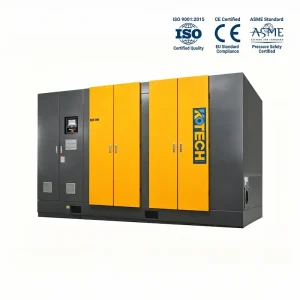
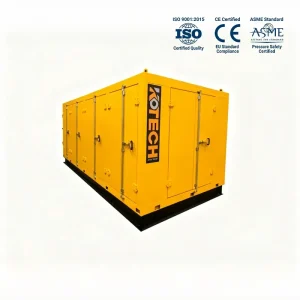
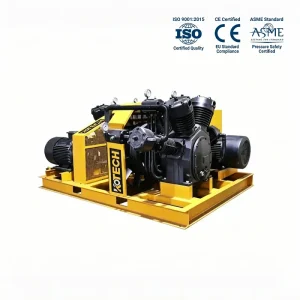
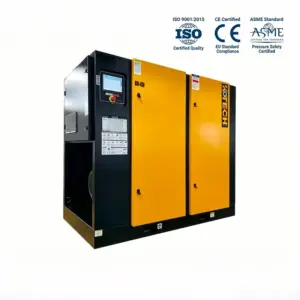
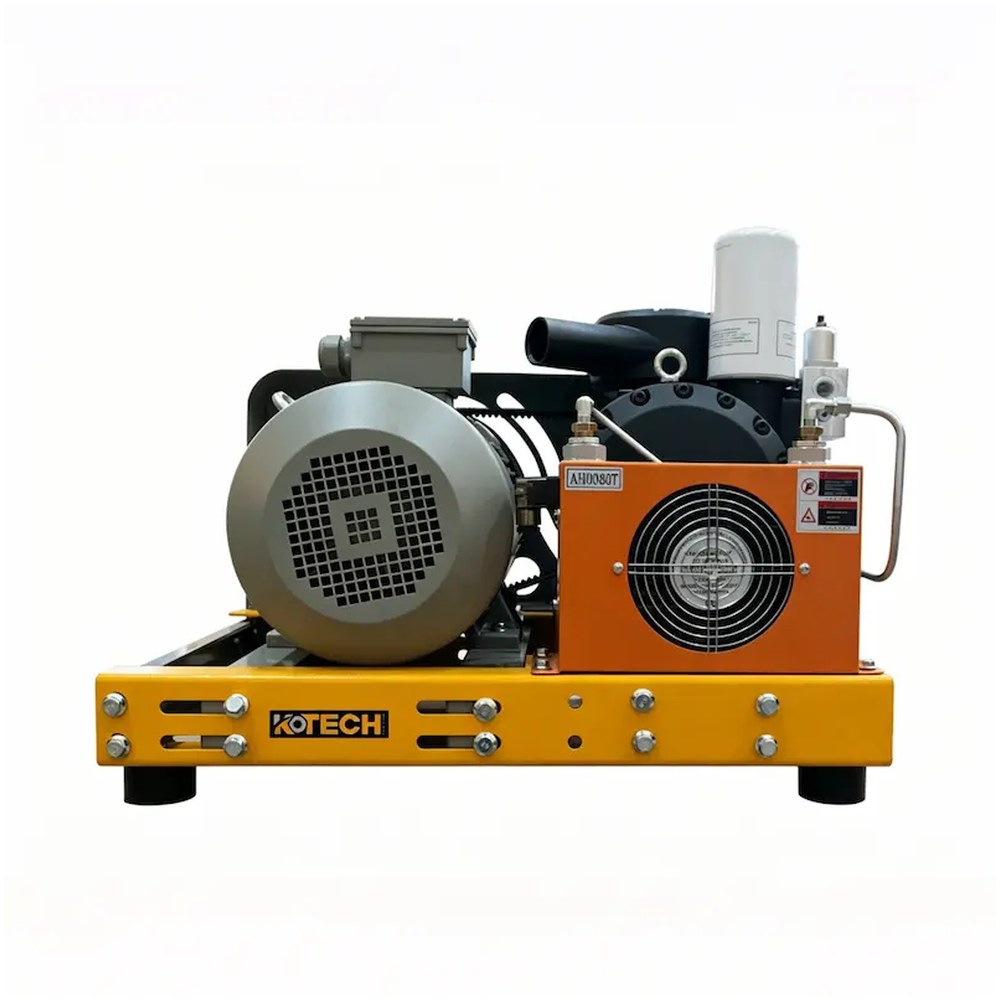
Underground mines have spent decades running diesel compressors below ground and paying for the consequences in exhaust, ventilation, and heat. A compact electric air compressor for underground mining removes the diesel engine from the tunnel entirely, which means no engine fumes at the working face, less heat load on the ventilation system, and quieter operation around crews. This guide looks at why mines are making the change, where an electric unit fits, and the real KOTECH KEV specifications to plan around.
The real cost of diesel below ground
A diesel engine running in an underground airway does more than burn fuel. It releases exhaust gases and particles that have to be diluted and removed by the mine ventilation system, and every litre of diesel also becomes heat that raises the temperature in the tunnel. In deep mines, where ventilation and cooling are already major costs, that extra heat and contamination are a direct operating expense.
Maintenance is harder below ground as well. Refuelling means transporting and handling diesel in the tunnel, filters and engine oil have to be carried to the machine, and an engine fault can stop production in a location that is difficult to reach. An electric air compressor for underground mining avoids most of that handling, because the energy arrives through a cable and the machine has far fewer engine-related service points.
- No diesel exhaust gases or particles released at the working face
- Less heat added to air that already needs ventilation and cooling
- No underground refuelling or diesel transport into the tunnel
- Fewer engine service points in a difficult-to-reach location
Where an electric mining compressor fits best
Electric drive is most attractive where power is already available or can be extended to the work area. Development headings, tunnelling projects, shaft operations, and fixed or semi-fixed underground installations often have electrical infrastructure close by, which makes connecting a skid-mounted electric compressor straightforward. The same machines are widely used in tunnelling where diesel emissions in a confined tunnel are tightly regulated.
The trade-off is mobility. Unlike a self-powered diesel unit, an electric compressor is limited by its cable and the supply that feeds it. Mines that need to follow a rapidly advancing face over long distances without power infrastructure still rely on diesel, while operations that can stage the machine near an electrical connection gain the ventilation and heat benefits.
- Development headings and tunnel drives with nearby power
- Shaft and fixed underground installations
- Confined tunnelling where diesel emissions are restricted
- Less suitable where the face advances far ahead of electrical supply
Noise, vibration, and crew exposure
Removing the diesel engine also changes the working environment around the compressor. Electric machines produce less noise and vibration at the unit, which improves communication in the tunnel and reduces crew exposure over a long shift. In many mines the compressor sits close to where people are working, so even a moderate reduction in noise matters across a full working week.
Because the motor and drive train are simpler than a diesel engine, there is also less to inspect on every shift and less chance of a fuel or oil spill in the airway. The remaining maintenance centres on the air end, the motor, and the cooling system rather than a complete engine package.
- Lower noise and vibration near the working crew
- Better communication in the tunnel during operation
- Reduced risk of fuel or oil spills below ground
- Simpler daily checks focused on the air end and motor
Real KOTECH KEV electric mining compressors
Current factory specifications for the KEV compact electric air compressor family used in underground mining and tunnelling.
The table shows the current KEV family with motor power, air delivery in CFM, and weight as published on the KOTECH product page. The range scales from the 11 kW KEV02 for light duties to the 55 kW KEV09 for larger underground and tunnelling loads. Because all four machines are electric, the choice is driven mainly by the CFM required at the face and the electrical capacity available there rather than by engine or fuel considerations.
How to plan the electrical supply
Selecting an electric air compressor for underground mining is only half the job; the supply has to support it. Check the motor starting current against the transformer and cable capacity at the planned location, because a large motor starting across a weak supply can cause voltage dips that affect other equipment. Cable length, protection, and the connector arrangement should be designed before the machine is moved underground.
It is also worth matching the compressor to expected duty. Where demand varies a lot, a machine that can run efficiently at part load avoids drawing full power continuously, while a steady high-demand heading may be better served by a larger unit running in its efficient range.
- Check starting current against the local transformer and cable rating
- Plan the connector, protection, and cable route before installation
- Match compressor capacity to the real CFM demand at the face
- Consider part-load efficiency where air use rises and falls
Buying tips
- Confirm electrical power can reach the work area before choosing electric
- Check motor starting current against the transformer and cable capacity
- Size from the CFM demand at the face, with allowance for line losses
- Compare the full machine weight against how it will be moved and mounted
- Plan cable and connector protection for the underground environment
Frequently asked questions
Is an electric air compressor for underground mining really more powerful than a diesel one?
Can an electric compressor keep up with a fast-advancing tunnel face?
How much does going electric reduce ventilation demand?
What maintenance does an underground electric compressor still need?
Are electric mining compressors safe around water and damp conditions?
How do I choose between the KEV02 and the larger KEV models?
If your mine or tunnel project has power available at the face, compare the KEV electric range and request the specifications that match your air demand.
Related Applied Cases