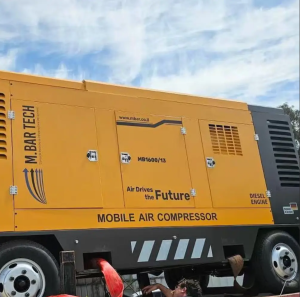
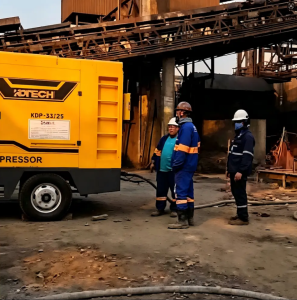
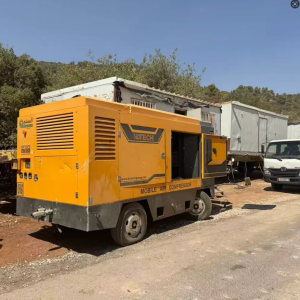
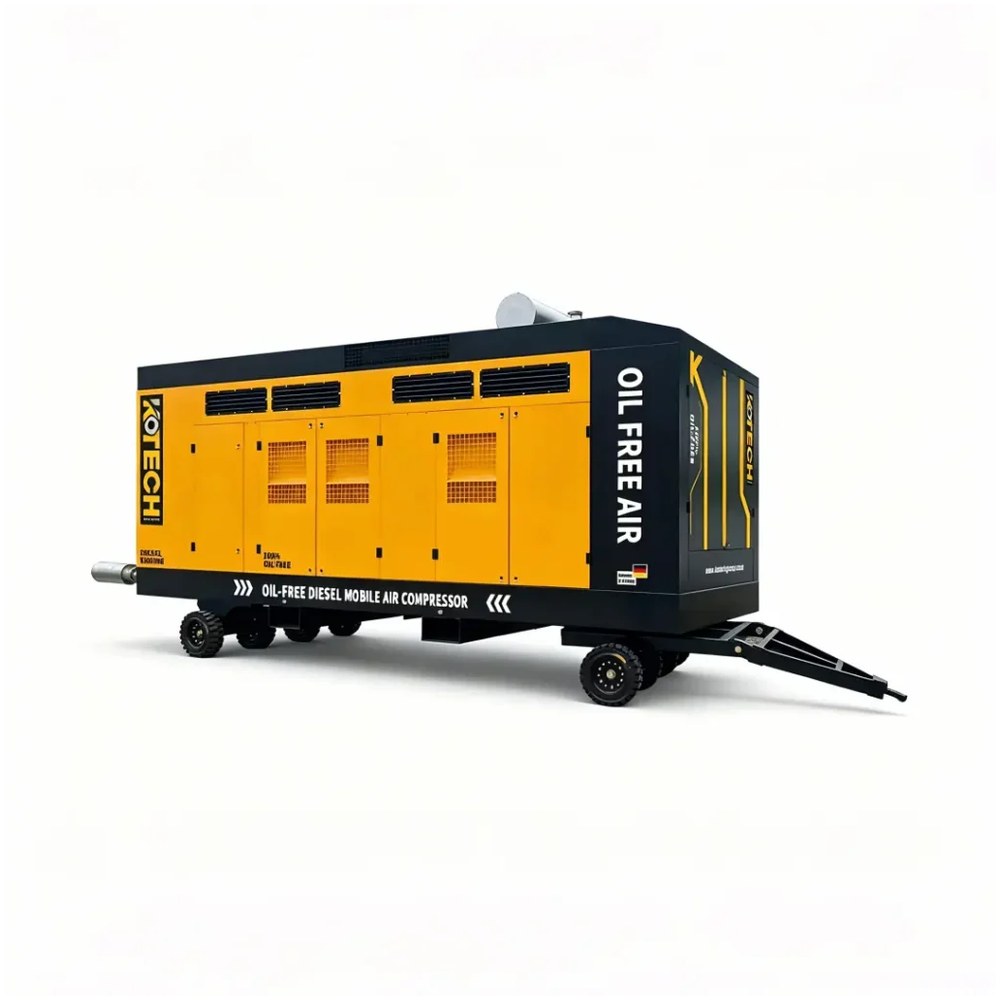
When a plant shuts down its main compressor room for service, the work does not always stop with it. Instruments, actuators, packaging lines, and critical pneumatic controls may still need air, and in oil-free industries that backup air has to be every bit as clean as the permanent supply. A portable oil-free air compressor can be brought in for the maintenance window, connected to a defined section of the system, and removed again, protecting production without compromising air quality. This guide explains when backup air is worth arranging and how to specify it.
Why maintenance shutdowns create an air-quality risk
Plants that run a fixed oil-free compressor house usually plan service carefully, but the backup options are often chosen at the last minute. If the only available temporary machine is an oil-lubricated compressor brought in from a general rental fleet, the plant risks feeding oil carryover into a network and end-use points designed around oil-free air. In pharmaceutical, food, electronics, and precision manufacturing settings, that contamination can force cleaning, validation work, and product holds.
A portable oil-free air compressor removes the risk at the source because the compression stage introduces no oil into the air stream. Used with the same filtration and drying as the permanent system, it maintains air quality while the main machines are offline, and the plant avoids choosing between a full production stop and accepting contaminated backup air.
- Protects oil-free networks from oil carryover during temporary supply
- Avoids product holds and re-cleaning in sensitive industries
- Maintains instruments and controls that cannot tolerate a full stop
- Keeps air quality aligned with the permanent installation
Which loads genuinely need backup air
Not every part of a plant needs to stay running during maintenance. The first step is to separate critical loads from those that can stop safely. Instrument air for control systems, safety-related functions, sealed packaging, and ongoing processes that are damaged by an interruption usually qualify, while general workshop air and non-essential machines can be isolated and shut down.
Once the critical loads are identified, their combined air demand defines the backup compressor size. It is common to find that the real critical demand is far lower than the full plant capacity, which means a single portable unit can cover it even though it could not replace the entire compressor house.
- Keep instrument and safety air supplied while isolating non-essential loads
- Protect continuous processes damaged by interruption
- Size from combined critical demand, which is often well below full plant capacity
- Define which sections are isolated before the temporary unit is connected
Connecting a temporary compressor safely
A backup connection should be planned before the maintenance window rather than improvised during it. A clearly marked tie-in point, flexible hose rated for the pressure, and isolation valves let the portable oil-free air compressor feed only the critical section while the main room is safely isolated. Pressure should be matched to the network so the temporary machine does not overpressurise a reduced section of piping.
Air treatment needs to travel with the temporary supply if the permanent dryers are part of the shutdown. In cold weather or sensitive processes, condensate left in the lines can cause problems even when the compressor itself is oil-free, so drainage and drying on the backup circuit should be checked as part of the setup.
- Pre-install a marked tie-in point and isolation arrangement
- Match pressure to the section being supplied
- Include drying and filtration if the main treatment is offline
- Check condensate drainage, especially in cold conditions
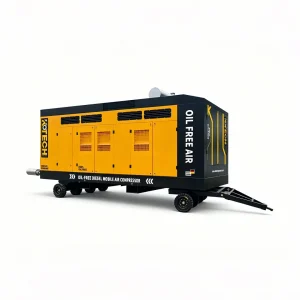
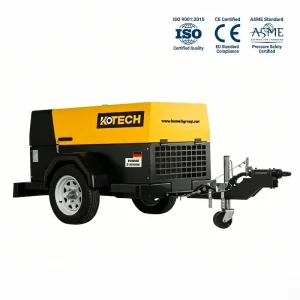
Real KOTECH KOP portable oil-free compressors
Selected current factory specifications for the KOP portable oil-free air compressor family.
The table lists selected current KOP portable oil-free models with their air delivery, pressure, engine, and power as shown on the KOTECH product page. The family spans a wide range: the KOP-12/8 provides a compact 424 CFM at 8 bar for smaller backup duties, while larger multi-cylinder machines extend to more than 1,600 CFM for large industrial sites. Because maintenance backup is temporary, the selected model only has to cover the isolated critical demand rather than the whole plant’s installed capacity.
Rental planning and lead time
Portable oil-free compressors are not always available from a local rental depot on the day they are needed, especially in smaller markets. Plants that know their major service windows should reserve the correct class of machine in advance and confirm that the rental unit genuinely delivers oil-free air rather than an oil-lubricated machine fitted with extra filters. The two are not equivalent for a validated oil-free system.
It is also sensible to agree connection and commissioning responsibilities before the machine arrives. A unit that is delivered but not correctly tied in provides no protection during a short shutdown, and a maintenance window can be over before the temporary supply is properly commissioned.
- Reserve an oil-free class unit ahead of planned service windows
- Confirm the rental machine is oil-free at compression, not merely filtered
- Agree who connects and commissions the temporary supply
- Keep a record of backup air quality for validated systems
Buying tips
- Identify and isolate critical loads before sizing backup air
- Require oil-free compression, not an oil-lubricated unit with added filters
- Plan the tie-in, pressure rating, and isolation before the shutdown
- Include temporary drying and filtration if the main treatment is offline
- Reserve the correct machine class well ahead of the service window
Frequently asked questions
Can I just rent a standard compressor and add filters for backup air?
How big a backup compressor do I need for a maintenance shutdown?
Will a portable compressor deliver the same pressure as my fixed system?
Which industries arrange oil-free backup air most often?
Do I need a separate dryer with a portable oil-free compressor?
How far in advance should I arrange backup equipment?
If your plant needs temporary oil-free air for an upcoming service window, compare the KOP range and request a model matched to your critical demand.
Related Applied Cases