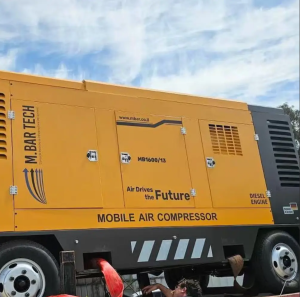
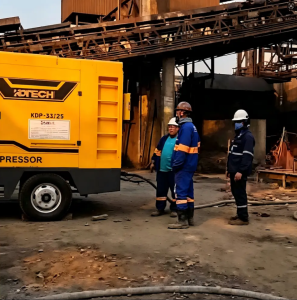
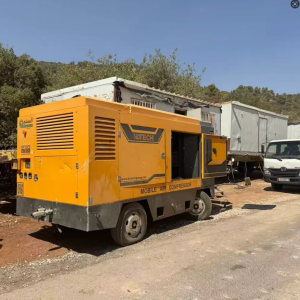
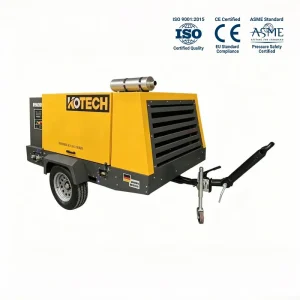
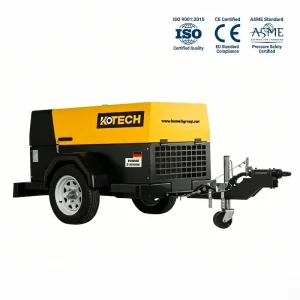
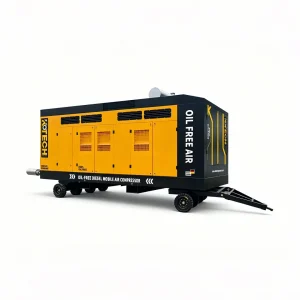
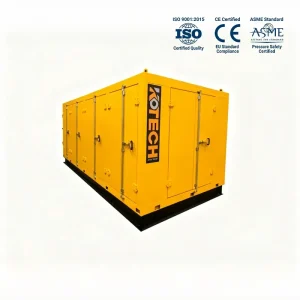
A single rental compressor often has to feed a 90 PSI breaker in the morning, a 110 PSI sandblast pot after lunch and a 125 PSI cable-blowing crew the next morning. Run all of that at one fixed, maximum pressure and you burn fuel, over-stress hoses and shorten tool life. The practical fix is an adjustable pressure diesel compressor that the operator dials to the job instead of the other way around. This guide explains how pressure tuning changes fuel use, how to set it safely for common tools, and how the real KOTECH KDP PACE range maps to those demands.
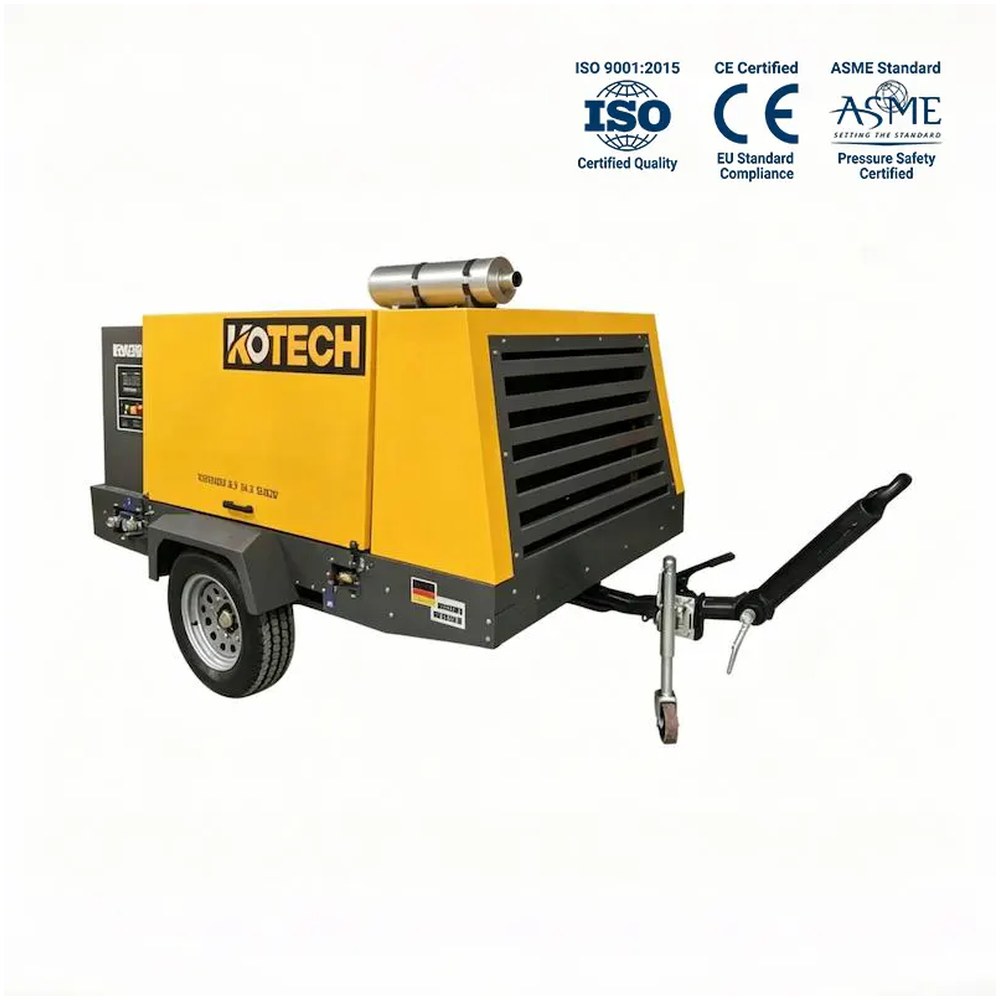
Why one fixed pressure wastes money on mixed jobs
Portable diesel compressors are usually rated at a single working pressure, and many fleets simply leave the machine at its maximum so nobody has to change anything. That habit is expensive. Every extra bar of pressure you produce but do not need adds roughly six to eight percent to the energy the air end absorbs, and on a diesel drive that comes straight out of the fuel tank.
On a multi-tool jobsite the penalty shows up twice. Tools rated for 90 PSI that receive 125 PSI run harder than they were designed for: seals fatigue faster, vibration rises and the operator loses feel. Meanwhile the compressor stays loaded longer to hold the higher set point, so a unit that should be cycling spends more time burning diesel. Dialing the outlet to the tool’s true requirement removes both wastes at once.
How adjustable output pressure actually works
In a pressure-adjustable machine such as the KDP PACE line, the operator sets the target outlet pressure and the engine and suction-control system match air delivery to demand. The engine is not permanently forced to run at the high end; as the pressure set point drops toward the minimum the machine can back off and still hold a stable supply.
The range is not infinite and it is not a way to force a small compressor to behave like a large one. Lowering pressure never increases the volume of air a tool receives, and raising pressure does not create more CFM. Adjustability is about matching the pressure band to the tool while keeping enough free-air delivery for every item running at once.
- Set pressure to the tool’s rated value, not to the compressor’s maximum.
- Add every connected tool’s CFM together and keep the total at or below the compressor’s free-air delivery.
- Account for hose length, fittings and leaks: long or narrow lines lose pressure, so set slightly higher at the machine to land on target at the tool.
- Re-check the setting whenever the crew swaps from one tool family to another.
Real KOTECH KDP PACE specifications
Current factory figures from the KOTECH product page. Free-air delivery and rated pressure vary with the chosen set point; select on CFM first.
Read across a row before you choose. A model can have the pressure you need but fall short on CFM once all tools are open, which is the most common cause of a breaker that feels sluggish in the afternoon. Sizing on CFM first and confirming the pressure band second avoids that mistake.
Practical set points for common rental tools
Most hand-held pneumatic breakers and chipping hammers want roughly 90 PSI at the tool and are tolerant, but they do not benefit from 125 PSI. Sandblast pots are often specified at 100 to 120 PSI depending on nozzle length and the distance from the pot, and trenchless cable and fibre-blowing equipment can call for higher, tightly controlled pressures where overshoot risks damaging duct.
Because a KDP PACE machine holds a chosen pressure rather than a fixed maximum, a rental house can send the same physical unit to three different customers in a week and document the set point on the delivery ticket. That flexibility raises utilisation: fewer specialised machines sit idle waiting for the one job that needs their exact rating.
What to specify for a rental fleet
Fleet buyers should treat pressure adjustment as part of total cost of ownership, not a checkbox. A unit that can be turned down for light jobs logs fewer litres of fuel across a year, and the engine and air end accumulate fewer high-load hours. Add easy-to-read controls, protected adjustment points and a clearly marked pressure gauge so operators actually use the feature rather than leaving it wide open.
Serviceability matters just as much in rental work. Machines that share engine platforms, common filters and accessible coolers turn over faster between hires, and a pressure range that covers the popular tool categories without forcing customers into the next size up keeps the fleet lean.
Buying tips
- Size on combined tool CFM first; pressure adjustment does not create extra air volume.
- Choose a model whose pressure band covers your highest-pressure tool, then run everything else below that maximum.
- Specify protected, legible pressure controls so crews tune the machine instead of bypassing it.
- Prefer a series with shared engines and filters across the range to simplify rental-fleet maintenance.
- Record the set pressure on each hire ticket so the next operator starts from the correct value.
Frequently asked questions
Does lowering the pressure on an adjustable diesel compressor really save fuel?
Can I turn the pressure up to get more CFM from a small compressor?
What pressure should I set for a jackhammer or breaker?
Is one adjustable compressor enough for both breaking and sandblasting?
Which KDP PACE model suits a small rental fleet starting out?
Will adjustable pressure damage the compressor if I change it often?
Compare the full KOTECH KDP PACE line, match a model to the CFM and pressure range your rental fleet rents most often, and ask for a quote with delivery details.
Related Applied Cases