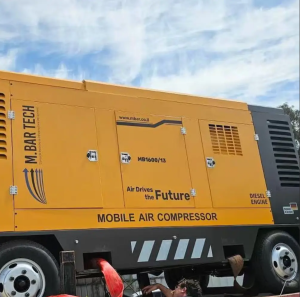
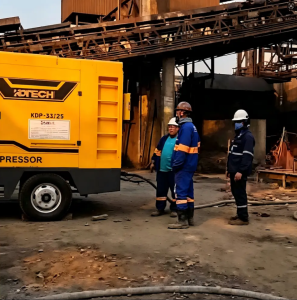
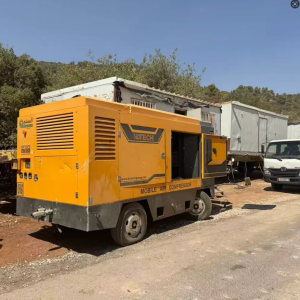
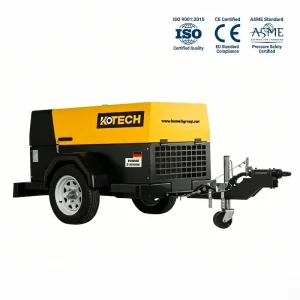
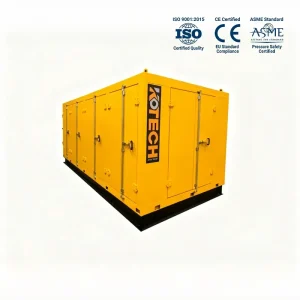
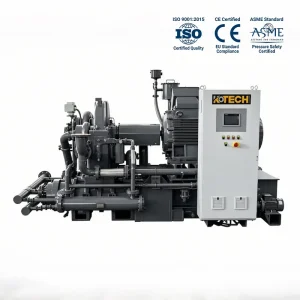
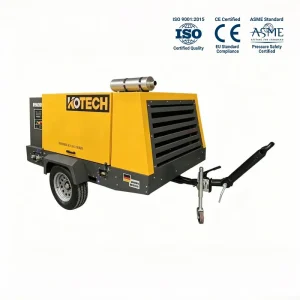
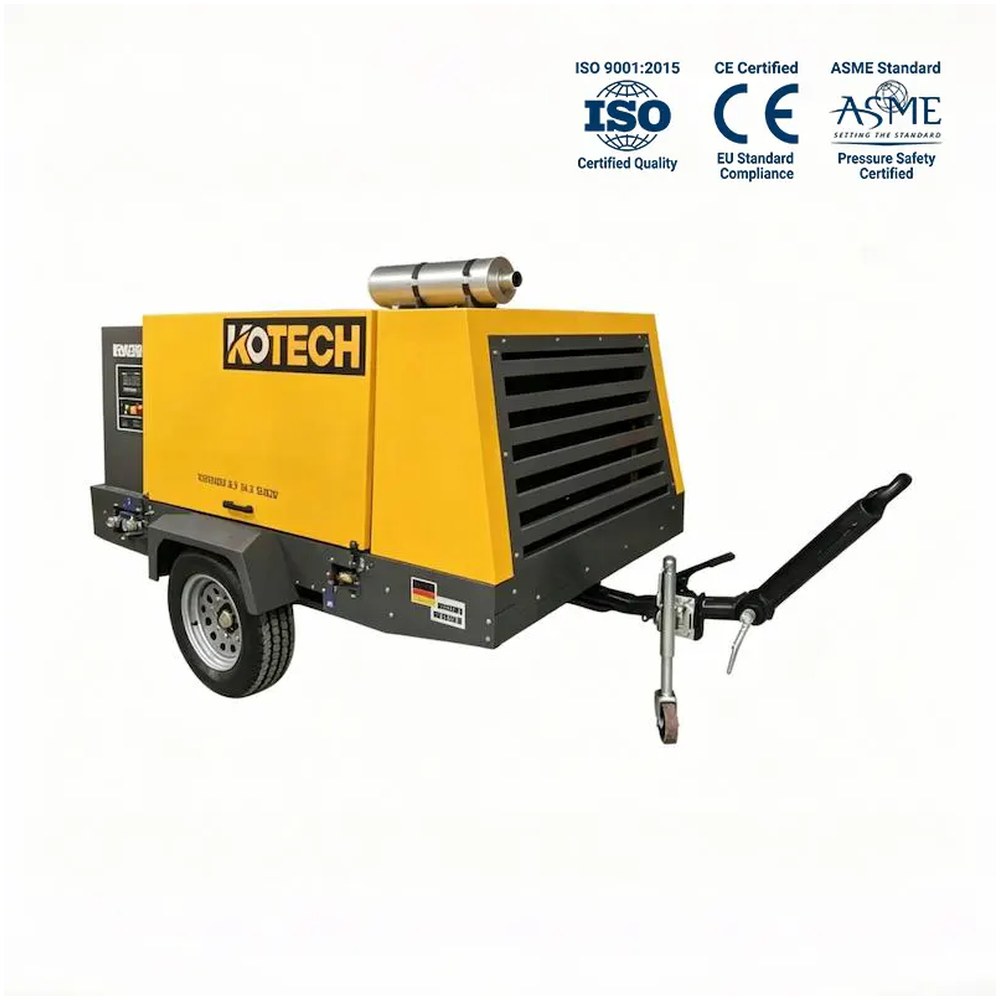
Rental fleets lose revenue every time a compressor comes back early because it could not match the pressure a new customer needed. An adjustable pressure diesel air compressor solves that by covering two pressure ranges on the same portable unit, so one asset can run a 7 bar sandblasting job one week and a 12 bar drilling or pipe-testing job the next. This guide explains how the dual-range design works, which real KOTECH models are available, and what to check before you add one to a rental fleet.
Why fixed-pressure units hurt rental utilization
Most portable diesel compressors are built around a single rated pressure. A 7 bar unit is efficient for abrasive blasting and general site air, but it falls short when the same fleet wins a contract for DTH drilling, cable blowing, or pressure testing that asks for 10 to 14 bar. The rental company then has to turn the job down, move a second machine between depots, or buy a second fleet of high-pressure units that sit idle part of the year.
An adjustable pressure diesel air compressor removes that split. The machine is engineered with an adjustable pressure range rather than one locked set point, letting the operator match the outlet pressure to the tool while the engine and air end keep working inside their design limits. For a fleet measured on utilization and days-on-rent, that flexibility is the main financial argument.
- Fewer machines needed to cover the same mix of customer jobs
- Less swapping between depots when pressure requirements change
- Higher resale appeal because the unit fits more applications
- Shorter idle time for high-pressure hardware that only fits a few jobs
How adjustable pressure actually works on a portable unit
The adjustment is not a matter of forcing the outlet valve closed. Inside the control system, the pressure set point, engine speed, and air-end output are coordinated so the compressor delivers the requested flow at the selected pressure without overloading the diesel engine. When pressure moves up, free air delivery drops, which is the normal trade-off on any positive-displacement compressor.
On the KOTECH KDP-PACE line, that range is delivered across a family of Perkins-powered units. A compact machine can start at 70 CFM at 7 bar, while the largest unit reaches 607 CFM at 14 bar. A rental fleet can therefore match the adjustable feature to the tool categories it serves most often instead of buying one oversized compressor for every customer.
- Higher pressure means lower usable CFM on the same machine
- Engine power and air-end speed are balanced by the control system
- Selecting the right range protects the engine from overload
- Matching tool demand first prevents buying more compressor than a job needs
How to match an adjustable compressor to rental demand
Before selecting a model, look at the actual pressure bands in your rental requests. Group them into rough categories: low-pressure blasting and general site air near 7 bar, medium duties around 10 bar, and higher-pressure drilling or testing work at 12 to 14 bar. Then choose a unit whose adjustable range and CFM output cover the band that appears most often, rather than the single highest pressure any customer has ever requested.
It also helps to count simultaneous tools. Two contractors running hoses off one compressor need the combined CFM at the working pressure, not just the flow for a single tool. Undersizing here causes pressure to sag at the nozzle, which customers read as a faulty machine even though the compressor is simply too small.
- List pressure requests by frequency before choosing the range
- Add the CFM of every tool running at the same time
- Plan for hose length and altitude, both of which reduce usable pressure
- Leave a safety margin so the unit is not running at its limit all day
Real KOTECH KDP-PACE adjustable pressure models
Current factory specifications for the KDP-PACE adjustable pressure diesel air compressor family, all powered by Perkins engines.
The table lists every current KDP-PACE model with its flow, pressure, Perkins engine, and rated power as published on the KOTECH product page. Notice the consistent pattern across the range: as pressure rises from 7 to 14 bar, free air delivery is traded for pressure while engine power increases. A rental buyer can use this to place a small, quiet unit at a local depot and reserve the larger high-flow machines for heavy industrial contracts.
Rental-duty features that protect the asset
Portable rental equipment is operated by many different users, often on unpaved ground and long shifts. The enclosure, running gear, and service access matter as much as the pressure range. Noise ratings on the current KDP-PACE family run from 66 dB on the compact KDP 70 PACE to 85 dB on the largest KDP 875 PACE, which helps when equipment is rented for work near residential areas.
Service intervals and easy access to filters and fluid should be checked before purchase. A machine that takes hours to service spends more time in the workshop and fewer days earning rent, while a well-placed drain and accessible air filter keep field maintenance fast.
- Enclosed housings reduce noise and protect the air end on site
- Heavy tow gear and jack stands support frequent moves between customers
- Fast access to filters and drains shortens turnaround between rentals
- Clear pressure controls help less experienced operators set the unit correctly
Buying tips
- Buy for the pressure band you rent most, not the highest number on the page
- Add CFM for every tool on the same circuit and keep a margin for leaks
- Check noise limits if the compressor will work in towns or near housing
- Confirm service access and local parts support before committing to a fleet order
- Compare weight and tow dimensions against the vehicles that will move the units
Frequently asked questions
Can one adjustable pressure diesel air compressor really replace two fixed-pressure machines?
What happens to CFM when I turn the pressure up?
Is an adjustable pressure unit harder for customers to operate?
Which industries rent adjustable pressure compressors most often?
How do I choose between the compact and large KDP-PACE models?
Does adjustable pressure increase fuel use or maintenance cost?
If your rental fleet serves mixed pressure jobs, compare the full KDP-PACE range and request factory specifications for the models that fit your depot.
Related Applied Cases