Most small plants do not use the same amount of air at 9 in the morning as they do at lunch or on the night shift. A fixed-speed compressor runs at one speed regardless, loading and unloading in cycles and throwing energy away in the gaps. A variable-speed drive, or VSD, changes the motor speed to follow the air demand. For a small plant whose load genuinely fluctuates, that single change often saves more electricity than any other upgrade.
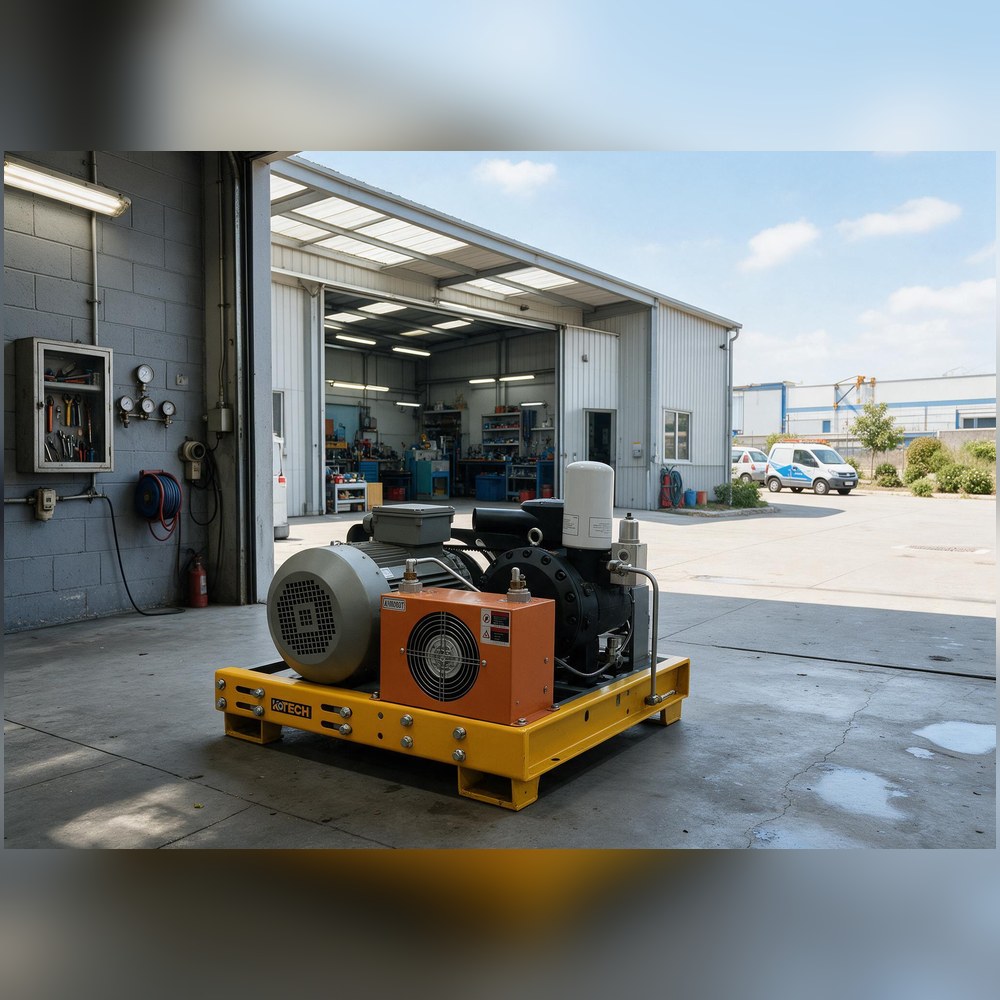
How a fixed-speed compressor wastes energy at part load
A fixed-speed electric motor runs at a set rotational speed tied to the power frequency, so the compressor element produces a roughly fixed amount of air whenever the motor is on. When demand falls below that output, the machine cannot simply make less air; it builds pressure to a set point, unloads, runs unloaded for a period, and then loads again.
During unloaded running the motor still draws power, commonly a meaningful fraction of full-load power, while compressing nothing useful. Short or irregular demand makes this worse because the machine spends a large share of its time cycling or sitting unloaded. In a small plant with a single shift, breaks, batch work and several different tools, average demand can sit well below the compressor’s rated output for much of the day.
Systems with leaks add to the problem because fixed-speed units keep cycling to satisfy demand that should have been fixed in the first place. Before sizing any new compressor, repairing leaks and measuring the true load gives a far cleaner baseline.
How a variable-speed drive follows the load
A VSD alters the frequency and voltage supplied to the motor, letting the element turn faster or slower. As tools open and close, the controller adjusts speed to hold a steady pressure, producing only the air the plant actually needs instead of cycling between full output and idle.
The savings are largest in the middle of the load range. At very low flow the drive still has a floor, and at full continuous output there is little part-load waste to remove, which is why a VSD is not automatic for every plant. The strongest case is a plant that spends many hours below full load, with demand that changes through the shift rather than holding a single steady value.
VSD units also start smoothly, which reduces electrical and mechanical shock, and they hold pressure more tightly, so tools see a more consistent supply. That stability often improves process quality even apart from the energy bill.
Reading the KOTECH KEV variable-speed range
The KOTECH KEV line is built around variable-speed electric drive. Because output changes with speed, each KEV model is defined by a flow range rather than one fixed CFM figure; the machine delivers more air near maximum speed and less as it turns down, while holding pressure.
At the smaller end, the KEV02 spans roughly 10.6 to 44.1 CFM with an 11 kW motor, and the KEV03 covers about 24.7 to 77.7 CFM at 18.5 kW. For larger small-plant loads, the KEV06 ranges from around 60 to 208 CFM at 37 kW and the KEV09 extends from about 113 to 314 CFM at 55 kW. Working pressure across the line reaches roughly 5 to 15 bar.
Match a model using the maximum realistic demand to set the top of the range, then check that the variable-speed band still covers the minimum sustained flow without the machine reaching its low-speed floor. If your lowest demand falls far below that floor, a small companion compressor or a storage tank can handle the off-peak hours.
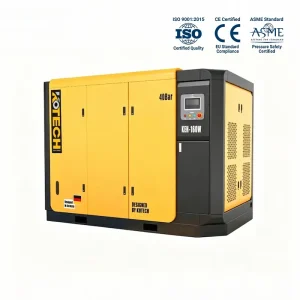
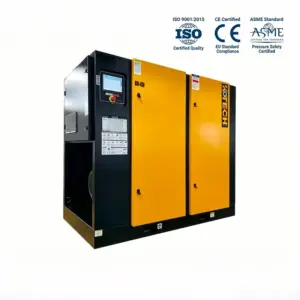
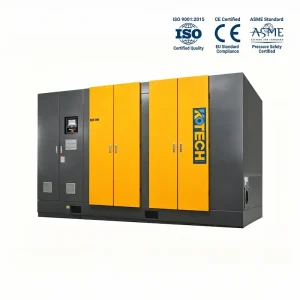
Real KOTECH KEV variable-speed compressors
KOTECH KEV variable-speed electric compressors, with free air delivery ranges and motor power from the current product data. Output changes with speed while pressure is held.
Because these are variable-speed machines, the free air delivery columns show a range rather than a single value; the compressor moves along that range as demand changes while pressure is held. Motor power sets the top end of each model’s output.
Choose the row whose maximum CFM covers your peak with a modest margin, then confirm its minimum sits at or below your usual low demand. A model that covers the peak but cannot turn down far enough will still cycle in quiet periods, losing much of the benefit.
Buying tips
- Measure demand for at least a full week before buying; VSD pays off most when load swings for many hours.
- Fix leaks first so the new compressor is not sized around avoidable demand.
- Size to the peak, then verify the turn-down floor covers your lowest sustained flow.
- Add storage if short, sharp demand peaks force you to buy a larger compressor than average needs.
- Confirm the electrical supply and motor protection suit a variable-speed installation.
- Compare payback on measured part-load savings rather than assuming a fixed percentage.
Frequently asked questions
Does a variable-speed compressor really save electricity in a small plant?
How do I know if my plant needs a VSD compressor?
What is the difference between a VSD and a fixed-speed compressor?
Can a variable-speed compressor run at very low demand?
Will a VSD compressor keep pressure more stable?
Should I fix air leaks before or after buying a VSD compressor?
If your small plant’s air demand rises and falls through the shift, a KOTECH KEV variable-speed compressor matches that load and holds steady pressure instead of cycling. Share a week of demand data and KOTECH will confirm the correct KEV model and the likely savings.
Related Applied Cases