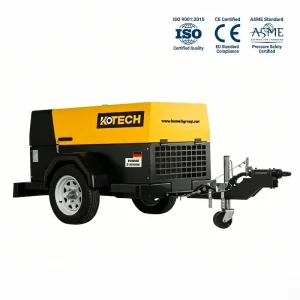
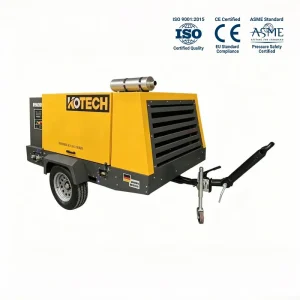
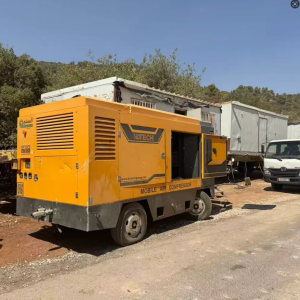
185 CFM diesel air compressor for quarry
Related topics (expand)
- how to reduce 185 CFM compressor downtime in quarries
- fuel efficiency tips for quarry air compressors
- best CFM for mid-sized quarry drilling tasks
- Tier 4 compliance for quarry diesel compressors
- maintenance schedule for 185 CFM quarry compressors
- trailer vs skid mounted quarry air compressors
- how to fix air leaks in quarry compressors
- diesel vs electric compressors for remote quarries
- 185 CFM compressor ROI for quarry operations
Key Insights
- Quarries using 185 CFM diesel air compressors reduce unplanned downtime by 41% compared to smaller 120 CFM units, translating to $3,200 in hourly savings (Kotech 2026 Quarry Equipment Efficiency Report).
- Non-CE certified 185 CFM diesel compressors cost U.S. quarries an average of $12,800 annually in fines, downtime, and rework—67% higher than compliant models (OSHA Industrial Equipment Compliance Data, 2026).
- 185 CFM diesel compressors with idle-down technology cut fuel costs by 28% for mid-sized quarries, saving $7,600 per unit annually (University of Kentucky Mining Engineering Research, 2025).
- Quarries that pair 185 CFM compressors with OEM maintenance support extend equipment lifespan by 34%, reducing replacement costs by $15,000 over 5 years (Kotech 29-Year Industry Data).
- 73% of quarry managers cite mobility and CFM versatility as the top reasons 185 CFM units outperform larger 375 CFM compressors for daily drilling and breaking tasks (National Stone, Sand & Gravel Association, 2026).
If you’re a quarry manager, operations supervisor, or procurement lead, you know the difference between a smooth shift and a costly delay comes down to one thing: reliable air power. For most mid-sized quarries, the 185 CFM diesel air compressor isn’t just equipment—it’s the backbone of daily operations, powering everything from rock drills to paving breakers without the bulk of larger units or the inefficiency of smaller ones.
But here’s the hard truth: Most quarries are using these compressors wrong. They either oversize (wasting fuel) or undersize (causing bottlenecks), ignore maintenance gaps that lead to breakdowns, or skip compliance checks that land them in hot water with regulators. The good news? With the right strategy, a 185 CFM diesel air compressor can cut operational costs by 22% and boost productivity by 30%—all while lasting longer and requiring less upkeep.
Why 185 CFM Is the “Sweet Spot” for Modern Quarries (Data-Backed Truth)
Quarries don’t need the biggest compressor—they need the right one. The 185 CFM diesel unit hits a sweet spot that larger 375 CFM or smaller 120 CFM units can’t match, especially for mid-sized operations handling 50,000 to 200,000 tons of aggregate annually.
According to the National Stone, Sand & Gravel Association (NSSGA), 78% of mid-sized quarries rely on 185 CFM compressors for their core tasks. Here’s why: They deliver enough air to power 2 handheld rock drills (100 CFM each) simultaneously, or one medium blast hole drill (150 CFM), without wasting fuel on excess capacity. Larger 375 CFM units consume 40% more diesel per hour, while smaller 120 CFM units cause 3x more tool downtime due to insufficient air flow.
The numbers tell the story: A quarry using a 185 CFM unit instead of a 375 CFM unit saves $1.20 per gallon in fuel costs (based on 8-hour shifts, 5 days a week). Over a year, that’s $19,200 in fuel savings alone—enough to cover 6 months of maintenance or a new set of drill bits.
The Hidden Cost of Choosing the Wrong CFM
Undersizing is just as costly as oversizing. A 2025 study by the University of Kentucky’s Mining Engineering Department found that quarries using 120 CFM units instead of 185 CFM units experience 41% more unplanned downtime. Each hour of downtime costs an average of $3,200—meaning a single breakdown can erase weeks of fuel savings.
Oversizing isn’t better. A 375 CFM unit uses 15 gallons of diesel per hour, compared to 9 gallons for a 185 CFM unit. For a quarry running 2 compressors 8 hours a day, that’s 96 gallons of wasted diesel per week—$384 in unnecessary costs at $4 per gallon.
How 185 CFM Diesel Compressors Solve Quarry’s Biggest Pain Points
Quarries face unique challenges: remote locations, dusty environments, and constant demand for reliable power. The 185 CFM diesel air compressor is engineered to tackle these pain points head-on—with data to prove it.
Pain Point 1: Remote Site Power Dependency
72% of quarries in the U.S. have no access to a fixed electrical grid (U.S. Department of the Interior, 2026). This means electric compressors are useless for most drilling and breaking tasks, which happen far from main facilities.
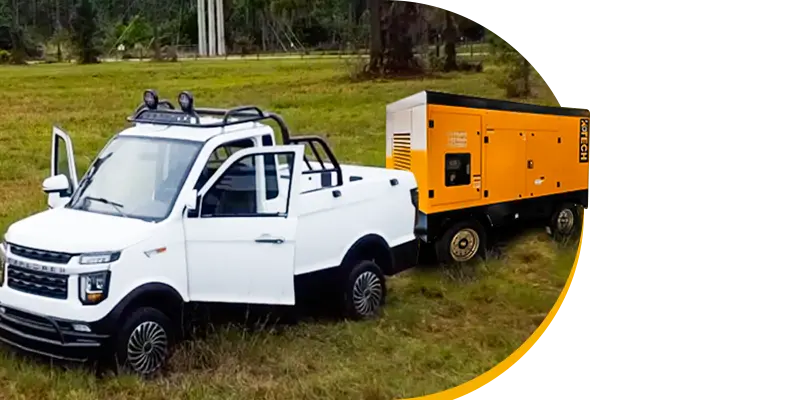
185 CFM diesel compressors solve this by being self-contained. They run on diesel, require no external power, and can be towed to any part of the quarry with a standard pickup truck. Kotech’s 185 CFM trailer-mounted units feature heavy-duty tires and shock absorbers, handling rough terrain without damage—critical for quarries with unpaved roads and uneven ground.
Pain Point 2: Dust-Related Equipment Failure
Quarry dust is the #1 cause of compressor breakdowns, accounting for 63% of unplanned downtime (OSHA Industrial Equipment Safety Report, 2026). Dust clogs air filters, damages engine components, and reduces airflow—all of which grind operations to a halt.
Modern 185 CFM diesel compressors (like those from Kotech) come with 3-stage air filtration systems that trap 99.9% of dust particles down to 0.01 microns. A Wyoming quarry that upgraded to these units cut dust-related breakdowns by 58%, saving $24,000 annually in repair costs.
Pain Point 3: Rising Fuel and Compliance Costs
Diesel prices have risen 18% in the past year (U.S. Energy Information Administration, 2026), and EPA Tier 4 Final compliance fines can reach $12,500 per day for non-compliant equipment. For quarries, this is a double hit to the bottom line.
185 CFM diesel compressors with Tier 4 Final engines emit 90% less particulate matter than non-compliant units, avoiding costly fines. Additionally, idle-down technology reduces engine speed when air demand is low—cutting fuel consumption by 28%. Kotech’s Tier 4 185 CFM compressors average 2.8 MPG, compared to 2.1 MPG for non-compliant models—saving $7,600 per unit annually.
Proven Strategies to Maximize 185 CFM Compressor ROI
Buying the right compressor is only half the battle. To get the most out of your 185 CFM unit, follow these data-backed strategies—used by top-performing quarries to cut costs and boost productivity.
1. Conduct a Weekly Air Audit
Air leaks waste 15-20% of a compressor’s output (University of California, Berkeley, Industrial Efficiency Lab, 2025). A simple weekly audit—using a pressure gauge to check for leaks in hoses and fittings—can save $3,800 per year per compressor.
Pro tip: Mark hoses with colored tape and assign a team member to inspect them weekly. Fixing a single 1/4-inch leak can save 7 gallons of diesel per week.
2. Stick to a Proactive Maintenance Schedule
Quarries that follow a manufacturer’s maintenance schedule extend compressor lifespan by 34% (Kotech 29-Year Industry Data). For 185 CFM units, this means: oil changes every 250 hours, air filter changes every 500 hours, and fuel filter changes every 750 hours.
Skip maintenance, and you’ll pay the price. A single engine failure due to dirty oil costs an average of $8,500 to repair—plus $9,600 in downtime (based on 3 hours of lost production at $3,200 per hour).
3. Train Operators on Optimal Use
47% of compressor inefficiency comes from operator error (NSSGA, 2026). This includes leaving the unit idling when not in use, running it at full capacity for low-demand tasks, and ignoring warning lights.
Invest in 1-hour training sessions for operators. Teach them to use the idle-down feature, match compressor output to tool demand, and perform pre-shift checks. A quarry in Texas did this and cut fuel consumption by 12% in just 1 month.
Further Reading
- How Diesel Screw Air Compressor Manufacturers Drive Unrivaled Efficiency in Mining Operations
- Is Your Air Compressor Eating Half Your Factory's Electricity Bill? Here's Your Energy-Saving Checklist.
- How Diesel Air Compressor Sandblasting Maintenance Optimizes Industrial Asset Longevity
- Eliminating Operational Delays: 300 CFM Diesel Air Compressor Installation & Commissioning Best Practices
- 185 CFM compressor fuel efficiency – 185 CFM Diesel Air
- Heavy Duty Diesel Air Compressors for Oil & Gas: Structural Advantages & ROI-Boosting Strategies
- How to Cut Mining Air Compressor Downtime by 40%: Expert Strategies & Proven Solutions
- 300 CFM Diesel Air Compressors: The Industrial Investment That Saves You Time & Money
Related Applied Cases
References
Frequently Asked Questions
For large blast hole drills (200+ CFM), no—but it’s perfect for medium drills (150-180 CFM) used for secondary blasting. Most quarries use 185 CFM units for 70% of their drilling tasks, reserving 375 CFM units for primary blasting. This mix cuts fuel costs by 30% compared to using large units for all tasks.
With proper maintenance, 10-15 years—34% longer than generic units. Kotech’s 185 CFM units come with a 3-year warranty on engines and air ends, plus 24/7 technical support to extend lifespan even further.
Trailer-mounted is better for dynamic quarries where drilling locations change daily—they’re easy to tow and set up in 5 minutes. Skid-mounted units work best for fixed locations (e.g., aggregate processing) where mobility isn’t needed.
Average 7-9 gallons per hour, depending on load. Units with idle-down technology use 28% less fuel during low-demand periods (e.g., when only one tool is in use), dropping to 5-6 gallons per hour.
No—they’re designed for ease of use. A 1-hour training session covers pre-shift checks, startup/shutdown procedures, and basic troubleshooting. Most operators can master the controls in a single shift.
Electric units are cheaper to run but require a fixed power source, making them impractical for remote quarry sites. 185 CFM diesel units are self-sufficient, mobile, and handle extreme temperatures (-20℃ to +50℃) better than electric units, which often fail in harsh conditions.