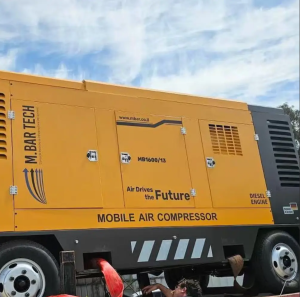
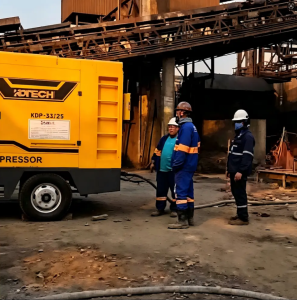
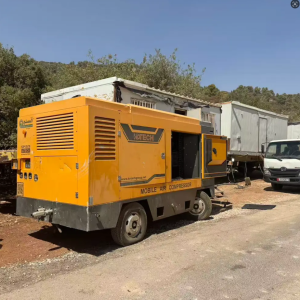
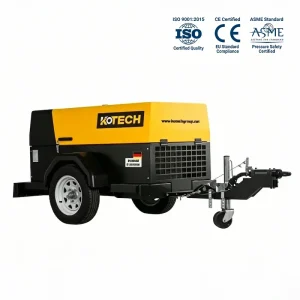
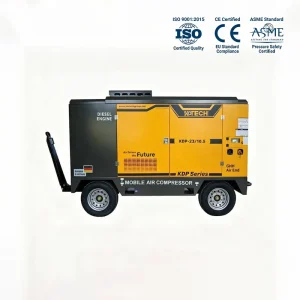
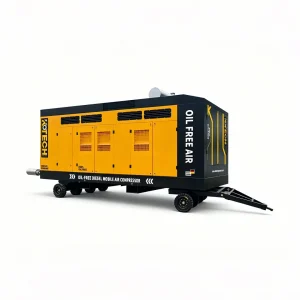
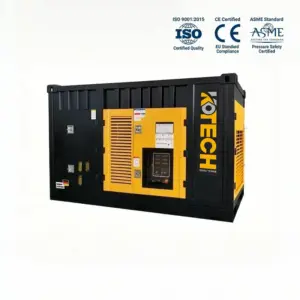
Highway and road construction runs on pneumatic power: concrete breakers, cut-off saws, sandblasting pots, post drivers and air lances all tap the same tow-behind compressor. Size the unit short of the tools’ combined CFM and the crew waits on weak, slow cycles; size it far too large and the contractor burns extra diesel all day for air nobody uses. The practical answer sits between those two mistakes — add the real CFM of every tool that runs together, allow a sensible margin, and match the pressure rating to the highest-demand tool. This guide works through that calculation with current KOTECH KDP portable diesel compressor figures.
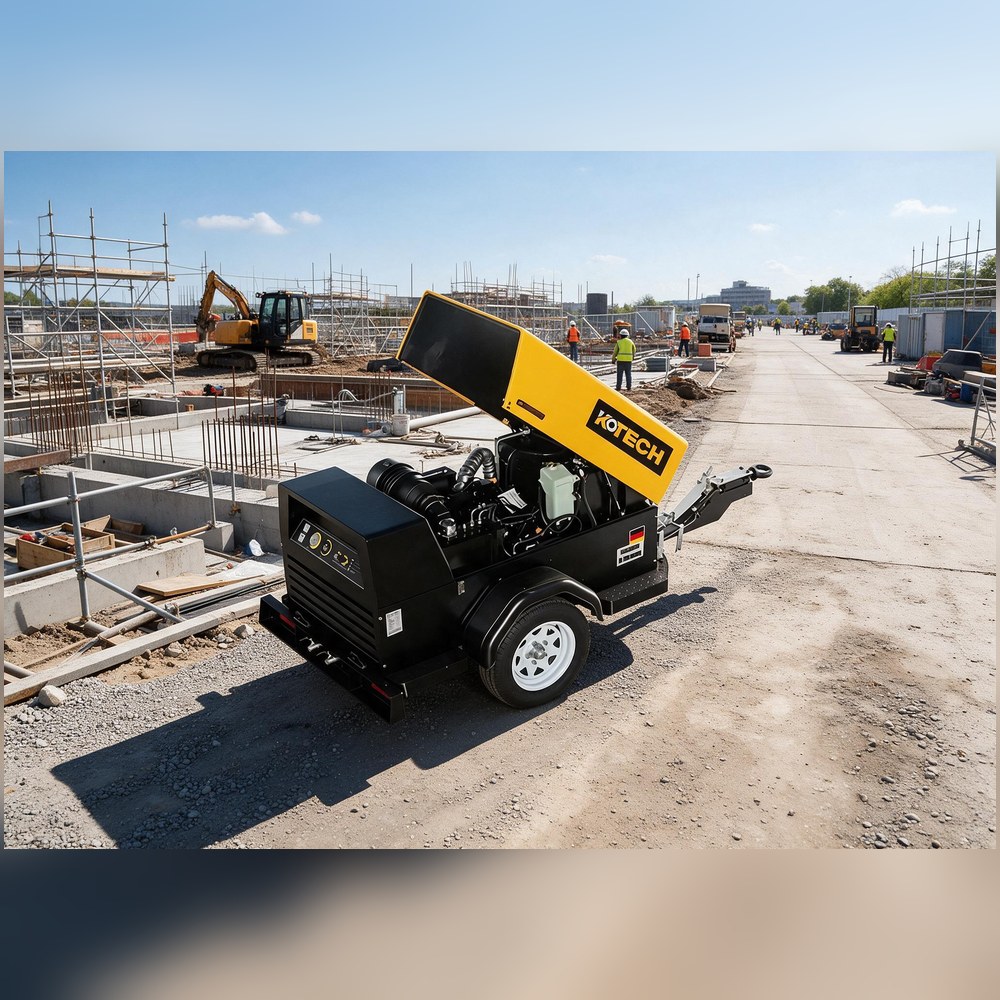
Which road-construction jobs need compressed air
A typical highway crew uses compressed air for a long list of short, intermittent duties. Pavement repair and expansion-joint work depend on handheld pneumatic breakers and chipping hammers. Surface preparation before coating or repair uses open-pressure sandblasting pots, which are among the most air-hungry tools on site. Guardrail and sign-post installation uses pneumatic post drivers and pullers, and cleanup after cutting or coring uses air lances to blow dust and slurry out of holes and saw cuts.
Utility and drainage work along the road alignment adds rock drills, trench compactors operated by air, and dewatering airlifts in some configurations. None of these duties is constant: a breaker runs for a few minutes, stops while the operator repositions, then runs again. That intermittent duty profile is the key fact that drives sizing — the compressor has to cover the simultaneous peak, not the sum of every tool owned by the crew.
- Concrete breakers and chipping hammers: intermittent, high individual CFM.
- Open-pressure sandblasting pots: the steadiest and often largest single load.
- Post drivers and pullers for guardrail and sign installation: short high-flow bursts.
- Air lances, blow guns and cutoff tools: small but numerous simultaneous users.
The CFM calculation that actually works on a road site
Start from the tool manufacturer’s stated air consumption at the tool’s rated pressure, not from a rule of thumb. A medium paving breaker commonly needs roughly 40 to 75 CFM, a large road breaker can exceed 90 CFM, and a 150 to 300 litre blast pot can demand 150 to 600 CFM depending on nozzle size and pressure. List only the tools expected to run at the same time: two breakers on a repair patch, or one breaker plus an air lance, or a single blasting pot with a helper line.
Add the simultaneous consumptions together and apply a margin of roughly 25 to 30 percent. The margin covers hose leakage, pressure loss through long or kinked hose runs and couplings, altitude and temperature derating, and the practical reality that stated tool figures are often optimistic. Pressure must be checked independently: most breakers and blast pots work at 90 to 125 PSI, so a 7 bar (100 PSI) machine is the road-crew standard, while high-pressure pots or drills may call for a 10 to 14 bar frame. Size CFM first, then confirm the compressor’s rated PSI clears the most demanding tool.
Real KOTECH KDP portable diesel specifications
Current factory figures from the KOTECH product page at each frame’s rated pressure; all KDP frames are rated for 50 °C maximum ambient temperature.
Note that flow is rated at each machine’s working pressure. A 10 bar frame such as the KDP-6/10 delivers the same 214 CFM at higher pressure, so it only earns its place when a tool genuinely needs the extra PSI; for ordinary breakers the 7 bar frame is the more economical choice.
Fuel, towing and site logistics
Highway work is mobile by nature, so the compressor moves between work zones every day. Tow-behind frames with road-tow running gear, a single-point lifting bail and forklift slots are the practical choice; the KDP mid-size frames are built on this pattern with 100 to 188 litre fuel tanks that carry a full working day without refuelling. Fuel consumption matters more than purchase price across a season of rental or ownership, which is another reason not to oversize — a larger engine idling behind one small tool burns diesel for nothing.
Hose management is part of the air calculation. Each coupling, filter and metre of hose costs pressure, so specify hose diameter from the CFM and length rather than reusing whatever hose is on the truck, and keep runs as short as the work zone allows. Position the unit upwind of dust and exhaust-sensitive work, on stable ground clear of passing traffic, and let the exhaust point away from the crew.
Buying and rental tips
For contractors who mostly run one or two breakers, the 185 CFM class is the sweet spot of the industry for a reason: it covers most patch repair and utility work with margin, and resells or rents easily. Crews that add blasting should step up deliberately, because a blasting pot can consume more air than every other tool combined. If the fleet mixes small and large jobs, two mid-size units often beat one very large one: they can be separated across two work zones, and one can keep working while the other is serviced.
Finally, specify for the real climate. Highway jobs in hot regions need a machine genuinely rated for high ambient temperatures with a cooling package to match, and engine emissions and registration requirements differ by market. Confirm the local engine standard, noise limits for urban road work at night, and the after-sales parts position before committing.
Buying tips
- Add the CFM of only the tools that genuinely run at the same time, then add 25 to 30 percent margin.
- Check PSI separately: most road tools run at 90 to 125 PSI; high-pressure drills and pots need 10 to 14 bar frames.
- A blasting pot can out-consume every other tool combined — size around it when blasting is planned.
- Prefer a frame with a full-day fuel tank and 50 °C ambient rating for summer highway work.
- For mixed fleets, two mid-size machines can be more flexible than one oversized unit.
Frequently asked questions
What size portable diesel compressor do I need for a concrete breaker on a road job?
How many CFM does a sandblasting pot need on highway work?
Is a 7 bar or 10 bar compressor better for road construction?
Can one portable compressor run two breakers at once?
Why does altitude change the required compressor size?
Should I buy one large compressor or two mid-size units for road crews?
Send us your road-project tool list — breaker and blasting nozzle sizes, simultaneous users, working pressure and site altitude — and we will size the right KOTECH KDP portable diesel compressor for the highway crew.
Related Applied Cases