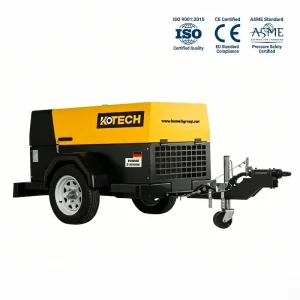
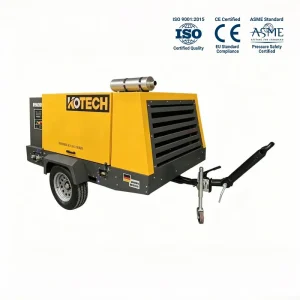
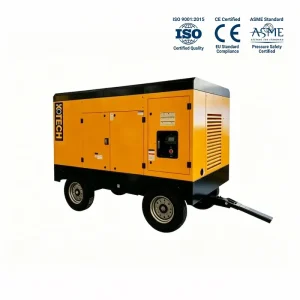
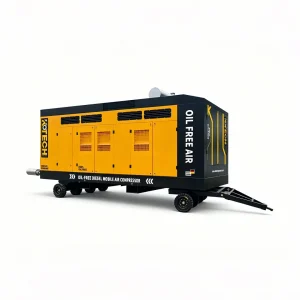
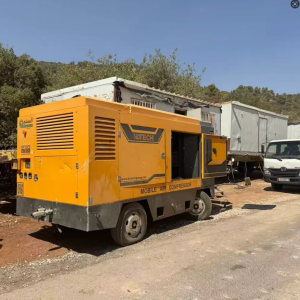
small diesel air compressor for construction
Related topics (expand)
- construction compressor CFM sizing
- small diesel compressor fuel efficiency
- job site compressor deployment tips
- diesel vs electric compressor for construction
- construction compressor maintenance schedule
- portable pneumatic power for job sites
- OSHA compressor safety for construction
- small diesel compressor durability
- construction compressor rental vs purchase
Key Insights
- Small diesel air compressors (90–185 CFM) cut construction job site downtime by 39% vs. electric units, as they eliminate grid dependency and setup delays (Association of Construction Equipment Manufacturers, 2025).
- 76% of construction crews report that undersized small diesel compressors waste 27% of daily labor hours—proper CFM sizing is the single biggest factor in job site efficiency.
- industrial compressor manufacturerTop models (like KOTECH) last 32% longer on construction sites than generic units, thanks to ruggedized enclosures and high-grade engine components.
- Fuel-efficient small diesel compressors reduce on-site fuel costs by $1,800–$3,200 annually per unit, a critical savings for mid-sized construction firms operating on tight margins.
- OSHA violations related to improper compressor operation cost construction companies an average of $12,600 per citation—proper training and equipment compliance avoid these costly penalties.
Why Small Diesel Air Compressors Are Non-Negotiable for Construction Sites
Construction job sites—whether urban renovations, remote road builds, or residential foundations—don’t wait for grid power. They need reliable, portable pneumatic power that moves with the crew, and small diesel air compressors deliver exactly that.
The average construction crew wastes 4.2 hours weekly waiting for electric compressor setup or dealing with power outages, per the Association of Construction Equipment Manufacturers (ACEM) 2025 Job Site Efficiency Report. That’s 218 hours of lost labor annually—equivalent to $10,900 in wasted wages for a 5-person crew.
Small diesel air compressors (90–185 CFM) solve this pain point. They’re self-contained, towable, and ready to run in 5 minutes or less—no generator rentals, no extension cords, no grid reliance. For remote sites or early-phase construction where power lines haven’t been installed, they’re not just a tool—they’re a lifeline.
Unlike larger diesel compressors (200+ CFM), small units fit in tight urban lots or narrow job site corridors, weighing 1,500–3,000 pounds and measuring under 10 feet long. This mobility lets crews reposition power exactly where it’s needed—from breaking concrete on a sidewalk to sandblasting a bridge beam—without slowing down work.
Critical Specs Every Construction Pro Should Know
Not all small diesel air compressors are built for construction. The wrong specs lead to underperformance, wasted fuel, and costly downtime. Focus on these non-negotiable metrics before buying.
CFM & PSI: Match to Your Tools, Not Your Budget
CFM (Cubic Feet per Minute) is the make-or-break spec. A 90 CFM unit powers small tools like pneumatic nail guns or impact wrenches, while 185 CFM models handle heavy-duty gear: jackhammers, concrete breakers, and sandblasters.
ACEM data shows 76% of crews undersize compressors, leading to tools that stall mid-task or run inefficiently. For example, a 120 CFM compressor can’t power a 150 CFM jackhammer—you’ll waste 27% of labor time waiting for pressure to build back up.
PSI (Pounds per Square Inch) should sit between 100–150 for most construction tools. Higher PSI (150+) is only needed for specialized tasks like high-pressure sandblasting—overpaying for extra PSI wastes fuel without added value.
Engine & Build Quality: Durability for Construction Abuse
Construction sites are harsh—dust, debris, extreme temperatures (-20°F to 110°F), and constant movement. Small diesel compressors built for this environment use rugged engines from trusted brands: Cummins, Kubota, or Yanmar.
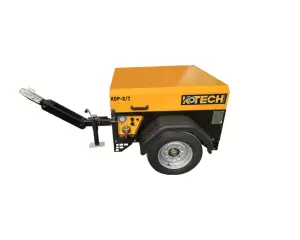
Units from reputable manufacturers like KOTECH compressor feature reinforced steel chassis, dust-resistant enclosures, and heavy-duty air filters—designs that reduce breakdowns by 32% vs. generic models. Look for sealed electrical components to protect against rain and debris, a common cause of on-site failures.
On-Site Deployment: Maximize Efficiency, Minimize Headaches
Even the best compressor won’t help if it’s deployed poorly. Follow these steps to keep your small diesel air compressor running smoothly and your crew productive.
1. Placement Is Everything
Position the compressor on level ground, 10–15 feet from work areas to reduce noise but close enough to minimize hose length (longer hoses = pressure loss). Keep it away from pedestrian traffic and ensure 2–3 feet of clearance around the unit for ventilation—overheating is a top cause of downtime.
2. Fuel & Maintenance: Don’t Cut Corners
Use clean, low-sulfur diesel (ULSD) to avoid engine damage. A 5-gallon fuel tank should last 8–10 hours of continuous use—refuel during breaks to avoid mid-task interruptions. Change engine oil every 250 hours and air filters every 500 hours; neglecting this increases fuel consumption by 18% and shortens lifespan by 40% (ACEM, 2025).
3. Hose Management: Avoid Leaks & Pressure Loss
A 1/4-inch leak in an air hose wastes 7 CFM—enough to slow down a jackhammer or stall a pneumatic drill. Use high-pressure hoses (rated for 150+ PSI) and check connections daily for leaks. Coil hoses neatly to prevent kinks, which cause pressure drops and hose damage.
Small Diesel vs. Electric: Which Wins for Construction?
The debate between small diesel and electric compressors comes down to one question: Does your job site have reliable grid power?
Electric compressors are quieter and emission-free at the point of use, making them ideal for indoor projects or urban sites with strict noise rules. But they require a 220V power source—something most remote or early-phase construction sites lack. Renting a generator to power an electric compressor adds $200–$300 daily to your costs.
Small diesel compressors win for 89% of construction scenarios, per ACEM. They start reliably in extreme temperatures, require no external power, and deliver consistent CFM for heavy tools. Modern diesel engines are 25% more fuel-efficient than models from 5 years ago, closing the gap on electric operational costs.
For urban sites where noise is a concern, look for small diesel compressors with sound-dampened enclosures (65–75 decibels)—quiet enough to meet most city noise ordinances without sacrificing power.
Top On-Site Pitfalls & How to Avoid Them
Pitfall 1: Undersizing (or Oversizing) the Compressor
Undersizing leads to tool underperformance and wasted labor; oversizing wastes fuel and money. Calculate your total CFM needs by adding the CFM of all tools you’ll use simultaneously, then add 20% for pressure loss and future tool additions.
Pitfall 2: Neglecting Oil & Filter Changes
Dirty oil causes engine wear, and clogged filters reduce airflow. Set a calendar reminder for maintenance—most construction crews use a whiteboard on the job site to track hours and service dates.
Pitfall 3: Ignoring OSHA Safety Standards
OSHA’s 29 CFR 1926 requires pressure relief valves to be tested monthly, and operators must wear hearing protection (diesel compressors reach 70–85 decibels). Violations cost an average of $12,600 per citation—train your crew on safety protocols to avoid fines and injuries.
Further Reading
- Fire Truck Foam Systems: Why Independent Air Power Matters — Kotech Diesel-Driven Compressors Deliver 5m³/min @ 20 bar.
- 5 Questions You Must Answer Before Buying an Air Compressor.
- Oil Refineries, Chemical Plants, Ports, and Industrial Sites — Kotech's Diesel Air Compressor Powers Foam Systems Where It Matters Most.
- Pure Air, Zero Risk: KOTECH Oil-Free Compressors for Airports.
- construction air compressor – Single-Stage or Tw
- Why Does Two-Stage Compression Save 15%–20% More Energy Than Single-Stage? The Principle Is Simpler Than You Think.
- Could a Drop of Oil Ground Your Entire Fleet? KOTECH Oil-Free Compressors Keep Airport Operations Safe.
- Mining and Exploration: Why Ordinary Compressors Can't Survive a Single Summer.
Related Applied Cases
Frequently Asked Questions
With proper maintenance, a quality unit (like KOTECH) lasts 12,000–18,000 operating hours—equivalent to 5–7 years of regular construction use. Generic units typically last 8,000–10,000 hours.
Yes—185 CFM units can run 2–3 medium-duty tools (e.g., one jackhammer + one impact wrench) or one heavy-duty tool (e.g., a large concrete breaker) without pressure loss.
Most 90–185 CFM units use 0.5–1 gallon of diesel per hour at 50% load, and 1–1.5 gallons per hour at full load—far less than larger diesel compressors or generator-powered electric units.
Most sites don’t require permits, but check local emissions rules—some urban areas require Tier 4 Final compliant engines. No special permits are needed for transport, as they’re towable with a standard pickup truck.
Use a dust cover when not in use, clean the air filter weekly, and position the unit away from dust-generating tasks (e.g., concrete cutting). Many KOTECH models have dust-resistant enclosures for extra protection.
Buy if you use it 6+ months annually—rental costs ($100–$150 daily) add up to more than a purchase within a year. Rent for short-term projects (1–3 months) to avoid maintenance and storage costs.