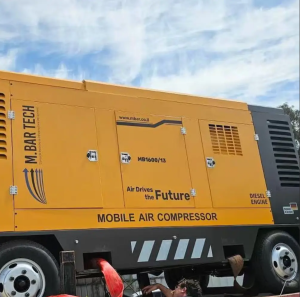
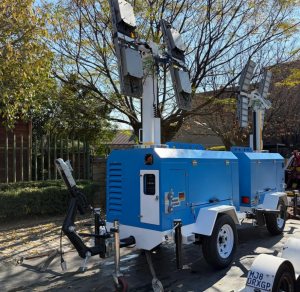
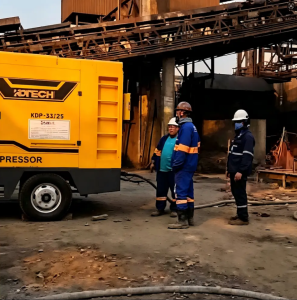
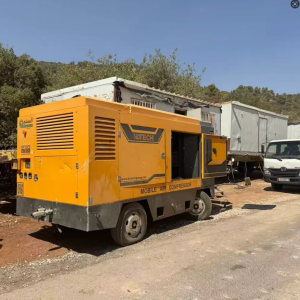
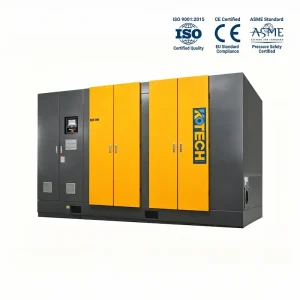
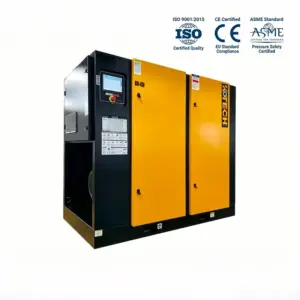
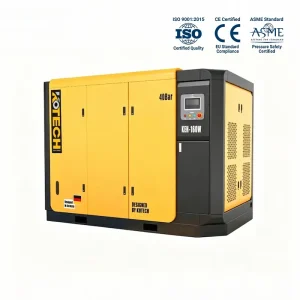
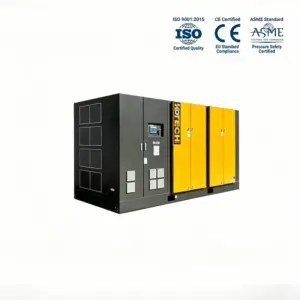
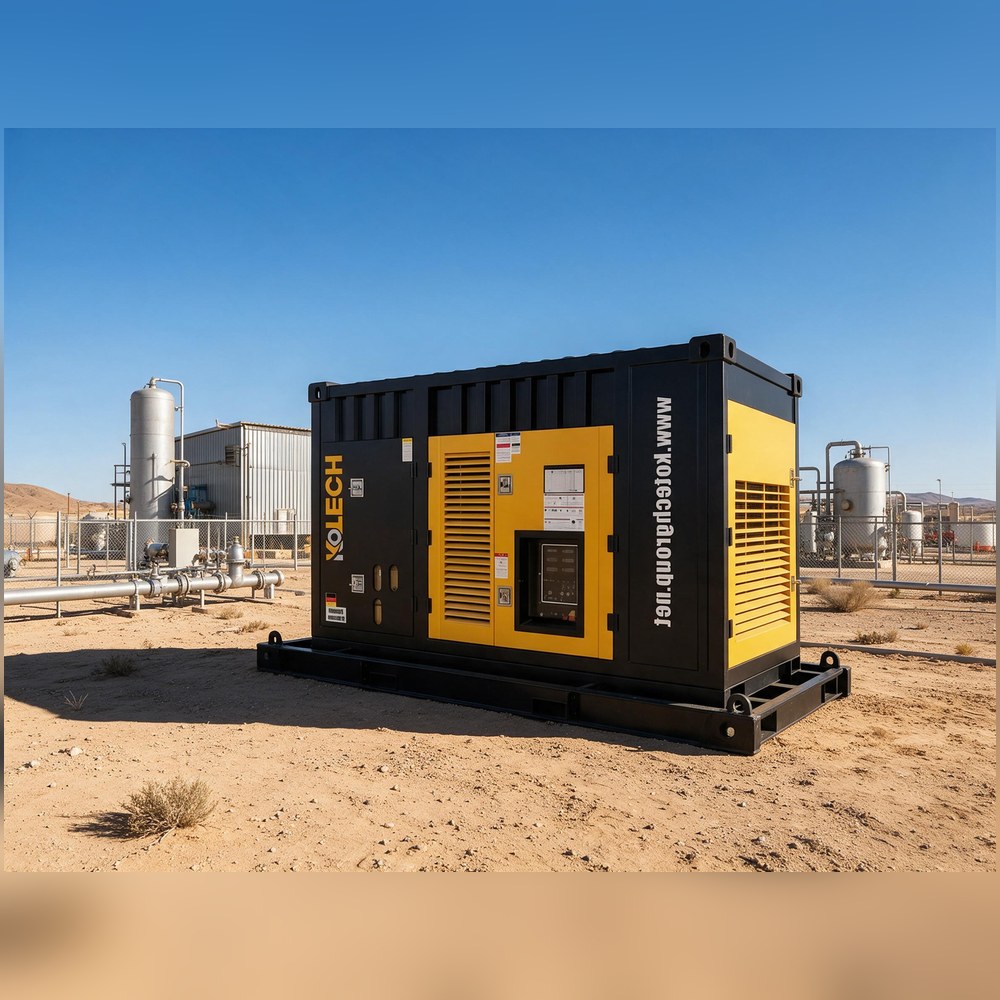
Oil and gas production in remote locations creates a difficult combination: instruments, valves, and process equipment need a dependable supply of compressed air or utility gas, but the site may have no compressor building, limited grid power, dusty or freezing weather, and few maintenance staff on hand. A containerized air compressor answers this by delivering the compressor, engine or motor, cooling, controls, and protection inside a single weatherproof, liftable package that is ready to run soon after it arrives on site.
Why remote sites favor packaged compression
On a conventional site, a compressor might be installed in a dedicated plant room with site-built ducting, foundations, and weather protection. At a remote production facility, gathering station, or well pad, that infrastructure is expensive, slow to build, and difficult to staff. Field work also has a defined schedule, and delays in commissioning utilities hold up the whole project.
A containerized package removes most of that site work. The compression equipment is mounted on a structural skid inside a protective enclosure, tested as a unit, transported by truck, and lifted into place with standard equipment. After connecting power or fuel, discharge piping, and controls, the station can be commissioned quickly and moved again if field development shifts.
What the container provides
The enclosure is more than a shipping frame. It protects the compressor and driver from rain, wind, dust, and temperature extremes, suppresses the noise of the engine and airend, and provides controlled ventilation for combustion and cooling. Access doors allow servicing in bad weather, while the lifting and skid structure makes the unit transportable without reassembly.
- Weather and dust protection in place of a site-built compressor room.
- Integrated noise attenuation for the engine and compression process.
- Liftable, transportable package that can relocate as the field develops.
- Factory assembly and testing reduce on-site commissioning work.
Diesel drive when grid power is limited
Many remote oil and gas locations have limited or no grid power, which makes an engine-driven package the practical choice. A diesel-driven containerized compressor generates its own compressed air independent of the site electrical supply, which is valuable during early field development, at unmanned well pads, and as backup for an electric instrument air system.
Fuel autonomy then becomes part of the design: tank capacity and fuel consumption determine how long the unit can run between refueling visits, an important consideration where access is long or weather-dependent. Where power is available, electric drives offer simpler, cleaner operation, and the two are often combined so a diesel package covers emergency or off-grid periods.
Real KOTECH skid-mounted compressor models
Current KOTECH containerized compressor models with free air delivery, working pressure, engine, and power from the product page specifications.
The table lists real KOTECH skid-mounted compressor models with free air delivery, working pressure, engine, and power. The range spans small well-pad units to larger process machines, allowing a package to be matched to the site demand and the level of fuel autonomy required.
Reliability and operation in harsh conditions
Reliability is the main selection criterion at a remote site, because a compressed air failure can disrupt instrumentation and process control and a service visit may take days. Proven components, good filtration, high-temperature and low-temperature capability, and clear monitoring all reduce the chance of an unexpected stop.
- Specify robust intake and process filtration for dusty environments.
- Confirm the operating temperature range, including cold starts.
- Use remote monitoring so unmanned sites can be checked from elsewhere.
- Size fuel storage to the longest realistic interval between visits.
- Provide lifting and access space for maintenance at the final location.
Air quality for instruments and process use
The purpose of the air determines the treatment required. General utility and purge duty tolerates a different standard from instrument air, which must be dry and clean enough to protect control valves, transmitters, and actuators from moisture and contamination. In cold weather, moisture in instrument air lines can freeze, so drying becomes a reliability issue rather than just an air-quality preference.
A package can therefore be specified with filtration, drying, and receivers suited to the duty, and the treatment equipment is best integrated into the same skid so the whole system is delivered, protected, and tested as one package.
What to specify for a remote compressor package
- Define the duty: instrument air, process air, purge, or backup.
- State the true temperature, dust, and weather range of the location.
- Choose diesel or electric drive from the available power supply.
- Match fuel tank capacity to the interval between service visits.
- Integrate drying and filtration into the package for instrument use.
- Require remote monitoring and proven, serviceable components.
Frequently asked questions
What is a containerized air compressor?
Why are containerized compressors used at remote oil and gas sites?
Should a remote compressor be diesel or electric?
How long can a diesel compressor run between refueling visits?
Does instrument air need a dryer on a remote site?
How is a containerized compressor maintained in a remote location?
If you need compressed air at a remote well pad, gathering station, or process facility, KOTECH can supply a containerized package matched to the duty, climate, and available power.
Related Applied Cases