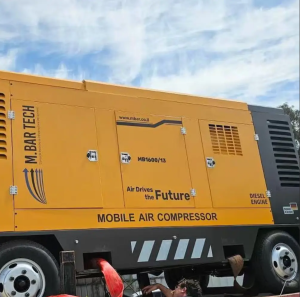
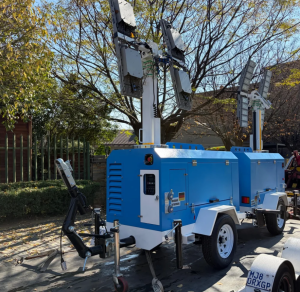
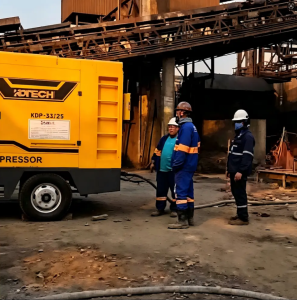
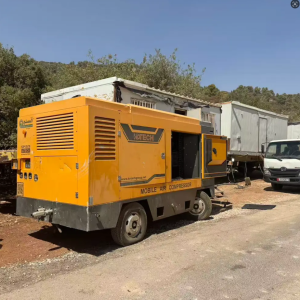
Inner-city night work is unforgiving. A compressor that starts on a residential street at 10 p.m. has to satisfy three masters at once: the noise officer, the permit, and the tool actually doing the work. Compact quiet diesel compressors in the 70-185 CFM class exist precisely for this squeeze – small enough to park inside a coned-off lane, quiet enough to run through restricted hours, and powerful enough to drive breakers, sandblasting pots and cable-blowing gear without bogging down. This guide explains how to match CFM, pressure and sound level to the job, using the real KDP PACE range as the reference line.
Why urban jobs need a different compressor spec
On a highway project at 2 a.m., nobody measures the distance to the nearest bedroom. On a city street, that distance might be eight metres. Municipal night permits typically cap site sound levels at the boundary – commonly 55 to 65 dB(A), with stricter limits near hospitals and schools – and inspectors do not negotiate in the middle of a pour. The practical consequence is that the loudest, cheapest machine is often the one that gets the crew sent home.
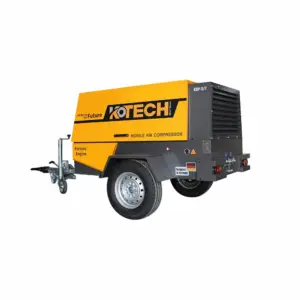
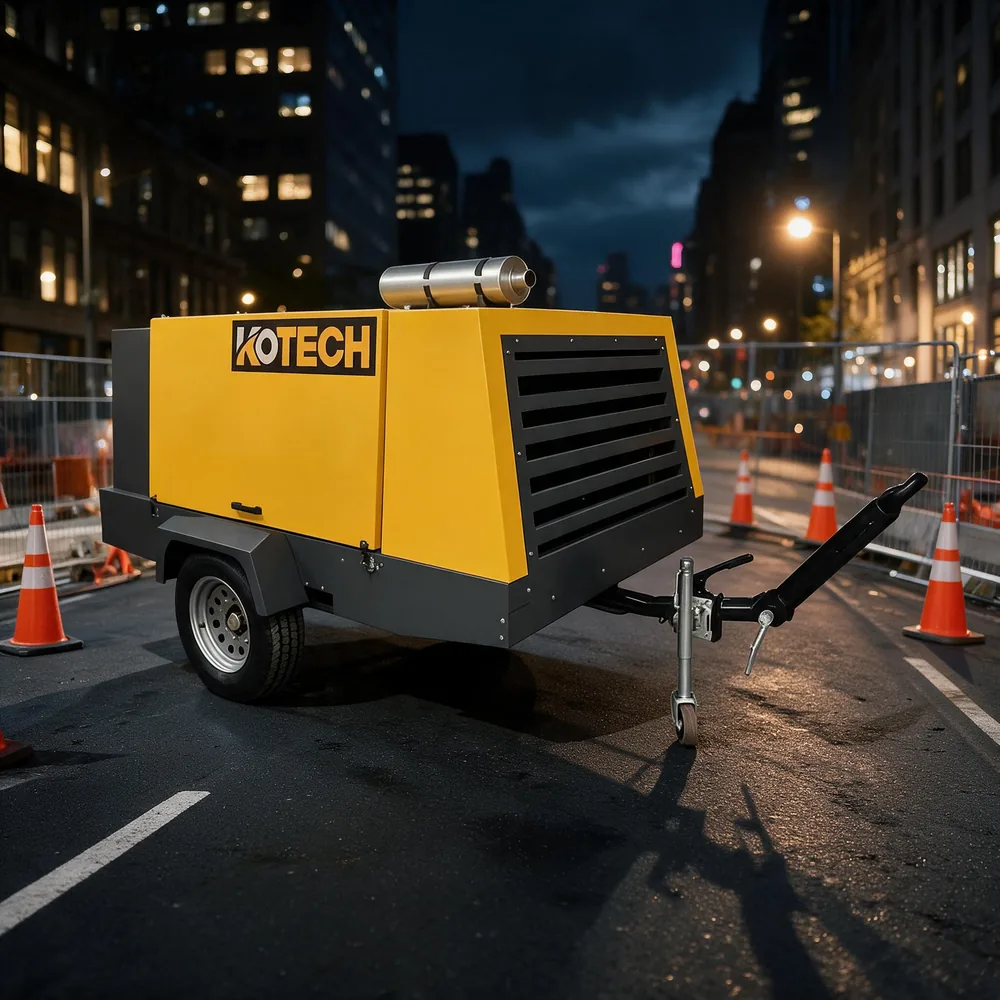
Footprint matters just as much. Utility repairs, telecoms duct blowing and façade work usually occupy a single lane or part of a sidewalk. A full-size skid rig needs a low-loader and a closure order; a single-axle compact canopy unit can be towed to the spot by a pickup and positioned inside the cones. The best urban machines are therefore defined as much by their envelope and acoustics as by their free air delivery.
- Sound-rated canopy: look for measured levels around 66-69 dB(A) at 7 m rather than bare-engine figures.
- Single-axle towability and an operating weight a pickup or light truck can legally tow.
- Adjustable pressure, so one machine covers 7 bar breaking and 10-12 bar blowing without oversizing.
Matching CFM to the night-shift tool list
Sizing always starts from the tools, not the brochure. Add the continuous air demand of every tool that runs at the same time, then apply a duty and leakage factor of roughly 20-30 percent for hose losses and trigger overlap. A 30 kg class breaker needs roughly 28-40 CFM at 7 bar; a 90 lb paving breaker can demand 55-75 CFM; a 150 CFM-class sandblast pot or a pair of medium breakers pushes the job into 150+ CFM territory.
The 70-185 CFM band covers the vast majority of single-lane urban work. The important design choice is pressure flexibility. Cable and fibre blowing, some leak-test work and smaller sandblast pots want 10-12 bar, while breakers and pole-driving adapters are happiest at 7 bar. A machine whose screw element maintains useful flow at the higher pressure rating removes the temptation to rent a second, larger unit ‘just in case’.
KOTECH KDP PACE compact diesel compressors: published specifications
All values are factory specifications for the canopy-enclosed, single-axle PACE units. Where two pressure ratings exist, the @10 bar model is the same machine at its higher rating.
Read the table at the pressure the job actually needs. The same physical machine loses flow as discharge pressure rises, because more of the compression work goes into pressure rather than volume. Choosing on the 7 bar number for a 12 bar blowing job is the single most common undersizing mistake in municipal rental fleets.
Noise, permits and neighbor relations
A sound-rated canopy is necessary but not sufficient. Site level at the receptor depends on distance and barriers as well as the machine’s own rating: every doubling of distance from a point source roughly halves the level, and parking a van or barrier between the compressor and a bedroom window buys a few more decibels for free. Point the exhaust and cooling-air discharge away from dwellings, and use the quietest hours for the loudest operations rather than running all tasks flat out until dawn.
Servicing also changes the real-world number. Canopy seals, cooling-fan bearings and degraded acoustic foam all push sound levels upward over a machine’s life, so the unit that measured 66 dB new may not stay there without the filter and seal changes in the maintenance schedule.
- Request the sound power or measured 7 m figure in writing when tendering night permits.
- Position the machine as far from the nearest facade as the lane closure allows, never directly under a bedroom window.
- Spec electric-start, auto-idle units: unloaded idle is markedly quieter and saves fuel between tool cycles.
Running costs across a week of night shifts
Urban work alternates between hard load and long waits: the crew sets up, runs a breaker for twenty minutes, moves ten metres, waits for the inspector. A fixed-speed compressor gulps fuel through all of that. Units that idle down when air demand drops can cut night-shift fuel use meaningfully and reduce the refuelling visits that themselves require street access. Add easy ground-level service points, because nobody wants a 2 a.m. oil check in live traffic, and the total cost of a compact unit over a season of permit work is usually well below the apparent saving of running an oversized bare-skid machine.
What to check before renting or buying for night work
- Build the tool list first: sum simultaneous CFM at the pressure each tool needs, then add 20-30 percent.
- Verify the sound figure is a measured machine level at 7 m, not an engine-only lab value.
- Confirm towing weight against the actual tow vehicle and local license rules; the 500-1000 kg band keeps the choice wide.
- Prefer pressure-flexible units rated to 10 or 12 bar if cable blowing or test work shares the fleet.
- Inspect canopy seals, acoustic foam and idle-down function on any used unit before a permit job.
- Plan position and barriers before the closure starts; distance and shielding are free noise control.
Frequently asked questions
What size compressor do I need for a single road-breaking hammer at night?
How quiet is a quiet diesel compressor in real terms?
Can one compressor do both 7 bar breaking and 12 bar cable blowing?
Does a compact compressor mean a small fuel tank and short runtime?
Why not just use a larger skid compressor for every city job?
If your crews work night closures, hospital zones or single-lane utility cuts, size the machine against the actual permit and tool list. The KDP PACE range spans 70-185 CFM with pressure ratings to 12 bar and canopy sound levels from 66 dB.
Related Applied Cases