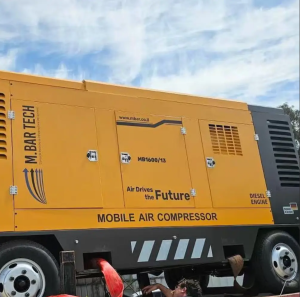
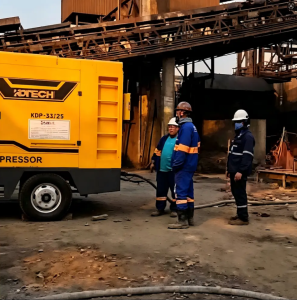
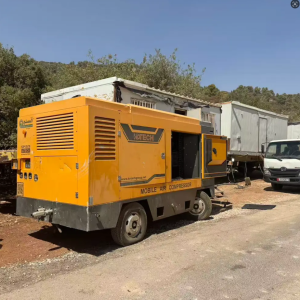
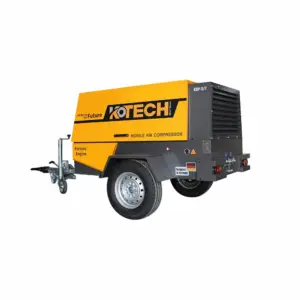
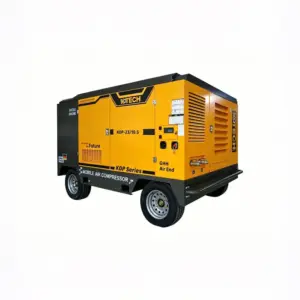
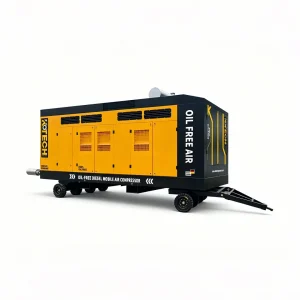
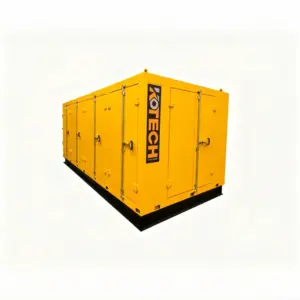
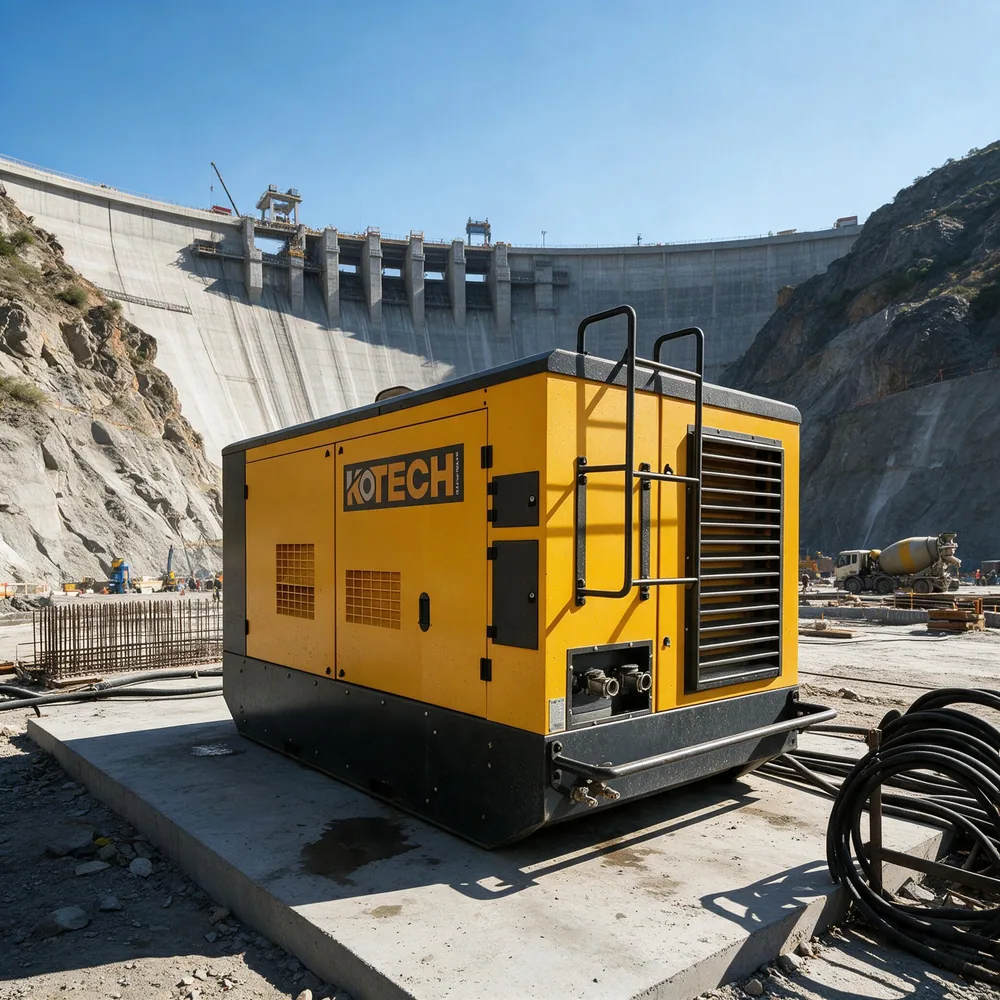
Grouting a dam foundation is unforgiving equipment work. Curtain and consolidation grouting runs for weeks in a canyon that has no grid power, limited water and no second chance once the gallery closes. The air supply has to start a grout mixer, run an agitator and a pneumatic pump simultaneously, hold a stable pressure through long injection cycles, and survive dust, vibration and 24-hour scheduling. Skid diesel compressors are the standard answer because they lift onto any pad with a crane, need no trailer space on narrow abutments, and are built for continuous load. This guide sizes them by pressure stage and airflow, using the real KDS skid range.
What grouting actually demands from the air supply
Foundation treatment uses several grouting methods, and they do not share one pressure. Contact grouting behind tunnel linings and blanket grouting near the surface usually run at low to moderate pressure, consolidation grouting through the upper rock mass commonly works between roughly 8 and 15 bar, and deep curtain grouting under high dams can be designed for 20-40 bar with staged pressure increments controlled by the grouting protocol. Sizing a compressor to the maximum design pressure instead of the average job is what separates a smooth site from a re-equipped one.
Airflow is driven by the equipment spread, not by the pressure gauge alone. A grout mixer, an agitator tank, water pumps, chipping hammers for gallery preparation and the air-driven grout pump all draw at once during a cycle. The compressor must deliver the summed continuous demand at the rated working pressure while the hoses and header maintain pressure at the farthole. Thin mains and long lines cause exactly the pressure decay that makes grout take readings unreliable.
- Pressure: match the grouting design stage – 8-15 bar covers most consolidation work, 20+ bar is high-pressure curtain territory.
- Flow: total simultaneous demand of mixer, agitator, pump and hand tools, plus 25-30 percent for hose losses and leakage at couplings.
- Duty: 10-20 hour days for weeks on end, so the machine must be rated for continuous full-load operation, not intermittent rental duty.
Why skid mounting wins on a dam site
A dam abutment is not a parking lot. Access roads are narrow, benches are cut into the slope, and the compressor position changes as the grout cap advances. A skid frame with integrated base tank and lifting lugs can be craned directly onto a small prepared concrete pad or placed on a flat bench, then relocated as the gallery moves. There is no tow vehicle requirement on the pad and no axle or tyre to damage on rock spoil.
The enclosed canopy matters as much as the frame. Grouting sites generate cement dust and frequent wash-downs, and canyon weather swings between cold nights and hot days. A sealed, sound-attenuated canopy with heavy-duty air filtration keeps the engine and screw element alive through a full grouting campaign, and keeps the noise exposure of a crew working close to the machine within tolerable limits.
KOTECH KDS skid diesel compressors for grouting: published specifications
Factory values for the enclosed skid units most commonly used in dam grouting spreads. CFM and pressure are paired ratings – select for the terminal pressure of the grouting design.
Read CFM and pressure as a pair, not independently. The same screw element delivers less volume at higher discharge pressure, so a pump that barely keeps up at 10 bar on paper will not keep up at all at 17 bar. If the grouting protocol steps pressure up over the campaign, select the machine for the terminal stage, not the first one.
Setting up the air plant on the bench
Placement follows three rules: level, clean air and short mains. The skid should sit on a level prepared pad with drainage so rain and wash water do not pool under the base tank, positioned so the radiator discharge points away from prevailing dust and the crew. Intake air should be drawn from the cleanest side of the pad, away from the mixer and cement silo dust, because abrasive dust through a screw element ends a campaign early.
Pipe the header generously. Undersized mains and cheap quick-couplers are where grouting sites lose the pressure they paid for; size the main for the total flow with low velocity, use full-bore fittings and pressure-test the header before the first hole. A small receiver tank near the grout pump smooths the pulsed demand of the pump and reduces cycling on the compressor. Fuel handling deserves the same discipline – a day tank schedule and filtered transfer keep water and sediment out of the engine on a site where fuel often arrives by truck over rough roads.
- Level drained pad, radiator away from dust, intake on the clean side of the bench.
- Oversize the air main and use full-bore fittings; verify pressure at the farthest hole, not just at the machine.
- Add a receiver near the grout pump to absorb pulsed demand.
- Plan refuels around injection cycles; never break a critical grout stage to refuel.
Reliability through a multi-month campaign
Grouting downtime compounds: an idle compressor holds the mixer, the pump, the rig and the quality-control crew simultaneously. Specify machines with Cummins-class engines, accessible service points for the filters and separator, and telemetry or at least reliable hour-metering so service intervals follow actual running time in a 24-hour operation. Keep the specified consumables on site before the campaign starts – delivery to a remote canyon is measured in days, not hours – and run a scheduled oil-analysis or filter regime rather than waiting for a warning light. Over a long project, the cheapest compressor is the one that never makes the grouting foreman replan the week.
Grouting compressor selection checklist
- Size for the maximum design pressure of the curtain, even if early stages run lower.
- Sum the full equipment spread at simultaneous duty and add 25-30 percent for line losses.
- Require a continuous-duty enclosed skid package with a substantial base tank for long cycles.
- Verify the pressure at the farthest injection hole during commissioning, not just at the outlet.
- Position for clean intake air; cement dust is the fastest way to destroy a screw element.
- Stock consumables on site before mobilization and service by running hours.
Frequently asked questions
What pressure compressor is needed for dam grouting?
How many CFM does a grouting spread consume?
Why use a skid compressor instead of a tow-behind on a dam site?
What causes pressure loss between the compressor and the grout hole?
How do I protect the compressor from cement dust on site?
If you are pricing a dam grouting package, match the compressor to the terminal pressure of the curtain and the full equipment spread. The KDS skid range runs from 353 CFM at 10 bar to 635 CFM at 25 bar with continuous-duty Cummins power.
Related Applied Cases