Lighting is the difference between a safe, productive night shift and a shutdown. When daylight fades on a highway pour, a bridge deck or a remote earthworks site, crews need enough uniform light to read levels, spot trip hazards and keep machines moving – without blinding oncoming traffic or burning through a tank of fuel before midnight. Diesel light towers for night construction are specified by a handful of hard numbers – total lumens, coverage area, mast height, lamp type and runtime – and most lighting failures come from confusing watts with lumens or pointing one bright tower at a large site. This guide turns those numbers into a usable lighting plan, with the real KOTECH KLT range as reference.
Start from lux and the task, not from watts
The right question is not how powerful the lamp is but how much light reaches the working surface. Illuminance is measured in lux – lumens per square metre – and recommended maintained levels rise with the detail and risk of the task. General earthworks and access roads typically call for roughly 20-50 lux, concrete placement, paving and structural erection around 50-100 lux, and detailed finishing, mechanical or electrical work 100-200 lux. Safety standards in most markets require the design figure to account for depreciation and dirt, so the initial output must exceed the maintained target.
Watts only describe electricity consumed. LED fixtures turn far more of that power into useful light than old metal-halide lamps, switch on instantly, restrike immediately after a power interruption and last long enough to largely remove lamp changes on site. Two towers can draw similar electrical power yet deliver very different working conditions, which is why lumens, beam spread and mounting height are the numbers to design around.
- Earthworks and haul roads: about 20-50 lux maintained.
- Paving, concrete placement and erection: about 50-100 lux.
- Detailed finishing and mechanical work: about 100-200 lux.
- Design for maintained levels – lumen output falls as lamps age and lenses collect dust.
Coverage, mast height and the overlap rule
A light tower does not light a circle evenly; illuminance drops toward the edge of the beam and shadows form behind equipment. The practical method is to plan overlapping pools of light rather than one bright center. As a rough planning figure for open sites, a modern LED tower in the 200,000-450,000 lumen class can support general work across an area in the order of 2,000-5,000 square metres depending on target lux, fixture optics and mounting height – but manufacturers’ coverage maps and a quick site lux check always beat a single rule of thumb.
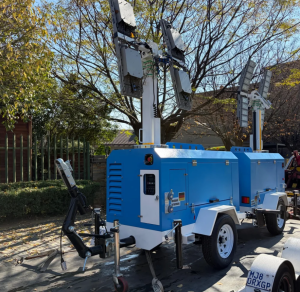
Mast height changes the shape of the light: higher mounting spreads a wider, softer pool and reduces harsh shadows, which is why 8-9 m masts suit large open decks, while lower masts concentrate light for close work. Rotating or individually adjustable lamp heads let the beam follow the work rather than the crew working around the light. Towers should be positioned to shine along the direction of travel and away from drivers’ eyes; glare control matters as much as brightness when live traffic runs beside the zone.
KOTECH KLT mobile light towers: published specifications
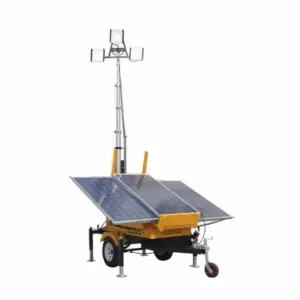
Engine-driven KLT units and solar KLTS units. Light output and lamp power are the values to compare for lighting efficiency; ‘/’ denotes not applicable to solar units.
Use the lumen figure for the lighting calculation and the watt figure for the fuel and engine calculation. The auxiliary output column matters on sites where the same tower also powers tools, chargers or small heaters.
Runtime, fuel and the midnight refuel problem
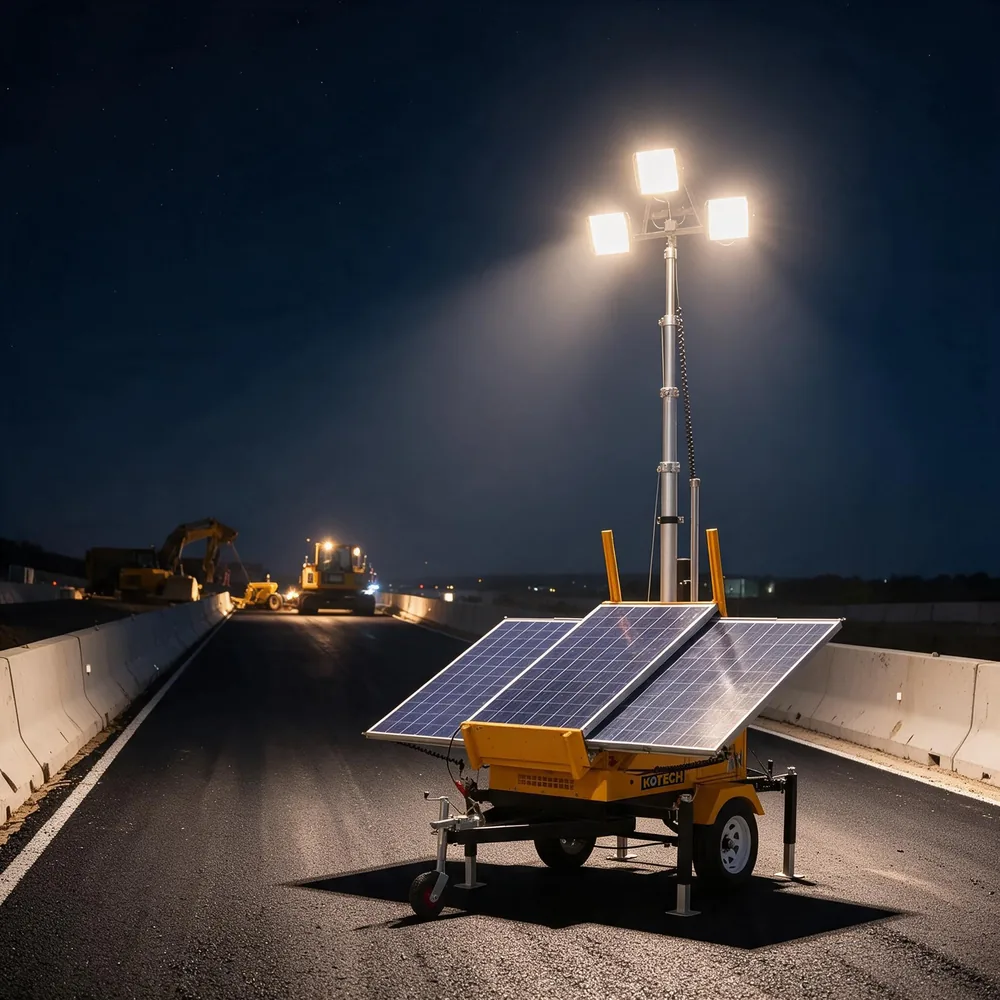
A tower that needs refuelling at 2 a.m. costs more than the fuel it burns – it needs a person, access to the work zone and a pause near live operations. Size the engine package for a full shift on one tank at the actual load, and favour LED units whose low electrical draw lets the engine run economically or, on hybrid and solar models, not at all for stretches of the night. Solar towers with battery storage can carry quiet overnight duty on a charged bank and are increasingly common in city centres and at schools and hospitals, where both exhaust and noise are restricted.
Cold weather changes the calculation too: diesel waxing, reduced battery capacity and longer dark hours all push toward engine packages rated for winter service and battery banks sized for the longer nights, not the equinox.
- Require single-tank runtime across the full planned shift at real load.
- Prefer instant-restrike LED lamps so a brief shutdown does not stall the site for minutes.
- Use solar or hybrid towers for hospitals, schools and residential streets with noise or exhaust limits.
- Specify winter-grade fuel and oversized batteries in cold climates.
A simple lighting plan for a night site
Lay out the work zone on paper, mark the tasks and their lux targets, then place towers around the perimeter so beams overlap in the centre rather than competing head-on. Mount high for open areas, angle heads to about 60-70 degrees for spread, keep the brightest sources out of approaching drivers’ sightlines and add low-level glare-shielded lights at changes in level, trenches and equipment crossings. Walk the site after dark with a lux meter before the shift starts; a ten-minute check and a mast adjustment is far cheaper than a repositioning exercise once concrete is being placed. Finish the plan with transport: single-axle trailers, four stabiliser jacks and quick mast deployment are what let one crew relocate light as the work front moves.
Choosing a light tower for night work
- Specify lux targets by task and design for maintained, not initial, illuminance.
- Compare lumens and optics, never lamp watts, when choosing between towers.
- Plan overlapping pools of light with masts raised high enough to kill harsh shadows.
- Require one-tank runtime for the full shift and instant restrike after interruptions.
- Choose solar or hybrid towers for noise- and exhaust-sensitive urban sites.
- Check towability, stabiliser jacks and deploy time, because light must follow the work front.
Frequently asked questions
How many lumens do I need to light a construction site at night?
Are LED light towers really cheaper to run than metal-halide?
How high should a light tower mast be?
Can I use a solar light tower on a long winter night?
How do I stop the lights blinding drivers on a live road?
Related Applied Cases