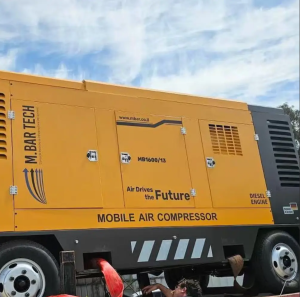
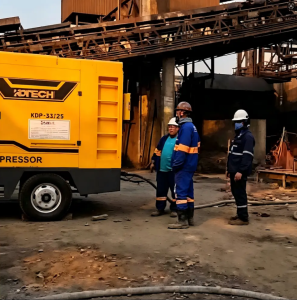
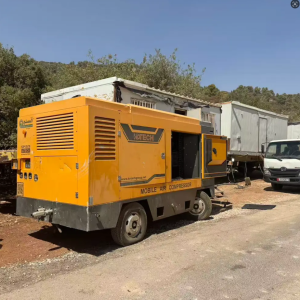
A two- or three-person crew working from a sidewalk, a back alley or a small rooftop rarely has room for a full-size diesel compressor, and mains power is often unavailable or unreliable. A compact gasoline air compressor solves both problems at once: it fits through a standard gate, runs independent of the grid, and still delivers enough air for breakers, nailers, blow guns and small blasting pots. The key is matching the machine to the actual tools rather than buying the largest unit the budget allows.
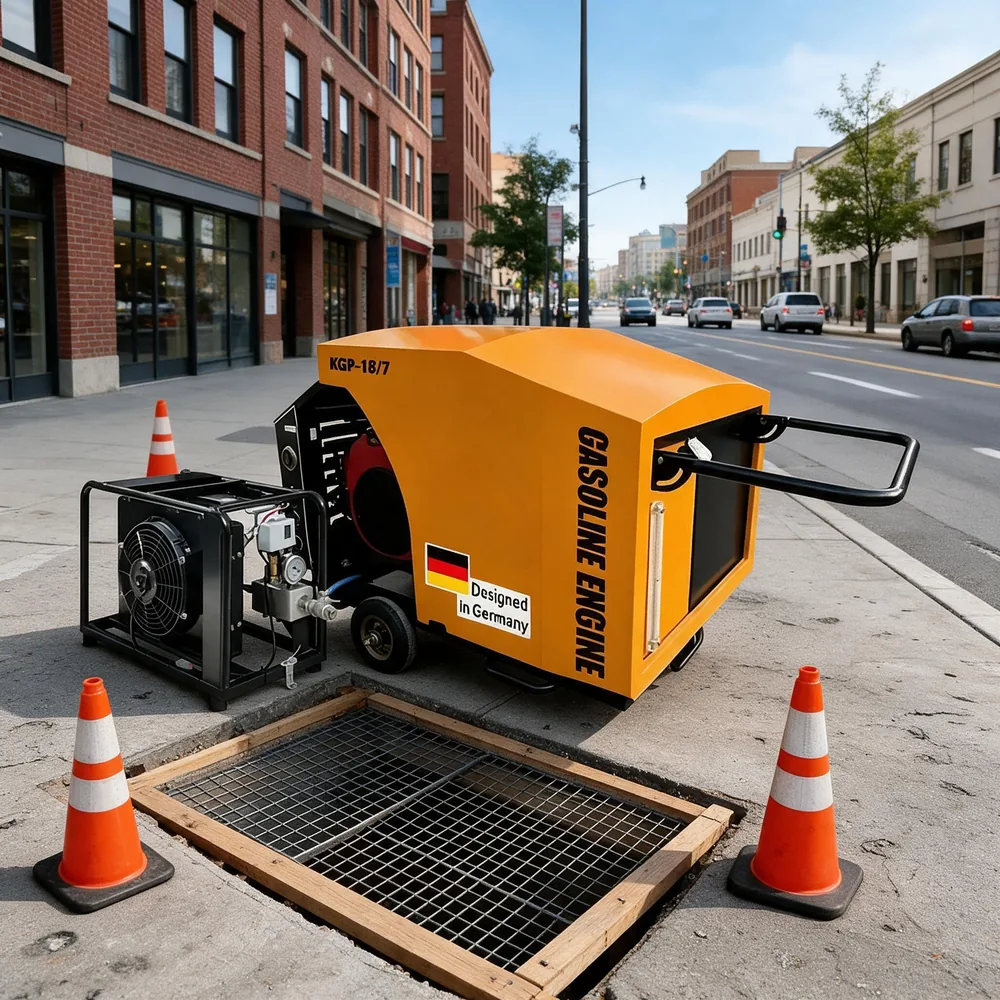
Where a compact gasoline compressor earns its keep
Small crews in city maintenance, fencing, landscaping, facade repair and light demolition share the same constraints: limited vehicle payload, narrow access, no fixed power supply, and a job that may move several times in a single week. Towing a heavy diesel skid into these environments costs time in maneuvering and often requires a larger truck and an extra operator.
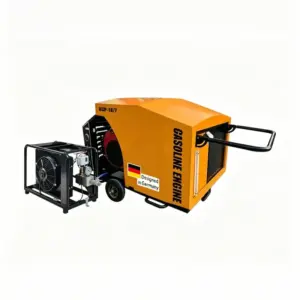
A gasoline portable such as the KGP series is built for exactly this pattern. The lightest units weigh around 200 kg, start with a recoil or key ignition, and can be rolled or lifted into position by the crew already on site. Because the fuel is gasoline, the same cans that feed a generator or a plate compactor can keep the compressor running, which simplifies logistics for small businesses that do not maintain bulk diesel storage.
- Sidewalk and courtyard utility repairs where a truck-mounted unit cannot enter
- Rooftop and mezzanine work reached by hoist or narrow stairwell
- Mobile tyre, fencing and sign crews that relocate several times a day
- Backup air in facilities that cannot tolerate a shutdown of their fixed plant
How to size the compressor for the tools you actually run
Sizing starts with air demand, not with horsepower. List every tool that will run at the same time, add the rated CFM of each, apply the duty cycle, and then add a safety margin of roughly 20 to 30 percent. The working pressure is the second variable: most handheld pneumatic tools are rated near 90 PSI at the tool, which means the compressor outlet should sit a little higher to cover hose and filter losses.
The KGP line covers the practical range for small crews. The KGP-0.9/15 is a high-pressure, lower-flow unit suited to single high-PSI tools and testing work, the KGP-1/10 balances flow and pressure for general breakers and drivers, and the KGP-1.6/7 offers the highest free air delivery for running larger tools or two smaller ones together. Choosing the smallest unit that still clears the peak demand keeps weight, fuel burn and noise down, which matters on noise-sensitive urban sites.
- Add the CFM of tools used simultaneously, then add 20 to 30 percent margin
- Confirm the outlet pressure clears 90 PSI at the tool after hose losses
- Prefer a single larger compressor over two tiny units when tools often run together
- Check hose diameter and length, because undersized hoses quietly steal CFM
Real KOTECH KGP compact gasoline compressor models
Figures are taken from the current KOTECH product-page specification table; only models that exist in the catalogue are listed.
The table reflects live product-page data for the KGP range. Notice that all three units share the same Honda engine class and a similar operating weight, so the real choice is between pressure and flow rather than between radically different machine sizes.
Gasoline versus diesel for the urban crew
Diesel compressors dominate heavy, continuous-duty and remote sites because they tolerate long hours and harsh fuel conditions. On short, intermittent urban jobs the balance shifts toward gasoline. Gasoline engines are quieter, lighter and cheaper at this power level, and they start cleanly in mild weather without the cold-weather fuel management that diesel requires.
That advantage has limits. If the crew runs the compressor for most of an eight- or ten-hour shift, day after day, a diesel unit’s lower specific fuel consumption and longer service intervals usually win on total cost. Gasoline portables are the right answer when mobility, low weight and simple handling matter more than marathon runtime.
- Choose gasoline for intermittent use, tight access and low payload capacity
- Choose diesel for continuous duty, long shifts and harsh remote conditions
- Factor fuel availability on the route, not just the sticker price
Practical setup and maintenance habits
A compact compressor is forgiving, but a few habits protect its reliability on a jobsite where there is no backup machine. Keep the unit level, position it so the cooling air inlet is not facing a wall or exhaust plume, and run it on a mat or board when the ground is dusty to reduce abrasives drawn into the intake.
Drain the receiver and moisture traps at the end of each shift, inspect the air filter more often in demolition dust, and stick to the engine oil and spark-plug intervals in the manual. Because these small units are often loaded quickly into a van, securing the tank and checking for fuel seepage before transport prevents both fire risk and wasted fuel. A short daily inspection takes minutes and avoids a dead compressor in front of a waiting client.
- Drain condensate every shift to protect tools and downstream air quality
- Inspect the intake filter frequently in dusty demolition work
- Secure the unit and check fuel lines before each transport
- Log engine hours so service intervals are never missed
Buying tips
- Measure the narrowest gate, stairwell or elevator the machine must pass before choosing a frame size.
- Buy for peak simultaneous tool demand plus margin, not for the largest single tool alone.
- Confirm the fuel type matches what the crew already carries and can source on the route.
- Check noise limits and operating hours of the municipality, especially for night and weekend work.
- Verify spare-part and service support in the region, since a portable unit only earns money when it is running.
Frequently asked questions
What size compact gasoline air compressor do I need for a jackhammer?
Can a gasoline portable compressor power tools indoors?
How does a gasoline compressor differ from a diesel one for small jobs?
What pressure should a small contractor compressor deliver?
How do I keep a portable gasoline compressor reliable on dusty sites?
If your crew needs a light, grid-independent compressor that fits through tight urban access, compare the KGP models against your tool list and ask for a configuration matched to your CFM and pressure demand.
Related Applied Cases