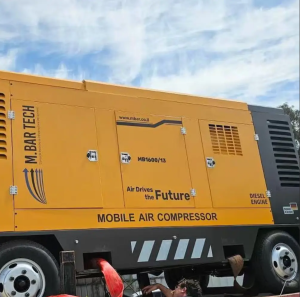
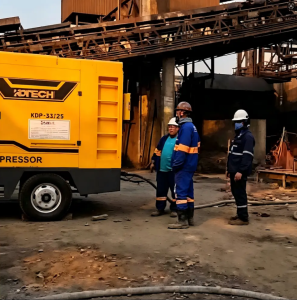
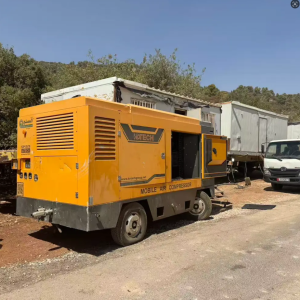
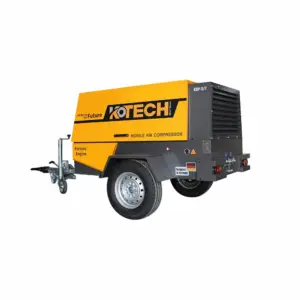
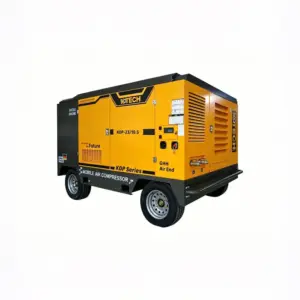
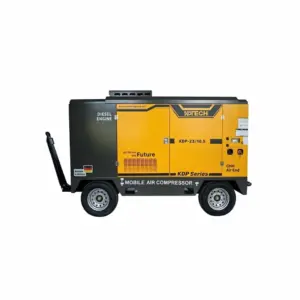
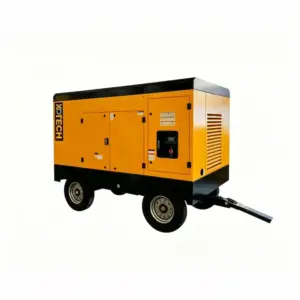
Inside a tunnel or underground heading, the air that powers rock drills, grouting pumps and mucking tools is the same air the crew breathes. A diesel compressor vented into that space adds exhaust heat, particulate and nitrogen oxides to an already difficult ventilation problem, which is why underground construction increasingly specifies a mobile electric air compressor on wheels or skids: it delivers the same continuous drilling air with no engine emissions at the working face. Sizing it correctly means matching compressed-air demand to the equipment train while respecting the site’s electrical supply and the long duty cycles that tunnel work imposes.
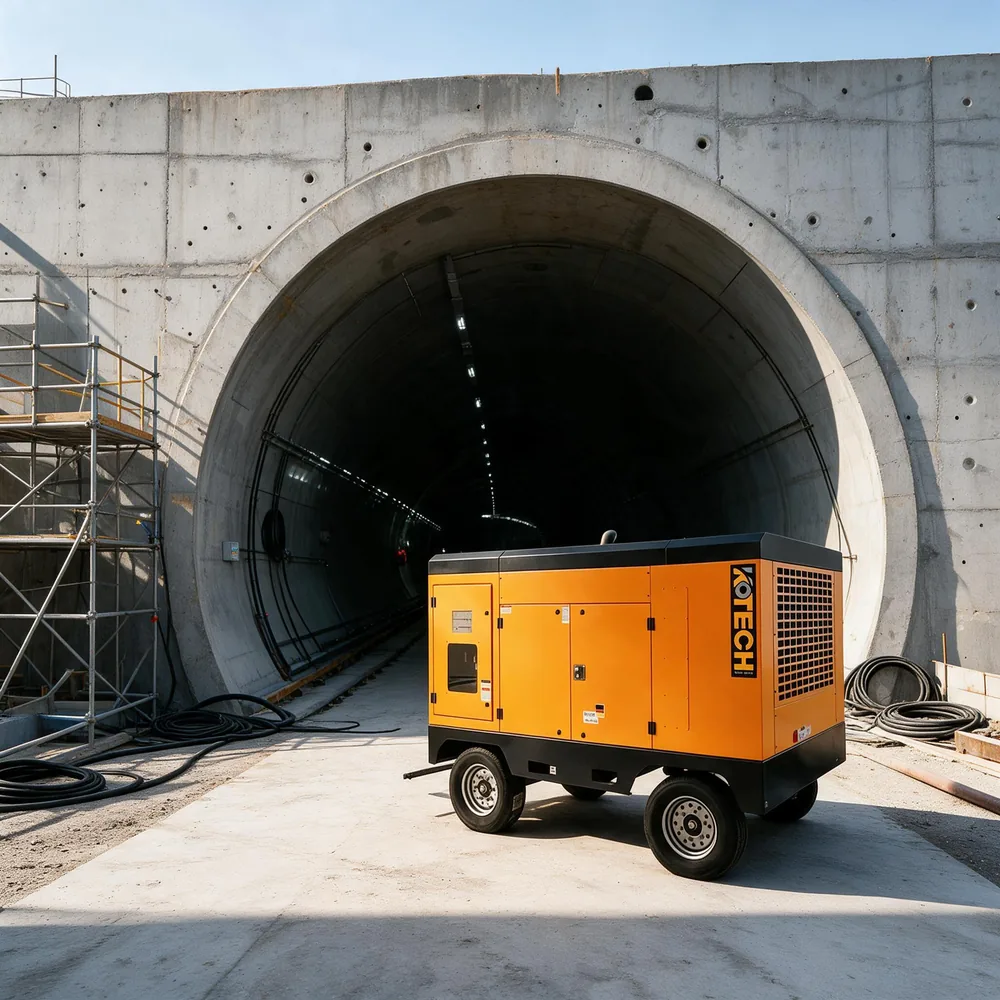
Why underground work favors electric over diesel
The further a heading advances, the harder ventilation becomes. Diluting diesel engine exhaust from mobile plant inside a confined tunnel requires large volumes of fresh air, long ducting and powerful fans, and any lapse in airflow immediately degrades the atmosphere at the face. Removing the compressor’s diesel engine eliminates one of the most consistent emission sources at the work area and reduces both heat load and noise, which improves safety and comfort in a space where crews spend full shifts.
Electric drive also fits the way tunnels are built. Once the site has established power through its transformer and distribution train, an electric compressor draws from that supply with high efficiency and no refuelling runs into the heading. There are no diesel storage and spill risks underground, no engine air filter changes in dusty conditions, and maintenance concentrates on the electric motor and air end rather than a combustion engine. For mines and tunnels where emissions regulations or owner standards restrict diesel equipment, electric compression is often a compliance requirement rather than a preference.
The trade-off is planning. Unlike a diesel unit, an electric compressor depends on available voltage, cable capacity and protection, so the machine has to be selected together with the electrical team rather than simply towed to the face. The KEP mobile electric range is built for this duty, with enclosed frames on wheels, direct-driven screw air ends and oil content held to 5 ppm or below in the output air.
- No engine exhaust, heat or fuel handling inside the confined heading
- Draws from the site’s established electrical supply with high efficiency
- Lower maintenance than a combustion-driven portable in dusty tunnels
- Often required by underground emissions and ventilation standards
Sizing continuous air for the drilling and grouting train
Tunnel air demand is built from the equipment that runs simultaneously. A typical face may run several rock drills or a jumbo, together with blow lances, grouting or shotcrete equipment and small pneumatic tools during the mucking cycle. Sum the rated air consumption of the machines genuinely operated together, apply their duty factors, and add a margin for leakage in long hose and pipe runs, which grows with the distance from the compressor to the face.
Pressure is the second dimension. Drilling and percussion tools need stable pressure at the tool, and every metre of pipe, every bend and every coupling costs pressure, so the compressor outlet must sit high enough to preserve the required tool pressure at the furthest heading. As the tunnel advances, the network lengthens and the effective pressure at the face drifts down, which makes a slightly higher-pressure frame a sensible choice on long drives.
The KEP frames map cleanly to progressive tunnel sizes. The KEP-6/8 supplies 6.2 m³/min at 8 bar from a 37 kW motor for small headings and maintenance work, the KEP-10/8 provides 10.2 m³/min at 55 kW for a single drill train, the KEP-13/8 reaches 13 m³/min at 75 kW for a busier face, and the KEP-16/10 delivers 16 m³/min at 10 bar with a 110 kW motor for longer runs where pipe losses and simultaneous tools demand more pressure and volume. Where a heading specifically calls for higher pressure, the KEP-13/13 offers the same 13 m³/min at 13 bar from a 90 kW motor.
- Sum simultaneous tool consumption and apply realistic duty factors
- Add margin for leakage and pressure drop over the lengthening pipe run
- Favor a higher-pressure frame on long drives to protect tool pressure at the face
- Confirm the frame’s motor power against the site’s transformer and cable capacity
Real KOTECH KEP mobile electric compressor models
Live product-page data for the wheeled electric frames used in tunnel and underground air supply.
The table uses live product-page fields. Note that KEP frames share a compact enclosed mobile package while spanning 37 to 110 kW, so a contractor can standardize service and transport across several tunnel phases.
Electrical and ventilation planning
Selecting the compressor is inseparable from designing the electrical supply. Confirm the available voltage and phase at the planned location, verify that the transformer, switchgear and trailing cable can carry the motor’s starting and running current, and coordinate starting method — the KEP range uses star-delta starting to limit inrush — with the site’s other large loads. Under-voltage on a long cable run causes overheating and nuisance trips, so cable cross-section and protection settings deserve the same attention as the air calculation.
Ventilation planning does not stop because the compressor is electric. The main ducting still has to clear dust, blasting fumes and emissions from remaining diesel plant, and the compressor itself needs clean, cool intake air with adequate clearance around its cooler. Siting the unit in a dedicated alcove or near the portal with insulated, properly sized main piping keeps heat and noise away from the face while limiting pressure loss, and a receiver near the work area smooths the pulsed demand of percussive tools.
- Verify voltage, phase, cable capacity and starting current with the electrical team
- Provide clean cool intake air and clearance around the cooler
- Use a receiver near the face to smooth pulsed drilling demand
- Keep the primary ventilation ducting sized for dust and remaining diesel plant
Reliability and maintenance underground
Underground downtime is expensive: a failed compressor stops the drill train and idles an entire crew, so reliability and service access carry real weight. Enclosed mobile frames protect the air end and motor from falling debris and standing water, while large doors allow filter and oil changes in cramped locations. Because electric units have no engine fuel, coolant or exhaust system, the routine maintenance burden is smaller and the failure points that remain — intake filters, oil separator, contactors and motor bearings — are straightforward to inspect on a schedule.
Dust and moisture are the persistent enemies. Inspect intake filters frequently in a heading environment, drain condensate points along the pipe network, and monitor the compressed-air oil content, which the KEP design holds at or below 5 ppm, to protect both tools and the working atmosphere. Logging running hours and keeping critical spares on the surface means a service stop is measured in minutes rather than an emergency parts delivery into an active tunnel.
- Enclosed frames protect the air end and motor from debris and water
- Electric drive removes engine-related failure points and servicing
- Change intake filters on a short interval and drain network condensate
- Hold critical spares on the surface to keep service stops short
Buying tips
- Build air demand from the tools that run together at the face, including duty factors and leakage margin.
- Choose outlet pressure with the future, longest pipe run in mind, not only the first week’s short heading.
- Validate voltage, transformer capacity, cable sizing and star-delta starting with the electrical team before purchase.
- Prefer enclosed mobile frames with easy service access for cramped underground locations.
- Plan intake air quality, receiver placement and condensate drainage as part of the tunnel services design.
Frequently asked questions
Can an electric air compressor really replace a diesel one in a tunnel?
What CFM or m³/min does a tunnel compressor need?
Why does pressure at the face drop as the tunnel gets longer?
Is the air from a KEP compressor clean enough for underground use?
What maintenance matters most underground?
If you are planning fume-free compressed air for a tunnel or underground project, share your drill list, heading length and electrical supply so a KEP mobile electric configuration can be matched to the duty.
Related Applied Cases