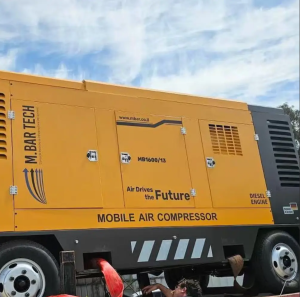
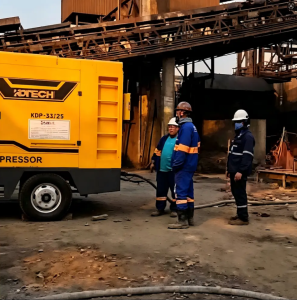
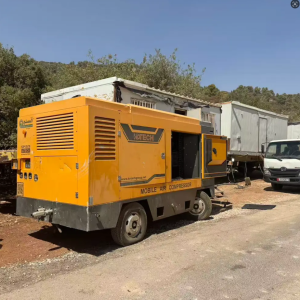
Factories built in mining regions, new industrial parks and remote processing sites often face a grid that is weak, unstable or simply not yet connected. When production depends on continuous compressed air for conveying, controls, cooling and process tools, relying on that grid is a direct risk to output. A skid mounted diesel compressor provides an independent plant-air source that starts on demand, runs through outages and can be relocated as the site develops. Treated as a fixed asset rather than a temporary rental, it becomes a dependable backbone for operations in places where electricity cannot be trusted.
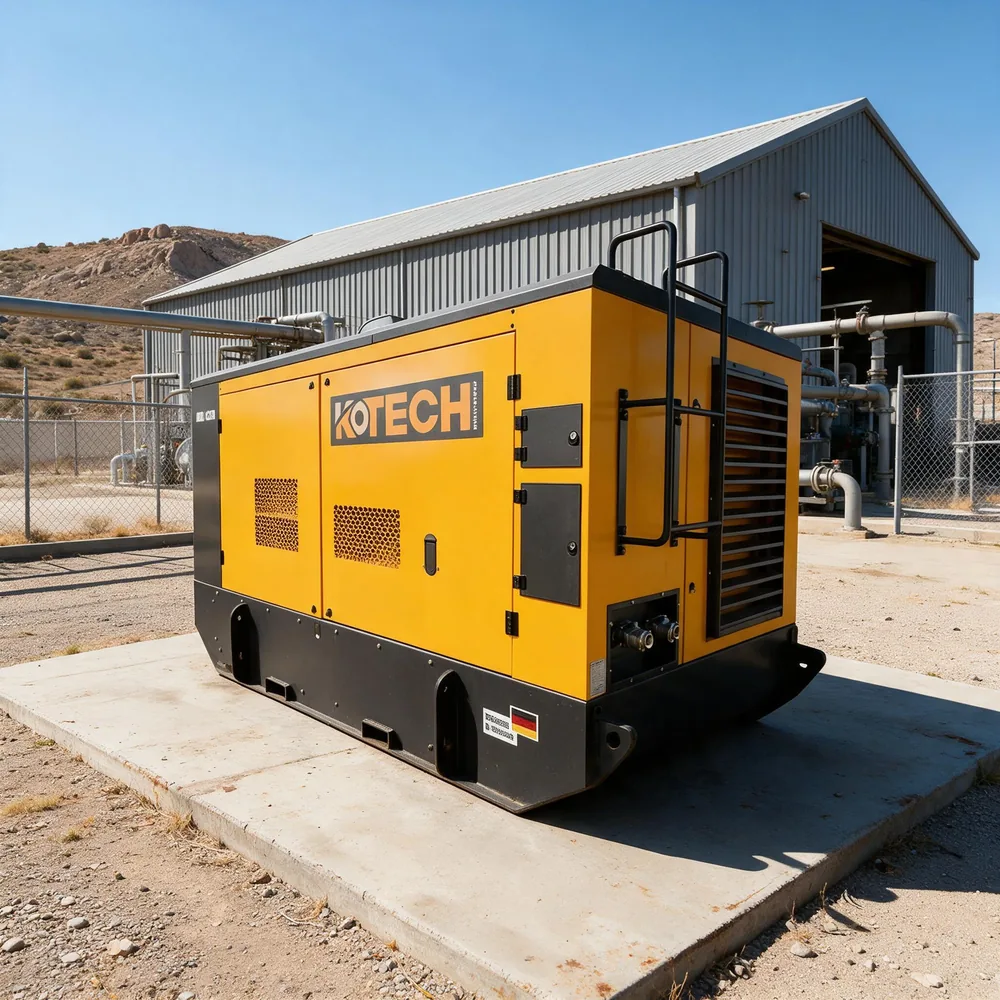
Why weak-grid factories choose diesel-driven plant air
Electric screw compressors are efficient where power is reliable, but they inherit every fault of the supply behind them. Voltage sags stall motors and corrupt controller settings, frequent blackouts stop production lines abruptly, and in many developing industrial zones the available capacity is simply insufficient to add a large electric compressor. Each interruption idles labour, wastes work in progress and can damage sensitive pneumatic processes.
A skid-mounted diesel compressor decouples plant air from the grid. It generates its own power from fuel that can be stored on site, delivers steady output regardless of external voltage, and keeps critical air users running during cuts. Because the machine is mounted on a rigid steel skid rather than a road trailer, it is installed as semi-permanent equipment on a concrete pad, piped into the plant ring main, and protected from the vibration and weather exposure that shorten the life of a mobile unit used as a stopgap.
- Continues production through grid outages and voltage instability
- Avoids costly transformer or supply-capacity upgrades in new zones
- Skid base allows fixed piping, sheltering and vibration isolation
- Relocatable if the factory expands or moves to a permanent supply
Sizing a skid compressor for continuous factory duty
Plant-air sizing differs from mobile tool sizing because the demand is steadier and the running hours are far higher. Begin with an air audit: list every fixed consumer, from air slides and pneumatic conveyors to control valves, actuators and cleaning stations, sum their average rather than peak consumption, and apply a realistic diversity factor because not every device runs at once. Add a growth margin of around 20 to 30 percent so the compressor is not forced to run fully loaded from day one.
The larger KDS frames are built for this continuous-duty role, with diesel engines from roughly 400 to over 600 kW and free air delivery that can feed a sizeable ring main. Pressure is selected to the highest process requirement plus the drop across dryers, filters and piping; most fixed plant sits in the 7 to 10 bar band, while the 25 bar and higher frames serve specialist process and test duties. Matching the frame to audited demand rather than to a single largest consumer keeps the engine in its efficient load range and avoids wet-stacking from chronic under-loading.
- Audit all fixed air users and apply a diversity factor before sizing
- Allow 20 to 30 percent headroom for production growth
- Set pressure to the highest process need plus treatment and pipe losses
- Avoid gross oversizing, because lightly loaded diesel engines carbon up
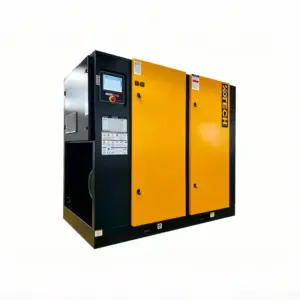
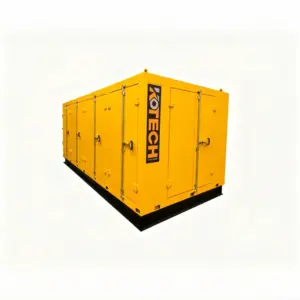
Real KOTECH KDS heavy skid-mounted diesel compressor frames
Live product-page data for high-output skid frames suited to continuous fixed plant-air duty.
These are current product-page figures for representative heavy KDS frames. The spread of pressures and flows shows why the series can be matched to both general plant-air rings and higher-pressure process duties rather than forcing one machine onto every application.
Installation, fuel and operating considerations
A skid compressor wants a level, drained pad with room for service access on all sides and clean intake air. Duct the exhaust safely away, provide weather shelter without enclosing the cooling airflow, and pipe the outlet through flexible connectors before joining the steel ring main so engine vibration does not transfer into the plant network. A downstream receiver, dryer and filters protect the process even though the compressor itself is diesel driven.
Fuel logistics are the main operating discipline. Size storage for at least several days of full-load burn, use filtered, water-separated fuel and rotate stock to avoid microbial growth in long-stored diesel. In continuous-duty plants, arranging scheduled top-ups and keeping a secondary supplier prevents the single most common off-grid failure, which is running dry. Monitoring engine hours and exhaust temperature also gives early warning of load or injection problems before they become shutdowns.
- Mount on a level drained pad with all-side service clearance
- Isolate vibration with flexible connectors before the ring main
- Keep several days of filtered fuel and rotate stored diesel
- Add a receiver, dryer and filters to protect downstream processes
When to move from diesel back to electric
Diesel-driven plant air is an excellent hedge against an unreliable grid, but it is not necessarily the cheapest energy source once supply improves. As the local grid is strengthened or a dedicated feeder and transformer become available, plants often re-evaluate electric compressors for their lower energy and maintenance cost per cubic metre. The sensible transition is usually gradual: keep the skid diesel unit as a standby and peak-shaving machine, and install electric screw compressors to carry the base load.
Because the KDS skid is relocatable and retains its value, it can then serve a second site, a temporary expansion or an emergency-role contract rather than becoming stranded. Planning the installation with standard pipe interfaces and adequate pad space from the start makes this later hybrid arrangement straightforward, so the original purchase supports both the off-grid years and the electrified future.
- Reassess electric drive once grid capacity and reliability improve
- Retain the diesel skid as standby and peak-shaving capacity
- Use standard pipe interfaces so electric units can be added later
- Treat the relocatable skid as an asset that moves with the business
Buying tips
- Run an air audit across all fixed consumers and apply diversity before selecting a frame.
- Choose pressure for the highest process need plus dryer, filter and piping losses.
- Verify the pad, exhaust routing and cooling clearance meet the installation manual.
- Plan fuel storage and a reliable supply contract for multi-day continuous running.
- Keep enough headroom for growth but avoid oversizing that leaves the engine under-loaded.
Frequently asked questions
Can a skid mounted diesel compressor replace a factory’s electric compressor?
What size diesel skid compressor does a factory need?
What pressure should off-grid plant air be set to?
How do you maintain a diesel skid compressor running continuous duty?
Is diesel plant air still a good choice after the grid improves?
If your factory operates on a weak or unconnected grid and needs dependable independent plant air, share your air audit and process pressures so the right KDS skid frame and installation layout can be specified.
Related Applied Cases