Key Takeaways
Buying an industrial air compressor is a big decision. Get it right, and you’ve got a reliable workhorse that keeps production moving for years. Get it wrong, and you’re looking at spiralling power bills, slower throughput, repeated breakdowns, and expensive unplanned downtime.
Too many buyers focus on the price tag first. That’s a mistake. The upfront cost is just the beginning. Industry data shows electricity accounts for roughly 75% of a compressor’s total running costs over a decade. A slightly more expensive, energy-efficient unit almost always beats a cheap, inefficient model that keeps eating into your budget year after year.
This guide cuts through the sales pitch. It covers five practical questions every plant manager should ask before buying a compressor. Nothing too technical—just clear, decision-focused checks to help you avoid costly mistakes and get a machine that actually fits your operation.
A Real Story: When the Sticker Price Wasn’t the Real Cost
A few years back, we got a call from a plant manager in Vietnam. He was frustrated. He’d just bought a new 100 kW compressor, trusting the supplier’s promise that it would power his entire plant.
It couldn’t. The machine couldn’t run his paint booth and assembly line at the same time.
When we asked about his plant’s actual airflow demand, he didn’t have an answer. He’d just picked a 100 kW model to match his old compressor, assuming a straight swap would work.
Here’s the thing—his old compressor had been oversized from day one. For five years, he’d been paying to run a 100 kW unit when his plant only needed 75 kW. Thousands of dollars wasted on electricity, plus a new compressor that couldn’t even do the job.
Question 1: What Do I Actually Need? (CFM, Pressure, and Duty Cycle)
This is where most buyers go wrong. Before you look at any models, get clear on three numbers:
Airflow (CFM): This is the total air your tools consume. Your new compressor’s CFM rating must exceed the combined demand of all tools running at the same time. Add up the nameplate ratings, then add a 15–25% buffer. That extra margin covers leaks and future expansion.
Pressure (PSI/bar): This is the force behind the air. Your compressor needs to meet or exceed the highest pressure requirement of any tool on site. But don’t go overboard—every extra 1 bar of pressure pushes energy consumption up by 6–8%.
Duty Cycle: How often will the compressor run? For intermittent work, a piston compressor might do. For 24/7 industrial production, you need a rotary screw compressor built for 100% duty cycle.
Common mistake: Don’t size by horsepower (HP). HP is a motor rating, not an air delivery rating. A 100 HP compressor from one brand might deliver completely different CFM than a 100 HP unit from another.
Question 2: Fixed Speed or Variable Speed Drive (VSD)?
This one decision will impact your electricity bills for the next decade.
Fixed-speed compressors run at full capacity whenever they’re on. They’re cheaper upfront, simpler, and work well if your air demand is steady. But if your production fluctuates, they waste a lot of energy during low-demand periods.
VSD compressors adjust motor speed to match real-time demand. They cut idle-load energy waste by 32% to 40%. For factories with fluctuating air needs, the extra upfront cost typically pays for itself in 2–3 years.
Rule of thumb: Go VSD if your daily air demand swings by 20–25% or more. Stick with fixed-speed only if you run at full load 24/7 with no major variations.
Question 3: Oil-Injected or Oil-Free?
Your air quality requirements will decide this one.
Oil-injected compressors use oil for cooling, sealing, and lubrication. They’re efficient, cost-effective, and the industry standard for most general applications. With proper filtration, they can achieve high purity levels, but they can’t deliver 100% oil-free air.
Oil-free compressors keep oil out of the compression chamber entirely. They deliver 100% pure air and are mandatory for:
- Food and beverage processing
- Pharmaceutical manufacturing
- Electronics production
- Medical air systems
The trade-off: Oil-free units cost more upfront and often need more maintenance. But when absolute purity is critical, there’s no alternative.
Question 4: Is It the Right Size for My Facility and Environment?
Specs on paper don’t always match real-world conditions.
Altitude: Air gets thinner at higher elevations. A compressor delivering 150 CFM at sea level might drop to 140 CFM at 1,500 meters. Account for this if your facility is at altitude.
Temperature: Hot air is less dense. A compressor sized for a cool climate may struggle in a hot factory. Cold climates need reliable cold-start capability and temperature-adapted lubricants.
Location: Where you put the compressor matters. Place it in a clean, well-ventilated area with cool intake air. Every 3°C drop in intake temperature saves about 1% in energy. A poor location with hot, dusty air forces the unit to work harder and shortens its life.
Bottom line: Size for your actual site conditions, not brochure specs.
Question 5: What’s the Total Cost of Ownership?
Smart buyers look beyond the sticker price. The upfront cost is only 15–20% of a compressor’s 10-year total spend.
Electricity (70–80% of the cost): This is where the real money goes. Spending a bit more on an efficient VSD or two-stage compressor pays off massively over time.
Maintenance: Oil, filters, and service labour add up. Compare maintenance intervals and costs between models.
Downtime: When the compressor fails, production stops. A reliable unit with fast local support costs more upfront but saves money in the long run.
Example: A two-stage compressor costs about 15–20% more than a single-stage model but cuts energy use by the same margin. For a 160 kW unit running 4,000 hours a year, that’s roughly $18,400 in annual electricity savings. Payback period: 10 to 18 months.
How KOTECH Helps You Get It Right
At KOTECH, we base our selection process on real data, not guesswork. We look at your actual site demand and working conditions to find the right match.
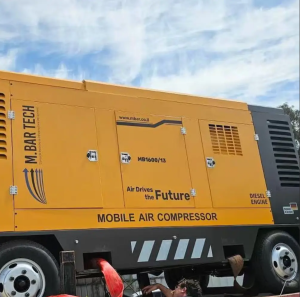
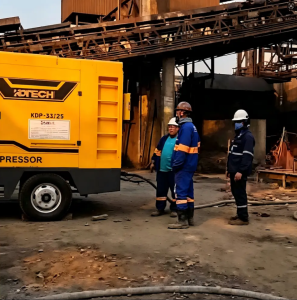
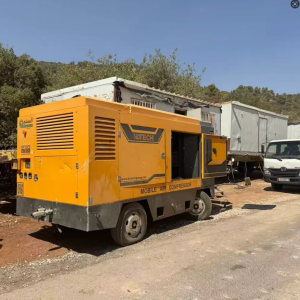
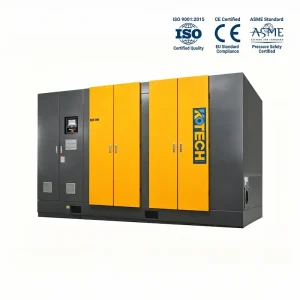
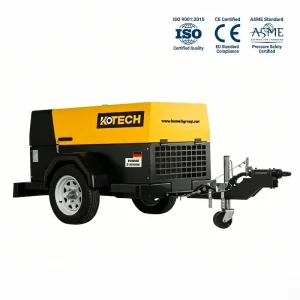
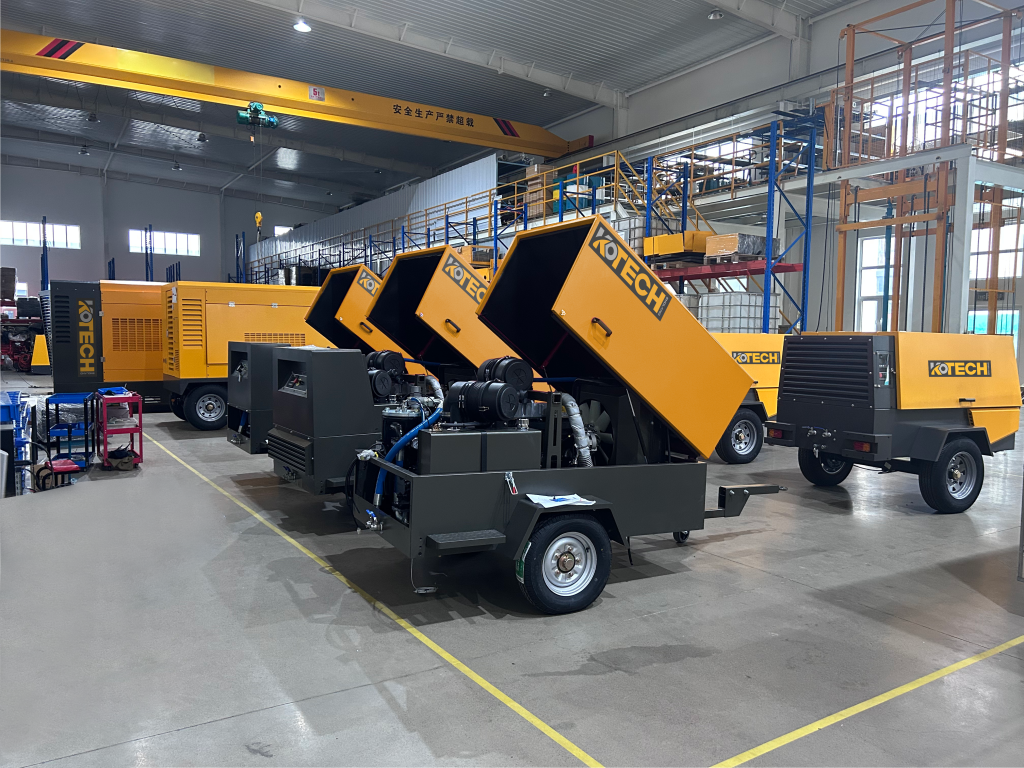
- KDP Series diesel portables: 185–1600 CFM, 7–35 bar, for sandblasting, drilling, rock breaking, and pipeline work
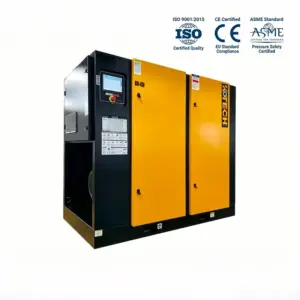
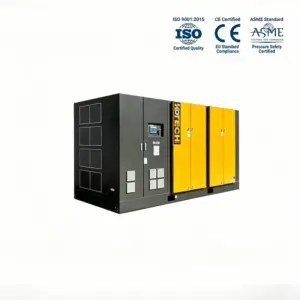
- KOE-II two-stage compressors: Up to 20% better energy efficiency than single-stage models
- Oil-free series: KDOF dry screw and KWI water-lubricated models for purity-critical applications
All KOTECH compressors use Siemens core components, draw on British engineering expertise, and are backed by a global service network. Our average on-site resolution time is 4 hours—34% faster than the industry average.
We help you answer these five questions with real site data, removing the guesswork. The result is a compressor that fits your operation, not just your budget.
Conclusion
Buying an industrial compressor is too important to guess at. The price tag is only the start. Electricity, maintenance, and downtime will affect your bottom line for years.
Ask the right questions first:
- What CFM, PSI, and duty cycle do I actually need?
- Fixed-speed or VSD?
- Oil-injected or oil-free?
- Is it sized for my site and environment?
- Am I looking at total cost of ownership?
Get these answers right, and you’ll have reliable, cost-effective performance for years. Cut corners, and you’ll pay for it every month.
Frequently Asked Questions
Q1: What’s the most common mistake buyers make?
Sizing by horsepower instead of CFM and PSI. HP is a motor rating, not an air delivery rating. Always base your choice on actual airflow and pressure needs.
Q2: How do I know if my compressor is oversized?
If it idles unloaded for more than 20% of runtime, or if system pressure consistently exceeds production needs, it’s likely oversized. This wastes energy and accelerates wear.
Q3: What’s the payback period for a VSD compressor?
For facilities with fluctuating demand, VSD units typically pay for themselves within 2 to 3 years through energy savings.
Q4: How much energy can a two-stage compressor save?
Two-stage models reduce specific energy consumption by 15% to 20% compared to single-stage units.
Q5: How do I know if I need an oil-free compressor?
Choose oil-free if compressed air contacts your product—food processing, pharmaceuticals, electronics, or medical systems. For general industrial use, oil-injected is usually sufficient and more cost-effective.
Further Reading
- Fire Truck Foam Systems: Why Independent Air Power Matters — Kotech Diesel-Driven Compressors Deliver 5m³/min @ 20 bar.
- Oil Refineries, Chemical Plants, Ports, and Industrial Sites — Kotech's Diesel Air Compressor Powers Foam Systems Where It Matters Most.
- Pure Air, Zero Risk: KOTECH Oil-Free Compressors for Airports.
- Single-Stage or Two-Stage? Kotech Compressor Delivers 80–88% Efficiency for Demanding Industrial Applications
- Cpmpressor selection – Why Does Two-Stage
- Could a Drop of Oil Ground Your Entire Fleet? KOTECH Oil-Free Compressors Keep Airport Operations Safe.
- Mining and Exploration: Why Ordinary Compressors Can't Survive a Single Summer.
- Pure Air, On Demand: KOTECH Oil-Free Compressors Keep Airports Operating Without Interruption.
Related Applied Cases