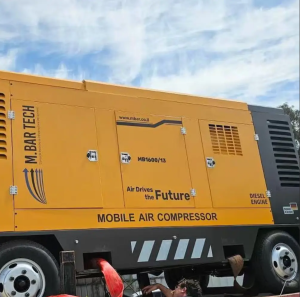
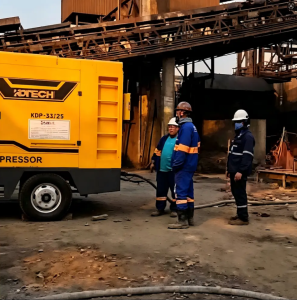
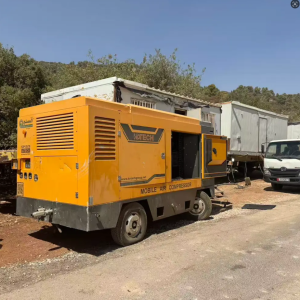
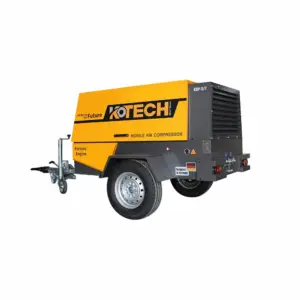
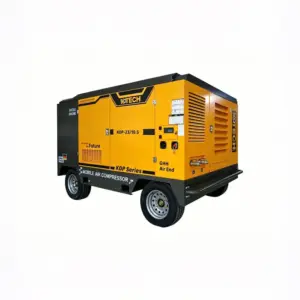
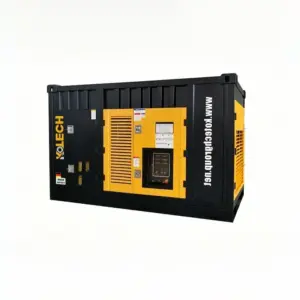
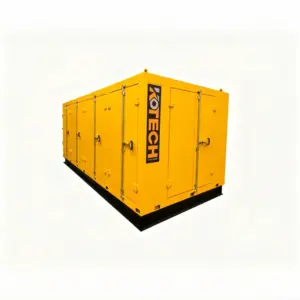
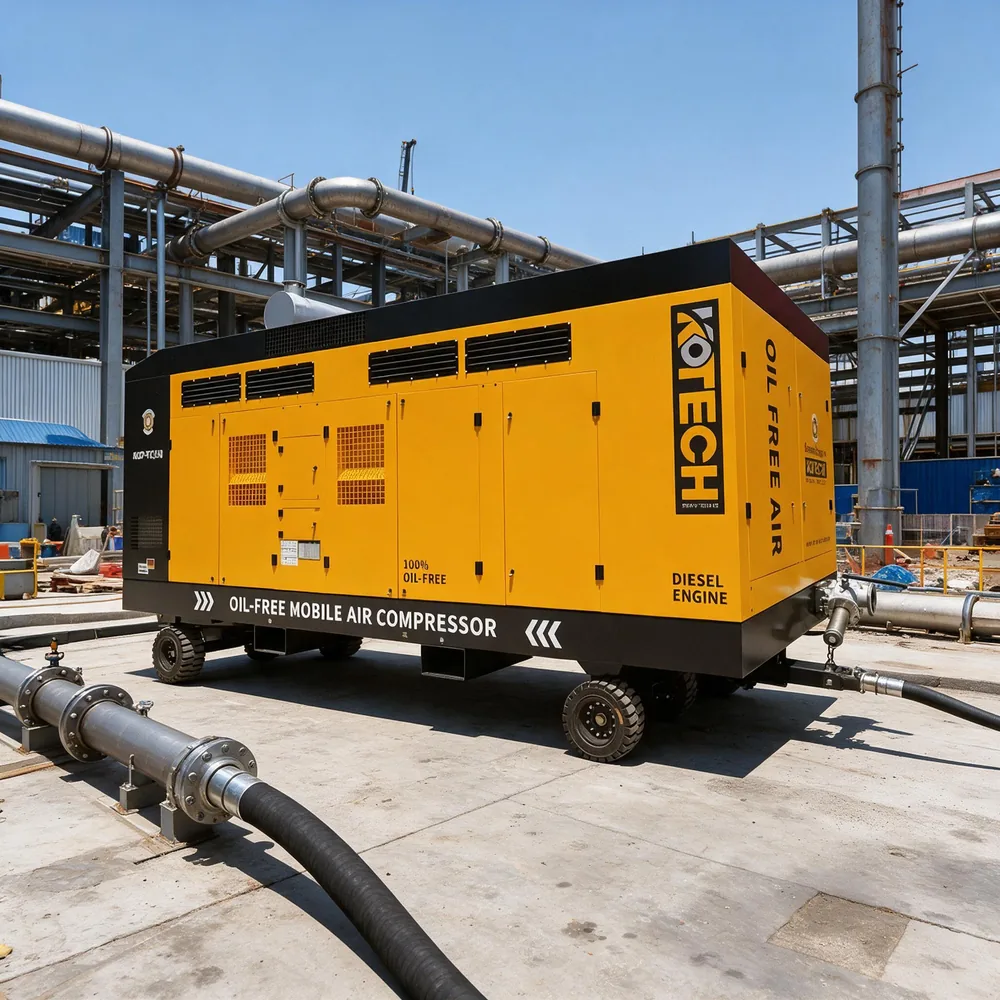
Before a newly welded process line ever sees product, it has to be proven clean, dry and tight. Construction teams blow construction debris and weld slag out at high velocity, hold a pneumatic pressure test, and then dry the line so corrosion cannot start under insulation. The air source for all three steps has to deliver large flow on an uncommissioned site — often before permanent power exists — and it must not introduce contamination that the plant will spend weeks cleaning out. An oil-free portable diesel compressor is the standard answer, and sizing it correctly is what separates a one-day blow from a repeated test failure. This guide explains the air demand behind each step and where the KOTECH KOP oil-free portable range fits the job.
Why new process piping needs three different air jobs
A freshly erected pipe run is not an empty, clean tube. It contains weld spatter, cutting swarf, mill scale left from manufacture, temporary-protection debris and dust that entered through open ends. Leaving any of it in service is a direct route to damaged control valves, blocked instrument tappings, scored pump seals and scrapped filter elements once the plant starts. Purging with a high-velocity airstream is the cheapest and most effective way to carry this material out before the line is closed, and most project specifications call for a target exit velocity far above normal process velocity to keep solids suspended until they leave the open end.
After the mechanical clean comes proving the line. Depending on the code and the service, contractors perform a strength or leak test — pneumatic where hydrostatic testing is impractical, such as large lines that cannot support water weight or systems that must be returned dry — followed by a drying pass when moisture would be unacceptable. These three steps want subtly different things from the compressor: purging wants flow, testing wants stable pressure with clean, dry air, and drying wants a long, continuous run at controlled dew point. One correctly specified oil-free portable machine commonly covers all three.
- High-velocity purge: removes weld slag, scale and construction debris before valves and instruments are connected.
- Pneumatic test: holds a stable, regulated pressure on the isolated section per the test procedure.
- Drying: sweeps moisture out after any wet activity so no corrosion starts under insulation.
- All three happen at construction stage, when permanent electrical and instrument air systems are usually not yet available.
Why the compressor must be oil-free
An oil-lubricated compressor can be fitted with filtration, but on a construction purge that is a fragile guarantee. Coalescing filters have a finite loading capacity, their performance depends on correct draining, and a single saturated element can pass an oil aerosol into a line that is about to enter hydrocarbon, chemical, food or oxygen service. Oil films plated onto the interior of process piping are extraordinarily difficult to remove once deposited, and in oxygen-enriched or strong-oxidizer service hydrocarbon contamination is not a quality issue but an ignition hazard. Starting with an oil-free compression chamber removes the contaminant at source rather than hoping downstream filters catch it on a dirty construction site.
KOTECH KOP portable compressors compress the air without oil in the compression path, so the purge and test air carries no lubricant carryover into the pipe. The air is still filtered and, for drying duty, routed through after-cooling and drying equipment to reach the required dew point, but the operator never has to explain an oil-contaminated line to the process licensor. This is the same reason oil-free air is demanded for pipeline pre-commissioning in refinery, chemical and gas-plant construction.
Real KOTECH KOP oil-free portable compressor specifications
Current factory figures from the KOTECH product page; CFM and PSI are the matched ratings of each model.
CFM falls as discharge pressure rises, so read the row nearest the actual regulated test pressure rather than taking the maximum flow and maximum pressure together. A pressure regulator and receiver tank downstream of the compressor keep the test pressure steady instead of pulsing with the load/unload cycle.
How to size flow for the purge, not the test
The pneumatic test sets the pressure rating of the machine, but the purge almost always sets its flow rating — a line under test at pressure contains a great deal of stored air, while reaching cleaning velocity at near-atmospheric exit pressure needs continuous volume. The calculation starts from the pipe internal diameter and the purge velocity specified in the project procedure: required free-air delivery is the pipe cross-sectional area multiplied by the target velocity, corrected for the modest pressure at the open blow-off end. Large-diameter thin-wall piping therefore needs surprisingly big compressors even though the test pressure itself is low, which catches teams who size only from the test pressure.
Practical planning matters as much as arithmetic. Blow the line in sections through open ends rather than across one enormous run, so velocity stays high and debris has somewhere to exit; isolate or remove sensitive control valves and instruments; vent through a barricaded, aimed discharge; and keep the compressor upwind so nothing blows back into the intake. For drying, run continuously until the measured exit dew point stabilises at the target, because short cycling leaves standing moisture in low points.
- Size CFM from pipe diameter x required purge velocity; size pressure rating from the test procedure.
- Purge in sections with aimed, barricaded open discharges, never through connected instruments.
- Use a regulator and receiver to hold test pressure steadily during the soak period.
- Dry continuously to a measured exit dew point rather than for a fixed clock time.
Diesel power on an uncommissioned site
Pre-commissioning air work is frequently scheduled before the substation is energised, and the test header may run hundreds of metres from the nearest temporary supply. A self-contained diesel unit with its own fuel tank and towable running gear removes the dependency on site power and can be repositioned as the blow moves from one pipe rack to the next. KOP frames pair the oil-free airend with Cummins diesel drives sized for continuous run, and the enclosed, sound-attenuated canopy keeps the machine acceptable inside an active construction area. Planning the fuel and exhaust position ahead of the purge, and parking the unit on level ground with the intake in clean air, keeps a multi-hour drying run uninterrupted.
Buying tips
- Demand oil-free compression at source for process piping; do not rely solely on filters on an oil-lubricated rental unit.
- Size from purge velocity against pipe diameter first, then confirm the frame reaches the pneumatic test pressure.
- Choose a self-contained diesel unit if permanent site power is not yet available at the test header.
- Plan after-cooling and a dryer on drying duty, with continuous run to a measured exit dew point.
- Confirm the unit can sustain the full purge CFM at the regulated pressure you will actually run — flow and pressure are linked.
Frequently asked questions
Can I use a normal oil-lubricated portable compressor to blow out process piping?
What pressure is needed to pneumatically test process piping?
How big a compressor does pipe purging need?
Why is a diesel compressor used instead of an electric one on new plant construction?
Do I need a dryer for pneumatic testing and purging?
Should the purge go through the installed control valves?
Send us your pipe diameters, total run lengths, specified purge velocity and pneumatic test pressure, and our engineers will size the right KOTECH KOP oil-free portable diesel compressor — or a multiple-unit arrangement — for your pre-commissioning sequence.
Related Applied Cases