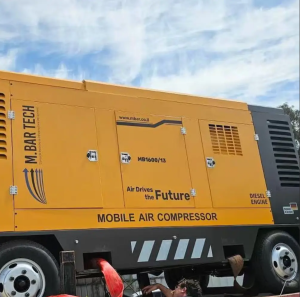
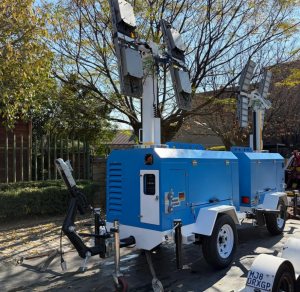
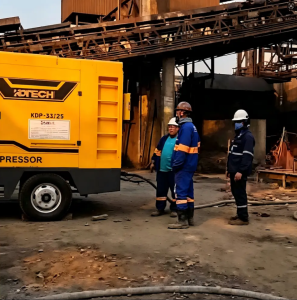
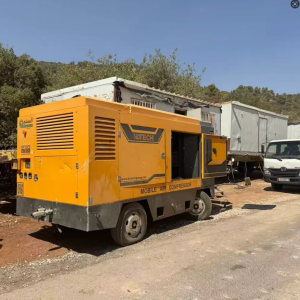
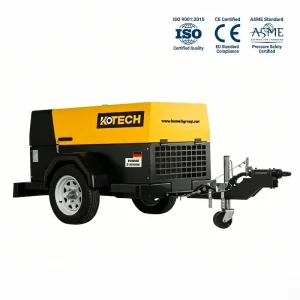
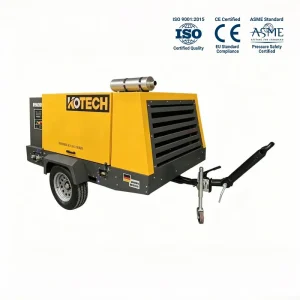
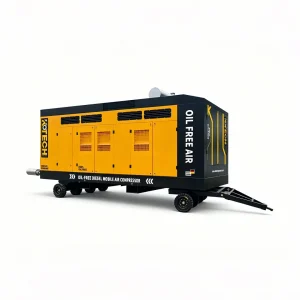
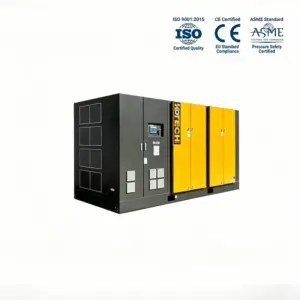
Anyone who’s spent time out on a jobsite knows the biggest headache crews deal with is gear conking out halfway through a shift. That’s exactly why we built KOTECH diesel portable air compressors: to hold steady whenever your project simply can’t afford costly delays.
Key Takeaways
- Pipeline and construction jobs almost never sit right next to a handy power outlet. Crews often work deep in isolated deserts, along winding mountain ridgelines, across rural farmlands, or smack in the middle of busy city road junctions. Out in these tough spots, reliable compressed air isn’t just a nice bonus — it’s what keeps every part of your job running smoothly. When there’s no municipal power grid to tap into, diesel portable compressors quickly become your most practical, down-to-earth solution.
- But the real challenge goes far beyond just having compressed air available. Remote worksites beat equipment relentlessly: sweltering heat, thick dust hanging in the air, back-to-back long shifts, plus constant packing, hauling, and relocating machinery. Standard electric compressors simply can’t reach these off-grid locations. As for no-name generic diesel units? More often than not, they start acting up once ambient temperatures hit 50°C, or whenever you end up using inconsistent-quality fuel sourced locally on site.
- We designed the KOTECH KDP Series diesel portable compressors specifically to stand up to these brutal real-world jobsite conditions. This product line delivers working pressures from 7 to 35 bar and airflow ranging from 185 to 1600 CFM, covering every task you might encounter — from small handheld pneumatic construction tools all the way to heavy-duty pipeline internal cleaning and deep drilling work. These machines have been tried and tested in field environments up to 50°C, and our on-site technical support team is always ready to step in whenever trouble crops up. It’s no wonder project managers running remote worksites keep coming back to KOTECH to avoid expensive equipment breakdowns.
Why Remote Projects Depend on Portable Diesel Compressors
Pipeline and construction work share one common trait: they’re always on the move. A single pipeline route can stretch hundreds of miles, while construction sites regularly shift work zones as each project phase wraps up. In both cases, your power source has to be just as mobile as your field crew.
Off-Grid Independence
The biggest advantage of these diesel portable compressors is their fully self-contained design. You won’t need to run miles of extension cords, connect to the local power grid, or set up separate standalone generator units. Simply fill up the fuel tank, fire up the engine, and you can get straight to work. This total freedom from grid power lets you kick off jobs much faster and cuts down on countless logistical headaches.
For pipeline crews, that means you can start working the moment your team arrives at a new stretch of pipeline route. For urban construction projects, you skip all the scheduling delays and extra fees that come with applying for and installing temporary power hookups.
Built for Tough Conditions
Remote jobsites never go easy on machinery. Blistering heat, choking dust, nonstop vibration, and endless operating hours aren’t rare exceptions — they’re just part of everyday site life. KOTECH’s KDP Series was built from the ground up to survive these harsh surroundings, packed with practical, site-proven features:
- Extreme temperature tolerance: Runs continuously and reliably in ambient temperatures up to 50°C, backed by high-capacity efficient cooling systems and heavy-duty air filters built to cope with extremely dusty field conditions
- Heavy-duty rugged build: Thick-gauge steel frames, reinforced outer casings, and corrosion-resistant pipe fittings, engineered to withstand repeated trailer transport and year-round outdoor exposure
- Long continuous runtime: Most mid-range models between 185–375 CFM can run nonstop for 8 to 10 hours on a full fuel tank, easily covering an entire standard work shift without mid-shift refueling
Consistent Performance Under Load
Every pneumatic tool you rely on needs steady, reliable airflow. Jackhammers, rock drills, sandblasting equipment, and pipeline cleaning pigs can only run at full efficiency when pressure and air volume stay consistent. Diesel portable compressors deliver stable airflow round the clock, with none of the voltage drops or power swings that so often derail setups relying on separate generators paired with electric compressors.
Pipeline Applications: From Construction to Cleaning
Pipeline work is about far more than just laying pipe sections. You’ll need compressed air to power construction tools, carry out internal pipeline cleaning, dry pipe interiors, and handle regular ongoing maintenance work.
Pipeline Construction Support
During pipeline installation, diesel portable compressors run all your essential on-site pneumatic tools: jackhammers for digging trenches, impact wrenches to fasten pipe fittings, and drilling gear to level out uneven terrain. Mobility and rock-solid reliability are non-negotiable here. Pipeline routes keep shifting, and any piece of equipment that can’t move along with your crew will immediately slow the whole job down.
Pipeline Cleaning and Drying
Once pipe installation finishes, thorough internal cleaning and drying become essential steps. Pipeline pigs — the mechanical tools used to scrub the inside of pipes — are pushed through pipelines entirely by compressed air to clear debris stuck to pipe walls. Right after cleaning, dry compressed air evaporates leftover internal moisture to prevent rust and stop pipeline contamination further down the line.
Stable airflow and clean air quality make all the difference for these jobs. Too much moisture or residual oil in your air supply will ruin cleaning results and leave unwanted residue inside pipelines. For projects requiring oil-free compressed air, we offer custom KOTECH configurations that meet strict industry purity standards, including ISO 8573-1 Class 0, ensuring zero oil residue enters your pipeline.
A Real-World Example: Kotech On-Site Pipeline Support
Let’s look back at a recent pipeline project our team supported. One of our clients was using a KOTECH KOP 34/10 diesel portable compressor to drive pipeline pigs for internal cleaning and drying. The project was progressing smoothly until site technicians noticed the compressor engine was working far harder than usual, and the machine’s temperature gauge kept creeping higher.
The crew ran through all their usual quick checks: they inspected the radiator, topped up coolant, and checked intake airflow, yet couldn’t figure out what was causing the overheating. Afraid of permanent engine damage that would shut down their whole pipeline phase, they reached out to our KOTECH service team right away.
Two of our field service engineers headed to the site quickly, plugged a laptop into the compressor’s built-in control system, and pulled the machine’s operational log data to run diagnostics. The issue turned out to be a partially clogged fuel filter — an extremely common problem on dusty jobsites, and one that’s easy to miss during routine visual checks.
Our technicians replaced the fuel filter, inspected all related connected components, and restarted the compressor. Engine temperature dropped back to normal immediately, and the pipeline project resumed without any more costly downtime.
This real case perfectly shows why choosing a manufacturer with responsive, hands-on field support matters so much. The fault itself was simple to fix, but pinpointing it fast required professional diagnostic tools and years of on-site experience. For remote pipeline projects, having a service team that can deploy technicians fast beats waiting days or even weeks for third-party general repair crews by a long way.
Construction Applications: Versatility Across Job Sites
Construction work demands maximum flexibility from your equipment. One week your crew might be breaking through bedrock, the next you’re prepping surfaces with sandblasting, or running multiple different pneumatic tools all at once on a single jobsite.
Jackhammer and Rock Breaking
Rock excavation is one of the most common uses for diesel portable compressors in construction. Jackhammers and pneumatic breakers need moderate working pressure paired with high airflow — especially when multiple tools run at the same time. Our 185–375 CFM models handle this workload effortlessly, supporting 2 to 4 standard medium-duty pneumatic tools operating simultaneously.
Sandblasting
Sandblasting depends entirely on steady, high-volume airflow. Any fluctuation in pressure ruins blasting consistency and brings down the overall quality of your surface preparation. All too often, compressors that are too small to deliver enough airflow end up dragging your entire sandblasting workflow to a crawl.
Drilling and Foundation Work
Drilling jobs — whether for building foundations, utility pole installation, or geological surveys — need a specific combination of pressure and airflow, determined by your drill rig and hammer specs. Heavy-duty drilling projects usually call for compressors rated for 14–20 bar working pressure.
Multiple-Tool Job Sites
Most construction yards run several pneumatic tools at the same time. You calculate your required compressor size based on the total combined CFM demand of every tool operating concurrently. Our KDP Series covers airflow from 185 all the way up to 1600 CFM, suitable for small local construction jobs right through to large national infrastructure projects. Industry usage data shows compressors in the 185–375 CFM range are the perfect fit for 83% of all heavy-duty field construction applications.
Selecting the Right Diesel Portable Compressor for Your Project
Picking the ideal compressor for pipeline and construction work isn’t just about choosing the model with the most impressive technical specs. Below is a practical step-by-step selection guide built around real on-site project needs:
Step 1: Define Your Application
First, clarify exactly how you plan to use the unit: general construction tool operation, pipeline cleaning, sandblasting, or drilling? Each application has unique requirements for working pressure, airflow volume, and continuous duty cycle.
Step 2: Calculate Airflow Demand
List every pneumatic tool you’ll run at the same time, add up each tool’s individual CFM rating, then set aside an extra 10–15% buffer to account for pressure loss through air hoses and any extra tools you might add later. Work out your target CFM based on actual jobsite usage, not just theoretical figures printed on product brochures.
Quick practical sizing reference:
- Light construction & routine maintenance: 90–185 CFM
- General building work & surface painting: 185–250 CFM
- Mining auxiliary work & medium-heavy drilling: 250–375 CFM
- Large infrastructure & busy multi-tool sites: 375–650 CFM
Step 3: Confirm Working Pressure
Your compressor’s rated pressure has to match the official operating requirements of your tools. Higher pressure ratings won’t fix insufficient airflow, so only select the pressure your equipment actually needs.
Common standard working pressure ranges:
- 7 bar: Regular general construction pneumatic tools
- 10–12 bar: Sandblasting, auxiliary drilling support
- 14–20 bar: Heavy-duty drilling and high-pressure industrial operations
Step 4: Evaluate Site Conditions
Ambient temperature, dust density, and operating altitude all affect compressor performance. For extreme working environments, choose units fitted with extra cooling capacity, high-grade air filtration, and calibrated altitude performance adjustments. All KOTECH KDP Series compressors are officially rated to run reliably in ambient temperatures up to 50°C.
Step 5: Choose Mobility Configuration
If you move your jobsite frequently, opt for a towable trailer-mounted model. For long-term fixed construction yards, skid-mounted setups tend to be more cost-efficient. Trailer-mounted compressors remain the most flexible option for year-round field work, cutting on-site equipment setup time by 32% compared to fixed or skid-mounted alternatives.
Step 6: Consider Emissions Compliance
Jobsites across the US and EU now enforce strict emissions rules for all construction machinery. Tier 4 Final and Stage V certified compressors meet these regulatory standards, helping you avoid fines and unexpected project shutdowns. The full KOTECH KDP Series offers both Tier 4 and Stage V emissions-compliant options.
The Total Cost Picture: Why Quality Matters
When you shop for a diesel portable compressor for pipeline or construction work, the upfront purchase price is only a small part of your long-term total expenditure. The biggest hidden costs always come from unplanned downtime, frequent repair bills, excessive fuel consumption, and premature equipment replacement.
Industry data consistently shows premium portable compressors deliver tangible financial benefits: they cut annual maintenance costs by 27–35%, extend service life by 3 to 5 years, reduce fuel consumption by 18–25%, and slash unplanned downtime by up to 42%. For businesses that rely on compressed air to generate revenue, these cumulative savings can add up to tens of thousands of dollars over the compressor’s entire service lifespan.
Every KOTECH KDP Series machine is built with features designed to deliver these long-term savings:
- Heavy-duty airend assemblies that extend service life and reduce mid-term maintenance repair costs
- Top-tier branded diesel engines (Kubota, Yanmar, Perkins, Volvo, Cummins) fine-tuned for great fuel efficiency and proven long-term reliability
- Customizable configuration options tailored to your real project demands, so you never pay extra for oversized capacity you’ll never use
Conclusion
Pipeline and construction crews never get the convenience of stable grid power or temperature-controlled repair workshops. Your work takes you to remote deserts, winding mountain routes, and busy urban construction zones — places defined by unpredictable, harsh working conditions.
KOTECH diesel portable compressors were engineered specifically for these tough environments. Our KDP Series delivers the exact pressure and airflow you need for every job, whether you’re running jackhammers and sandblasters or operating pipeline cleaning equipment and industrial drill rigs. Every model has been field-verified to run reliably at temperatures up to 50°C, with airflow options from 185 to 1600 CFM to suit projects of every scale.
Still, high-quality machinery is only half the solution. When you run into an unexpected fault on a remote pipeline jobsite — like a subtle fuel filter clog that won’t show up in basic inspections — having a responsive professional support team on call is what separates a quick minor fix from days of costly project standstill.
For project managers who simply can’t afford equipment breakdowns, the choice boils down to one simple question: do you want a compressor that can run occasionally, or one that delivers reliable performance shift after shift — and keeps your whole project moving forward without interruption?

Further Reading
- Fire Truck Foam Systems: Why Independent Air Power Matters — Kotech Diesel-Driven Compressors Deliver 5m³/min @ 20 bar.
- 5 Questions You Must Answer Before Buying an Air Compressor.
- Oil Refineries, Chemical Plants, Ports, and Industrial Sites — Kotech's Diesel Air Compressor Powers Foam Systems Where It Matters Most.
- Pure Air, Zero Risk: KOTECH Oil-Free Compressors for Airports.
- 185 CFM diesel air compressor – Single-Stage or Tw
- Why Does Two-Stage Compression Save 15%–20% More Energy Than Single-Stage? The Principle Is Simpler Than You Think.
- Could a Drop of Oil Ground Your Entire Fleet? KOTECH Oil-Free Compressors Keep Airport Operations Safe.
- Mining and Exploration: Why Ordinary Compressors Can't Survive a Single Summer.
Related Applied Cases