Key Takeaways
Here is a number that might surprise you. Up to 80% of a compressor’s total lifetime cost is not what you pay upfront. It is the electricity you feed it over the years. That means a cheaper machine with poor efficiency will cost you far more in the long run than a slightly pricier one that is built to save power.
The U.S. Department of Energy estimates that energy accounts for as much as 80% of the 10-year total cost of ownership for an industrial air compressor. Yet most buyers still fixate on the sticker price, ignoring the massive electrical bill that is about to show up month after month.
Variable Speed Drive technology changes the math. Unlike fixed-speed compressors that run at full capacity even when you barely need air, VSD units automatically adjust motor speed to match real-time demand. The savings can reach 35% to 50% on energy costs, with some field tests showing figures as high as 60% compared to traditional models. For a 100 kW compressor, that translates to tens of thousands of dollars saved over its lifespan.
Then there is the technology choice. Rotary screw compressors dominate continuous industrial applications because they run 24/7 without overheating. Reciprocating compressors are cheaper upfront but need cooling breaks and cannot handle steady heavy loads. The wrong pick leads to premature failure, production delays, and expensive repairs.
The global industrial air compressor market is growing steadily, but the real story is not market size. It is the hidden costs that keep plant managers up at night. This guide walks you through five practical steps to avoid expensive mistakes and make a selection that actually delivers long-term value.
Introduction: Why Compressor Selection Is Harder Than It Looks
Picture this. You are a plant manager with a budget to replace an aging compressor. You have brochures from three different manufacturers, each claiming to be “the most efficient” and “the most reliable.” One is cheaper upfront. Another has better specs on paper. A third promises faster service. How do you decide?
Here is the thing. Most people get it wrong. Not because they are careless, but because they focus on the wrong metrics.
The Compressed Air and Gas Institute publishes performance data that can help you compare real-world efficiency across brands. But how many buyers actually look at specific power (kW per 100 cfm) or part-load efficiency before making a decision? Not enough.
This guide cuts through the confusion. We will walk through five practical steps that address the real selection pitfalls: picking the wrong technology, choosing the wrong size, ignoring air quality needs, underestimating lifecycle costs, and partnering with the wrong service provider.
At the end, you will have a clear framework to make a decision that saves money, keeps production running, and avoids costly regrets.
A Real Story: When “Good Enough” Cost a Factory $18,000
Let me tell you about a metal fabrication plant in Thailand. Back in 2022, the plant manager was under pressure to cut costs. He bought a lower-priced reciprocating compressor from an unfamiliar brand. “It meets our CFM and PSI specs,” he said. “Why pay more?”
Twenty months later, he called us. The compressor had failed twice. Each shutdown cost the plant three days of lost production. Add in emergency repair fees, and the total damage came to roughly $18,000 in downtime and repairs. That was on top of the original purchase price he thought he had saved on.
The problem was not bad luck. The compressor was undersized for the plant’s duty cycle. It ran constantly, overheated repeatedly, and eventually burned out. The bargain turned into an expensive headache.
His comment after we replaced it with a properly sized rotary screw unit: “I should have asked better questions upfront.”
That is what this guide is really about. Asking the right questions before you buy, not after.
Step 1: Choose the Right Technology
This is the first and most critical decision. Pick the wrong type of compressor, and nothing else will fix the problem.
Rotary screw compressors are the workhorses of modern industry. They use two intermeshing helical rotors to compress air continuously and smoothly. They are built for 100% duty cycle. That means they can run 24/7 without overheating. They are quieter, more energy-efficient for larger applications, and require less maintenance over time. The trade-off is higher initial cost.
Reciprocating compressors use pistons driven by a crankshaft. They are simpler and cheaper upfront, but they have more moving parts and higher vibration. They typically run at 50% to 60% duty cycle, meaning they need cooling breaks between cycles to prevent overheating. They are suitable for intermittent use, small workshops, or backup applications, not continuous heavy-duty production.
The practical takeaway: If you run production more than 30 to 35 minutes per hour, a reciprocating compressor is likely the wrong choice. You need a screw compressor.
Fixed-speed compressors run at full capacity whenever they are on. If your air demand fluctuates, they waste a lot of energy during low-demand periods.
VSD compressors adjust motor speed to match real-time air demand. The energy savings are dramatic. 35% to 50% lower electricity consumption compared to fixed-speed models. Some VSD units can cut energy costs by up to 60%.
The practical takeaway: If your air demand varies with shift changes or different production schedules, VSD is likely worth the premium. If you run at steady full load all day, fixed-speed may be sufficient.
Oil-injected compressors are the industry standard. They use oil for cooling, sealing, and lubrication. They are more efficient and less expensive.
Oil-free compressors deliver 100% pure air with zero oil carryover. They are required in applications where air contacts the product: food processing, pharmaceutical manufacturing, electronics production. They cost more to buy and run, but the compliance risk is worth avoiding.
The practical takeaway: If your product could be contaminated by trace oil, go oil-free. If not, oil-injected will be more cost-effective.
Step 2: Size It Right
This is where most buyers trip up. They assume bigger is better. It is not.
Oversized compressors waste energy. When a compressor runs at partial load, its specific power (kW per 100 cfm) rises significantly, making it far less efficient than running at full load. Frequent start/stop cycles also cause motor burnout and premature failure.
Undersized compressors cause pressure drops and cannot meet peak demand. You will end up with sluggish tools, production slowdowns, and potential equipment damage.
The right way to size: Calculate your total air demand by auditing every pneumatic tool and process that runs simultaneously. Add up the CFM requirements for each. Apply a realistic usage factor, not every tool runs 100% of the time. Then add 10% to 15% margin for system leakage and future expansion.
Many compressor manufacturers publish CAGI performance data sheets that include full-load and part-load efficiency figures. Use these to compare actual operating costs, not just brochure specs.
Step 3: Know Your Air Quality Requirements
Different applications need different air purity levels. Not paying attention to this is a common and expensive mistake.
Medical and pharmaceutical: Require 100% oil-free air. Any oil contamination can ruin product and trigger regulatory action.
Food and beverage: Also require oil-free air when air contacts the product: packaging, mixing, fermentation.
General manufacturing: Can tolerate trace oil if proper filtration is installed. Oil-injected compressors with downstream filters are often sufficient.
Electronics and painting: Require very clean, dry air to prevent product defects.
The practical takeaway: If you are unsure, consult a compressed air expert. They can help you determine whether you need oil-free compressors or just proper filtration.
Step 4: Do the Total Cost of Ownership Math
This is where the real savings hide. The initial purchase price is typically 20% to 30% of the total 10-year cost. The rest is electricity and maintenance.
Consider a real-world example. A 75 kW compressor running 2,000 hours a year at $0.11 per kWh can cost over $3,600 per year in electricity alone. Over 10 years, that is $36,000 or more just for power. A slightly higher upfront investment in an efficient VSD model could cut that by 35% to 50%, saving $12,000 to $18,000 over the same period.
Components of TCO:
- Purchase price: the smallest part
- Energy costs: the largest part, 70% to 80% of lifetime costs
- Maintenance costs: oil changes, filters, parts
- Downtime costs: lost production when the compressor fails
The practical takeaway: When comparing quotes, ask for full-load and part-load efficiency data, specifically specific power in kW per 100 cfm. A compressor that is 10% more efficient at full load could save you thousands over its life. For VSD units, part-load efficiency is even more critical because they spend most of their time there.
Step 5: Pick the Right Service Provider
One of the most overlooked decisions. A cheap compressor from a manufacturer with poor local support is a false economy.
What you need:
- OEM parts availability, because non-OEM parts often cause failures
- Regular maintenance service, with scheduled visits, not just emergency calls
- Emergency support, with fast response when you are down
- Technical expertise, people who understand your application
The practical takeaway: Ask about service response times, spare parts inventory, and technician training before you buy. A few hundred dollars more upfront for better support is trivial compared to a week of lost production.
How KOTECH Fits In
Here is where KOTECH fits into this picture.
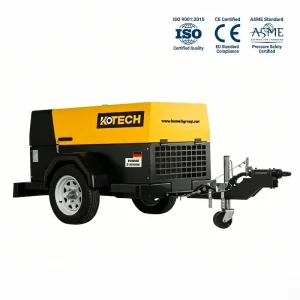
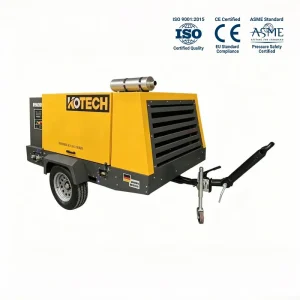
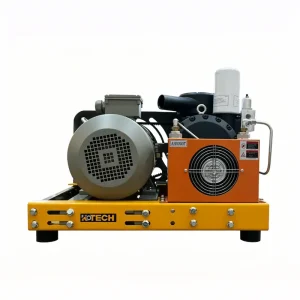
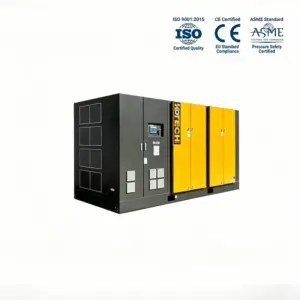
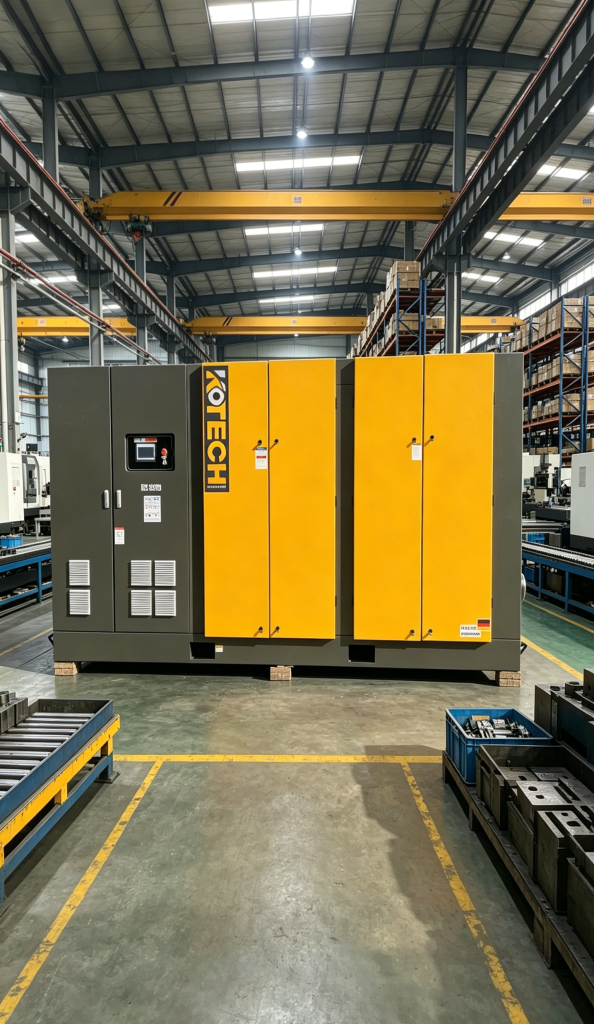
Our KOE Series screw compressors cover 2.2 to 355 kW with Siemens core components, offering both fixed-speed and VSD options. The KOE-II two-stage series delivers 15% to 20% lower energy consumption than single-stage models, with stable output pressure within ±0.02MPa.
We have deployed solutions in over 148 countries. Our after-sales network resolves issues in an average of 4 hours, significantly faster than industry averages.
But what matters more than any spec sheet is this: we built these machines based on what we learned from real field failures, like the Thai fabrication plant that lost $18,000 from the wrong compressor choice. We are not here to sell you the most expensive machine. We are here to help you make the right choice for your specific application.
Conclusion
Choosing an industrial compressor is not complicated, but it is consequential. The wrong choice costs you energy bills for years, unplanned downtime that kills production schedules, and expensive repairs that eat into your operating budget.
The right choice, matched to your technology needs, properly sized for your demand, aligned with your air quality requirements, justified by TCO analysis, and supported by a reliable service partner, delivers decades of reliable performance at predictable costs.
Ask better questions before you buy. It saves far more than the sticker price.
Frequently Asked Questions
Q1: How do I calculate my factory’s total CFM demand?
Audit every pneumatic tool and process that runs simultaneously. Add up each tool’s CFM requirement, apply a realistic usage factor, not all tools run 100% of the time, then add a 10% to 15% buffer for system leaks and future expansion. A professional air audit from a qualified provider can help identify actual demand.
Q2: Is VSD always worth the extra cost?
Not always. If your air demand is stable at full load all day, fixed-speed may be more cost-effective. But if your demand fluctuates with shift changes, production peaks and valleys, or varying processes, VSD typically pays for itself within 2 to 3 years through energy savings.
Q3: What is the difference between oil-free and oil-injected compressors?
Oil-injected uses oil for cooling, sealing, and lubrication. It is more efficient and cheaper. Oil-free delivers 100% pure air with zero oil carryover, required in food, pharma, and electronics applications.
Q4: What certifications should I look for?
ISO 9001 for quality management and CE for European safety are basic. For oil-free applications, ISO 8573-1 Class 0 certification is critical. For performance comparisons, check CAGI data sheets for specific power (kW per 100 cfm) at full and part loads.
Q5: How important is after-sales support?
It is critical. A compressor can last 10 years or more, and you will need parts and service along the way. Choose a manufacturer with local technicians, OEM parts availability, and fast response times. The initial savings from a cheaper unit can be wiped out by a single extended downtime incident.
Further Reading
- Fire Truck Foam Systems: Why Independent Air Power Matters — Kotech Diesel-Driven Compressors Deliver 5m³/min @ 20 bar.
- 5 Questions You Must Answer Before Buying an Air Compressor.
- Oil Refineries, Chemical Plants, Ports, and Industrial Sites — Kotech's Diesel Air Compressor Powers Foam Systems Where It Matters Most.
- Pure Air, Zero Risk: KOTECH Oil-Free Compressors for Airports.
- drilling air compressor – Single-Stage or Tw
- Why Does Two-Stage Compression Save 15%–20% More Energy Than Single-Stage? The Principle Is Simpler Than You Think.
- Could a Drop of Oil Ground Your Entire Fleet? KOTECH Oil-Free Compressors Keep Airport Operations Safe.
- Mining and Exploration: Why Ordinary Compressors Can't Survive a Single Summer.
Related Applied Cases