Key Takeaways
Most industrial compressor buyers end up paying unnecessary costs for one simple reason: they focus on price before they figure out what they actually need.
Walk into almost any equipment inquiry, and you’ll hear the same lines: “What’s your cheapest 100 HP compressor?” or “How much is a 200 CFM unit?”
These buyers lock in a spec before they fully understand what their plant actually requires. It’s like buying shoes by color alone, without checking your size first — it never fits right.
This mistake costs far more than the purchase price. It leads to inflated monthly electricity bills, unplanned downtime when the compressor can’t keep up, and rising maintenance costs. A 2024 industry study found that nearly 40% of industrial compressors are improperly sized for their real-world use. Thousands of factories are either wasting power on excess capacity or struggling with insufficient air supply to keep production lines running.
This guide breaks down the only process you need before comparing prices: matching your compressor specs to your plant’s actual working pressure and airflow demands. Three simple steps, no generic fluff — just practical advice you can use today.
Introduction: A Costly Mistake That Starts Day One
I spoke with a plant manager in Vietnam last month. He was frustrated. His brand-new compressor kept tripping mid-shift.
“I bought a 100 kW model because my old unit was 100 kW,” he explained. “The supplier said it would power my entire plant. But it can’t handle my paint booth and assembly line running at the same time.”
I asked him one question: “Do you know your plant’s actual airflow demand?”
He paused. He didn’t have the numbers. He’d simply matched the old compressor’s rating, assuming it was the right fit.
That’s the mistake. He replaced outdated equipment without checking whether it had ever been the right size in the first place. And here’s the kicker — his original 100 kW compressor was already oversized. For five years, he’d been paying for 25% more capacity than his plant ever needed.
Industry data shows that electricity accounts for roughly 75% of a compressor’s total 10-year operating cost. Oversize by 25%, and that extra cost adds up fast — higher daily power consumption, more maintenance, and a shorter equipment lifespan. Undersize, and you get pressure drops, slower production, and premature wear on your entire pneumatic system.
The solution is simple: stop guessing, start measuring.
A Real Story: Why “More Power” Meant “More Waste”
A few years back, we worked with a food processing plant in California that was drowning in energy costs. They ran two 150 HP compressors in parallel to cover peak production days. Their monthly compressed air electricity bill was over $6,000.
We ran a week-long air audit to map their actual usage. Here’s what we found:
| Metric | Their Setup | What They Actually Needed |
|---|---|---|
| Peak demand | 220 CFM | 220 CFM |
| Average demand | 135 CFM | 135 CFM |
| Installed capacity | 300 CFM | 150–185 CFM |
| Annual energy cost | ~$72,000 | ~$45,000 |
They had a 300 CFM system just to cover a 220 CFM peak. Most of the time, they only used 135 CFM. One of the two 150 HP units sat idle for two-thirds of every day, burning power with zero productive output.
We replaced their setup with a single 150 HP VSD compressor sized to their actual load. The result: $27,000 saved in the first year. Payback period: 14 months.
The plant manager summed it up: “I always thought bigger meant safer. Turns out, bigger just meant more expensive.”
Step 1: Measure Your Real Air Demand (Don’t Guess)
This first step is the most skipped. Most buyers rely on old nameplate numbers, rough estimates, or sales reps’ suggestions — none of which reflect current plant conditions.
Run a 7-Day Air Audit
The most accurate way to capture your true air usage is to install a flow meter on your main air header and log data for a full production week. This captures normal fluctuations while avoiding one-off anomalies like maintenance shutdowns.
If a full audit isn’t feasible right now, use this manual estimation method:
- List every pneumatic tool and process that operates simultaneously
- Look up the rated CFM for each device (check the manual or nameplate)
- Apply a simultaneous use factor of 0.6 to 0.8 — most tools don’t run at full capacity nonstop
- Add 15–20% margin for system leakage and future expansion
Track These Three Numbers
Your sizing decision hinges on three data points:
| Measurement | What It Means | Why It Matters |
|---|---|---|
| Peak flow | Maximum air during busiest production periods | Sets the upper limit your compressor must handle |
| Average flow | Normal air consumption during daily operations | Where your compressor runs most — efficiency here determines long-term energy costs |
| Base load | Minimum demand during low-activity periods | Determines whether you need VSD or a multi-compressor setup |
Key point: You don’t size for peak demand. You size for average demand, with enough headroom for occasional peaks.
Step 2: Match the Compressor Type to Your Load Profile
Once you have accurate airflow data, you face one key decision: fixed-speed or VSD?
Most buyers choose the cheaper upfront option without calculating long-term costs — and it costs them thousands annually.
Fixed-Speed Compressors
Fixed-speed units run at full capacity whenever powered on. Simple, durable, and cheaper upfront. But they only make sense for specific conditions.
Best for: Facilities with steady 24/7 production, where load fluctuations stay below 15%.
The catch: If your average load is much lower than your peak, a fixed-speed compressor idles or cycles constantly during slow periods. That wastes electricity and accelerates wear on the motor and airend.
Variable Speed Drive (VSD) Compressors
VSD units adjust motor speed in real time to match your exact demand. Higher upfront cost, but consistent long-term savings for dynamic production environments.
Best for: Facilities with shift-based production, intermittent operation, or frequent changes in air demand.
The math: If your daily demand fluctuates by 20–25% or more, the energy savings from a VSD will offset its premium within 2–3 years.
KOTECH’s KOE+ VSD series uses Siemens drive motors and intelligent controls to adjust output in real time, cutting idle energy waste by 32–40% under variable load. Every bit of saved power goes back to your bottom line.
Key point: For fluctuating air demand, VSD isn’t an added expense — it’s a high-return investment.
Step 3: Dial In Exact Pressure Requirements
Incorrect pressure sizing is the second most common mistake. Most buyers over-spec pressure “just to be safe” — and it creates permanent, unnecessary energy waste.
Here’s the rule: every 1 bar of excess pressure increases energy consumption by 6–8%. Run a 10 bar compressor for an 8 bar requirement, and you’re paying extra for unused pressure every single day.
How to Size Pressure Correctly
- Test at the point of use — discharge pressure doesn’t reflect what your tools actually receive. Measure at your farthest or most pressure-dependent equipment to account for natural drops across filters, dryers, and piping.
- Map your equipment requirements — identify the maximum pressure rating needed by any pneumatic tool or production line. That’s your target.
- Account for system pressure drop — add 0.3–0.5 bar buffer to cover filtration and piping losses. Keep total pressure drop under 10% of the compressor’s rated pressure.
- Stop at your calculated target — no extra buffer needed. Higher pressure doesn’t improve performance — it only raises your power bills and equipment wear.
Don’t Overlook Altitude and Temperature
Environmental conditions directly impact efficiency. Facilities above 1,000 meters deal with thinner air, which reduces volumetric efficiency. Ambient temperatures over 40°C hinder cooling performance and lower output.
Most standard compressors struggle in these conditions. KOTECH compressors are engineered for ambient temperatures up to 50°C with upgraded cooling systems, delivering stable performance where generic units fall short.
Key point: Specify the exact pressure your processes need — not the extra pressure you think might keep you safe.
Why This Mistake Is So Common
Three factors drive this problem:
- Habit — Most plant teams replace old compressors with identical models, assuming the original setup was correctly sized, even if it wasn’t.
- Uncertainty — Buyers oversize to hedge against future growth, fearing precise sizing will leave them short later.
- Sales pressure — Some suppliers push larger, higher-priced units for bigger margins, regardless of actual load requirements.
The result: nearly 40% of operating compressors run below 75% of their full-load efficiency due to poor sizing. That’s massive, widespread energy waste across industrial sectors.
KOTECH’s Approach to Sizing
Since 2014, KOTECH has delivered tailored compressed air solutions from our Shanghai manufacturing base and UK R&D center. Our core principle: we never oversell or over-spec. Our engineering team has spent nearly a decade fixing costly “bigger is better” mistakes for industrial clients worldwide.
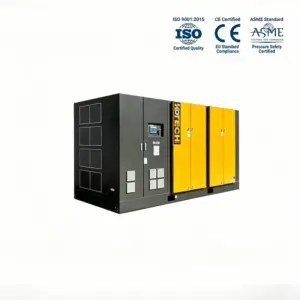
Our compressor lineup covers all industrial scenarios:
| Requirement | Recommended Series | Pressure Range | Flow Range |
|---|---|---|---|
| General manufacturing, steady 24/7 | KOE Series (fixed-speed) | 7–13 bar | 0.69–120 m³/min |
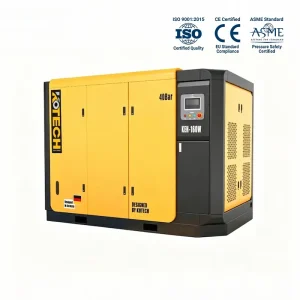
| Variable load, energy savings priority | KOE+ Series (VSD) | 7–13 bar | 0.69–120 m³/min |
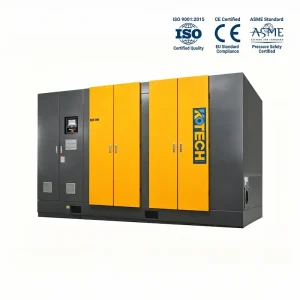
| Max efficiency for stable heavy loads | KOE-II (two-stage) | 7–13 bar | 9.5–61.9 m³/min |
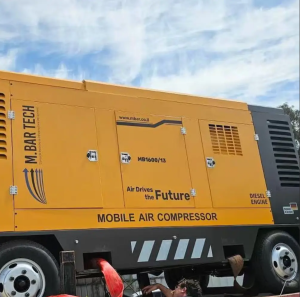
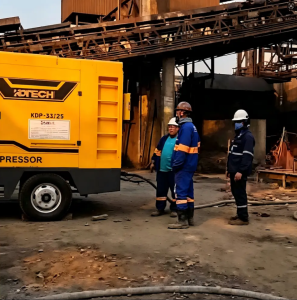
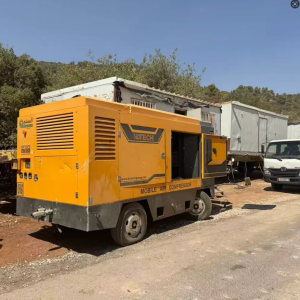
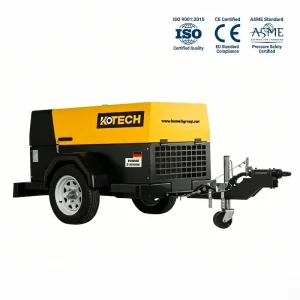
| Remote sites, pipelines, construction | KDP Series (diesel portable) | 7–35 bar | 185–1600 CFM |
Our selection process is data-first: recommendations built around your on-site air demand metrics, not product brochures.
Conclusion
The biggest compressor selection mistake has nothing to do with brand choice or upfront pricing. It’s failing to measure your plant’s operational needs before purchasing equipment.
With 40% of industrial compressors mis-sized, nearly half of all manufacturing facilities are throwing money away — either wasting electricity on oversized units or losing production to undersized equipment downtime.
The fix is straightforward: measure your real air demand, select the right technology for your load profile, and specify only the pressure you actually need.
If you’re currently running a compressor and suspect it’s improperly sized, schedule an air audit. If you’re shopping for new equipment, invest a few hours in calculating your true requirements before comparing prices. It’s one of the most cost-effective improvements you can make for your facility.
Frequently Asked Questions
Q1: How can I estimate average plant air demand without a flow meter?
Track your compressor’s load and unload cycles. A compressor that runs for 6 minutes and unloads for 4 minutes is running at roughly 60% of its rated capacity. Not as precise as metering, but it gives you a quick baseline.
Q2: What’s the most common sizing error?
Over-sizing as a “safety buffer.” Excess capacity keeps compressors running below full load most of the time, killing efficiency and increasing wear. A 15–20% buffer above your calculated average demand is enough for leakage and future expansion.
Q3: Is VSD always the better choice?
No. Fixed-speed compressors are more efficient for stable, high-volume loads (24/7 production above 85% capacity). VSD drives have a small 3% efficiency loss, which becomes noticeable under consistent full-load operation. VSD only outperforms fixed-speed when demand fluctuates.
Q4: How do I size for future plant expansion?
Size for current demand and design your air header system to support future upgrades. Add a second compressor later, or invest in a VSD now — its adaptive performance will handle gradual production growth.
Q5: How can I verify KOTECH’s sizing recommendations?
All KOTECH compressors undergo pre-shipment testing with performance figures certified to ISO 1217. For independent verification, cross-check our specs against official performance data from the Compressed Air and Gas Institute (CAGI).
Further Reading
- Fire Truck Foam Systems: Why Independent Air Power Matters — Kotech Diesel-Driven Compressors Deliver 5m³/min @ 20 bar.
- 5 Questions You Must Answer Before Buying an Air Compressor.
- Oil Refineries, Chemical Plants, Ports, and Industrial Sites — Kotech's Diesel Air Compressor Powers Foam Systems Where It Matters Most.
- Pure Air, Zero Risk: KOTECH Oil-Free Compressors for Airports.
- drilling air compressor – Single-Stage or Tw
- Why Does Two-Stage Compression Save 15%–20% More Energy Than Single-Stage? The Principle Is Simpler Than You Think.
- Could a Drop of Oil Ground Your Entire Fleet? KOTECH Oil-Free Compressors Keep Airport Operations Safe.
- Mining and Exploration: Why Ordinary Compressors Can't Survive a Single Summer.
Related Applied Cases