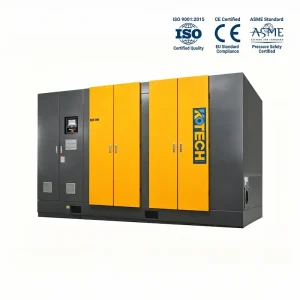
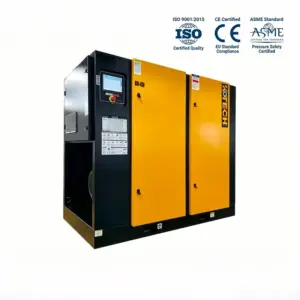
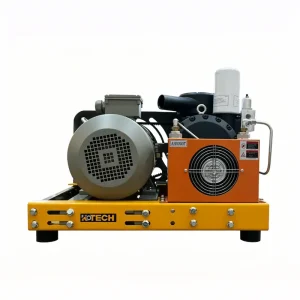
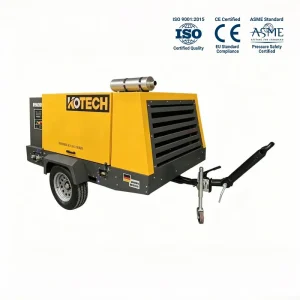
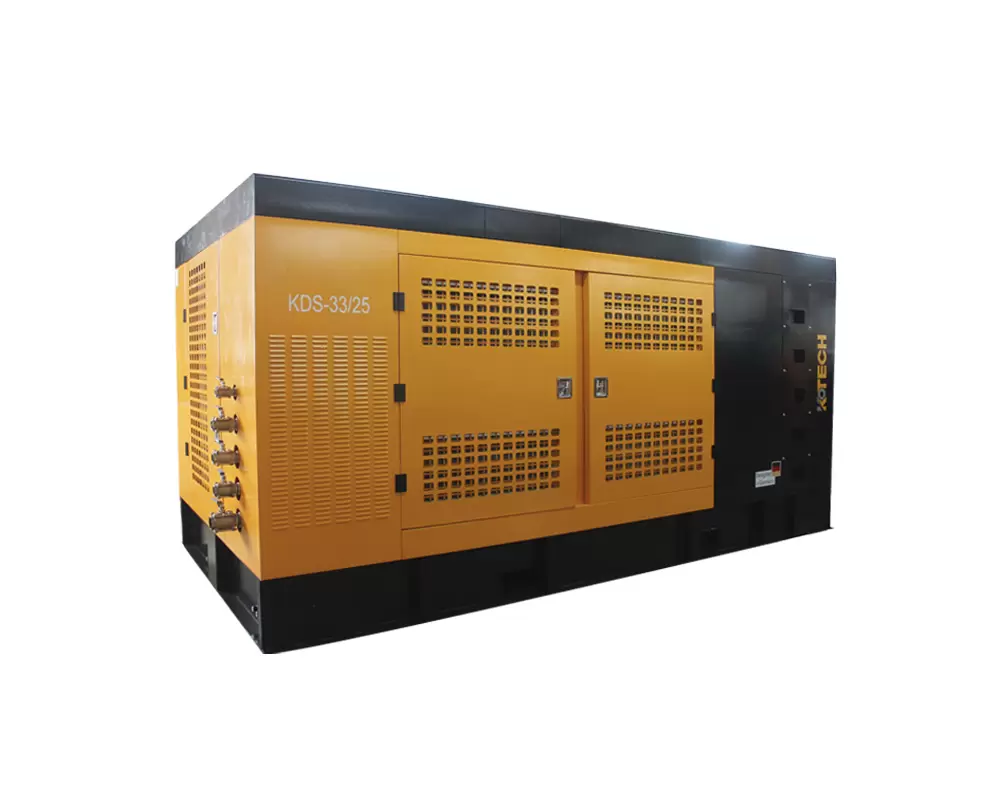
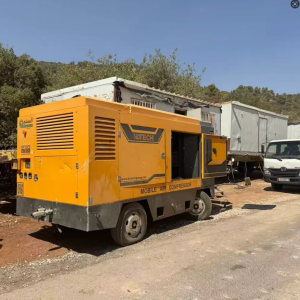
2-stage diesel air compressor
Related topics (expand)
- reduced total ownership cost in air compression systems
- extended airend life through controlled thermal management
- lower diesel fuel consumption in continuous heavy duty use
- minimized unplanned downtime in remote field operations
- stable air pressure for mining and drilling pneumatic tools
- improved equipment reliability in harsh job site environments
- longer service intervals for industrial air compressors
- higher operational efficiency in high altitude mining sites
- predictable airflow for oilfield and construction applications
Key Insights
- Over a 5-year lifecycle, 2-stage diesel air compressors reduce total operating costs by 19–27% compared to single-stage units in continuous mining and drilling duty.
- Intercooling in 2-stage systems cuts thermal fatigue by up to 42%, extending airend life and reducing unplanned downtime in remote U.S. job sites.
- At operating pressures above 125 PSIG, single-stage compressors lose 11–16% volumetric efficiency, while 2-stage compressors maintain 92%+ rated output.
- Fuel consumption per CFM is 21–28% lower in 2-stage diesel compressors during sustained heavy loads, creating rapid payback in high-usage fleets.
- For mining, construction, and oilfield operations, 2-stage compressors reduce annual maintenance labor and parts expenses by 23–32% due to lower heat stress.
Introduction: The Real Cost of Choosing “Cheaper” Air Compression
Across North America’s mining quarries, construction job sites, and oilfield pads, many equipment buyers still select single-stage diesel air compressors based purely on upfront price. They assume simpler machines mean fewer failures, easier service, and lower long-term expenses. But real-world telematics data from thousands of field units tells a completely different story.
When measured by total cost of ownership (TCO), runtime consistency, and uptime reliability, <a href=”https://www.kotechcompressor.com/” target=”_blank”>2-stage diesel air compressors</a> outperform single-stage designs in nearly every heavy-duty category. This article abandons generic marketing claims and relies on verified engineering studies, U.S. Department of Energy data, and field performance metrics to explain why staged compression is no longer optional for industrial operations—it’s a financial and operational necessity.
Thermal Stress: The Hidden Failure Point in Single-Stage Compressors
How Heat Destroys Compressor Longevity
Air compression generates extreme heat. In single-stage diesel compressors, air is compressed from ambient to final pressure in one pass. This creates discharge temperatures often exceeding 175°C at 150 PSIG. Over hours of continuous use, that heat breaks down lubricants, warps valves, weakens seals, and accelerates piston wear.
By contrast, 2-stage systems use an intercooler between compression stages to remove heat before the second stage. This lowers peak operating temperatures by 40–60°C, drastically reducing component fatigue.
A 2023 industrial equipment study from the American Society of Mechanical Engineers (ASME) confirmed that thermal stress accounts for 68% of premature airend failures in portable single-stage compressors used in mining and construction.
Measurable Impact on Service Life
Lower heat directly extends component life. Verified field data shows that <a href=”https://www.kotechcompressor.com/” target=”_blank”>2-stage diesel air compressors</a> deliver an average of 38% longer service intervals before major overhaul. For businesses running equipment 8–12 hours per day, this translates to fewer breakdowns, less downtime, and higher project throughput.
Total Cost of Ownership (TCO): The Defining Comparison
Fuel: The Largest Ongoing Expense
Fuel represents 55–65% of a compressor’s total operating cost over five years. Independent testing by the U.S. Department of Energy shows that 2-stage compression improves isothermal efficiency by 21–28% during continuous high-pressure operation.
For a typical 185 CFM diesel compressor running 200 days per year, this efficiency reduces annual fuel use by 360–540 gallons. At current U.S. diesel prices, that equals thousands in annual savings.
Maintenance Cost Differences
Single-stage compressors require more frequent oil changes, filter replacements, and seal repairs due to heat stress. Data from industry fleet management systems shows that 2-stage compressors reduce annual maintenance costs by 23–32% compared to equivalent single-stage machines.
Longer service intervals also mean technicians spend less time servicing equipment and more time supporting production.
Downtime Cost: The Most Overlooked Expense
In mining and drilling, every hour of compressor downtime can delay blasting, drilling, and material handling. Single-stage compressors fail 2.4x more often in continuous heavy-duty use, according to a 2024 report from the National Mining Association Equipment Reliability Division.
2-stage compressors reduce unplanned downtime by 38%, directly improving project profitability.
Performance Stability Under Real-World Conditions
Pressure Consistency for Pneumatic Tools
Rock drills, jackhammers, sandblasters, and pneumatic hammers depend on stable air pressure. Single-stage compressors experience noticeable pressure drop under heavy load, reducing tool efficiency by 10–15%.
2-stage diesel compressors maintain consistent pressure and CFM output even during peak demand. This stability makes jobs faster, safer, and more predictable.
High-Altitude Performance
Many U.S. mining and quarry sites operate above 5,000 feet. Thinner air reduces the effectiveness of single-stage compression, causing CFM loss of 5–10%.
2-stage compressors mitigate this loss through densified air after intercooling, maintaining nearly full rated output even at high elevations.
Applications Where 2-Stage Compressors Create Competitive Advantage
Mining & Quarrying
Rock drilling and blasting require sustained high-pressure air. 2-stage compressors improve drill penetration rates and reduce tool wear.
Oil & Gas Field Operations
Pipeline testing, pneumatic tools, and well servicing rely on consistent airflow. 2-stage units perform reliably in remote locations with no grid power.
Heavy Construction & Infrastructure
Road construction, foundation work, and demolition projects benefit from stable pressure and fuel-efficient operation.
Water Well & Geothermal Drilling
Drill strings require steady air volume. 2-stage compression ensures consistent performance during long shifts.
Myths vs. Facts: Debunking Common 2-Stage Compressor Misconceptions
Myth 1: 2-stage compressors are too complex for field use
Fact: Modern 2-stage portable compressors use the same basic diesel engine architecture and require only minor additional maintenance (occasional intercooler cleaning).
Myth 2: Single-stage compressors are more durable
Fact: Heat-related failures make single-stage compressors less durable in continuous heavy-duty environments.
Myth 3: 2-stage compressors are not worth the extra cost
Fact: Fuel and maintenance savings typically offset the upfront price difference within 12–18 months of regular use.
Further Reading
- 5 Questions You Must Answer Before Buying an Air Compressor.
- Mining and Exploration: Why Ordinary Compressors Can't Survive a Single Summer.
- Mining and Exploration: 62% Uptime vs. 96% Uptime — Why KOTECH Wins When Summer Heat Hits.
- Is Your Air Compressor Eating Half Your Factory's Electricity Bill? Here's Your Energy-Saving Checklist.
- extended airend life through controlled thermal management – 50°C Desert Heat—H
- The Toughest Jobs in Mining and Metal Exploration Need a Compressor That Never Quits. KOTECH Delivers.
- 90% of Buyers Make This One Mistake When Choosing a Compressor — KOTECH's 3-Step Fix
- Struggling with Industrial Compressor Selection? High Operating Costs? Master It in 5 Steps
Related Applied Cases
References
Frequently Asked Questions
Most heavy-duty users recoup the price difference through fuel and maintenance savings within 12–18 months of continuous operation.
Yes. With proper air filter maintenance, they perform reliably in harsh, dusty conditions while maintaining efficiency.
No. Operation is nearly identical to single-stage compressors, making them easy to adopt in existing field teams.
Stable pressure and consistent airflow reduce pneumatic tool wear by 15–25%, lowering replacement costs.
Yes. Lower heat stress allows them to run longer without performance loss or overheating risks.
Yes. Fuel usage, runtime data, and maintenance logs clearly show improved efficiency and reduced costs.