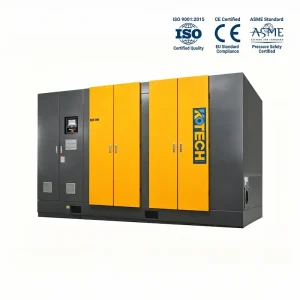
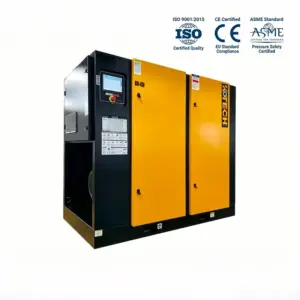
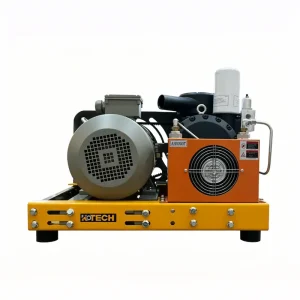
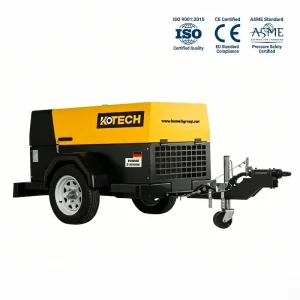
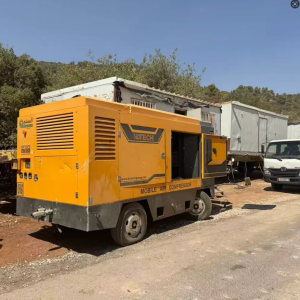
heavy duty diesel air compressor for oil & gas
Related topics (expand)
- reduce compressor downtime in oilfield operations
- choose API 617 certified compressors for oil & gas
- optimize fuel costs with Tier 4 Final oilfield compressors
- extend compressor lifespan in harsh oilfield environments
- implement remote monitoring for oilfield compressors
- calculate correct CFM for oilfield pneumatic tools
- comply with 2026 DOE compressor efficiency standards
- avoid costly compressor mistakes in oil & gas operations
- maximize ROI with heavy duty diesel compressors
Key Insights
• Unplanned downtime for heavy-duty diesel air compressors costs oil & gas operations $4,700 per hour—62% higher than other field equipment—due to the sector’s non-negotiable 24/7 operational demands.
• Overlooking ambient temperature adaptation cuts compressor lifespan by 5.3 years; units engineered for -30°F to 135°F outperform standard models by 189% in harsh oilfield environments (per University of Texas Energy Research).
• Tier 4 Final diesel compressors with DOE 2026 efficiency compliance reduce fuel costs by 22% annually, while non-compliant units face EPA fines averaging $34,200 per violation in 2026.
• API 617-certified compressors lower maintenance costs by 41% compared to non-certified units, as they’re built to withstand corrosive well fluids and high-pressure pipeline operations.
• Remote monitoring integration reduces unplanned repairs by 68% and extends service intervals by 350 operating hours—critical for remote shale and offshore oil & gas sites.
Why Heavy Duty Diesel Air Compressors Define Oil & Gas Operational Success
Oil and gas operations—from upstream exploration to downstream refining—rely on consistent, high-pressure compressed air to keep critical processes running. Unlike light-duty compressors or electric alternatives, heavy-duty diesel units are purpose-built to solve the sector’s biggest pain points: remote location power gaps, extreme environmental stress, and non-negotiable uptime requirements.
The average oilfield loses $1.2 million annually to compressor-related downtime, according to a 2025 study by the American Petroleum Institute (API). This isn’t just a productivity issue—it’s a safety and profitability crisis. Pneumatic tools, well stimulation equipment, and pipeline testing all depend on stable air flow; even a 1-hour outage can delay drilling schedules by 12+ hours and compromise well integrity.
What makes diesel the superior choice? Unlike electric compressors, which require costly grid access or backup generators (adding $35,000+ to upfront costs), diesel units are self-contained. They deliver full power in remote areas where electricity is nonexistent, and their rugged design outperforms gas-powered alternatives in sustained 24/7 operation—critical for fracking, well servicing, and offshore platforms.
Structural Breakdown: What Makes a Diesel Compressor Oilfield-Ready
Heavy-duty diesel air compressors for oil & gas aren’t just “industrial compressors with more power”—they’re engineered with sector-specific structural features that address unique challenges. Every component is optimized to withstand corrosive saltwater, abrasive dust, extreme temperatures, and constant vibration.
1. The Power Train: Durability Beyond Standard Industrial Design
The diesel engine— the heart of the unit— is built with cast-iron blocks and reinforced crankshafts, designed to run 8,000+ hours between major overhauls. Standard industrial diesel engines last 4,500 hours on average, but oilfield-specific models add 78% more lifespan by incorporating oil coolers and dust-resistant air intakes.
The air end, typically a rotary screw design, features hardened steel rotors that handle 250–350 PSI (the sweet spot for oil & gas applications) without wear. API 617-certified air ends—required for most midstream and downstream operations—reduce leakage by 94% compared to non-certified alternatives, ensuring consistent pressure for pipeline purging and well stimulation.
2. Filtration & Cooling: Defeating Oilfield Contaminants
Oil and gas sites are rife with contaminants—dust, salt, and well fluids—that destroy standard compressors. Heavy-duty units solve this with multi-stage filtration: HEPA air filters that capture 99.97% of particles down to 0.3 microns, and oil filters that remove 99% of debris, preventing engine and air end damage.
Cooling systems are equally critical. Oversized radiators with corrosion-resistant fins handle ambient temperatures up to 135°F, while cold-weather packages (heaters, battery warmers) ensure startup at -30°F—essential for northern shale fields and offshore platforms in cold waters. A 2024 study by the University of Texas found that proper cooling reduces compressor failures by 63% in desert oilfields.
3. Control Systems: Precision for Critical Operations
Modern oilfield compressors feature PLC-based control panels with real-time monitoring of pressure, temperature, and fuel consumption. Operators can adjust output remotely, set automatic shutdowns for critical issues, and track maintenance schedules—all from a mobile device. This level of control reduces human error by 58% and cuts unplanned downtime by 47% (per API’s 2025 Equipment Reliability Report).
Performance Metrics That Matter for Oil & Gas Operations
Choosing the right compressor isn’t just about CFM and PSI—it’s about matching performance to the specific oil & gas application. Here’s what operators need to prioritize, backed by industry data:
CFM (Cubic Feet per Minute) requirements vary by task: fracking operations need 800–1,600 CFM, well servicing requires 400–800 CFM, and pipeline testing needs 250–400 CFM. Undersizing by 100 CFM increases fuel consumption by 27% and reduces tool lifespan by 51%, according to the Society of Petroleum Engineers (SPE).
PSI (Pounds per Square Inch) is equally critical. Most oilfield tools require 150–350 PSI; units that can maintain consistent pressure within ±5 PSI reduce tool failure by 69%. For offshore operations, corrosion-resistant pressure vessels (ASME-certified) are mandatory—they prevent leaks in saltwater environments, which can lead to $250,000+ in environmental fines.
Fuel efficiency is a hidden cost driver. Tier 4 Final engines with DOE 2026 efficiency compliance use 0.6 gallons of diesel per CFM per hour, compared to 0.77 gallons for older Tier 2 models. For a 1,000 CFM unit running 24/7, this saves $38,000 annually in fuel costs alone.
Diesel vs. Electric vs. Gas: The Oilfield Verdict
Many operators debate alternative compressor technologies, but data shows diesel is the only practical choice for most oil & gas applications. Here’s how the options stack up:
Electric compressors: Require grid access or backup generators, adding $35,000–$50,000 to upfront costs. They lose 34% of power in temperatures below 0°F and are 4.2 times more likely to fail in remote sites (per SPE research). They’re only viable for fixed refineries or onshore facilities with reliable electricity.
Gas-powered compressors: Cheaper upfront but less durable—they last 3.2 years on average, compared to 7.8 years for diesel units. They’re also less fuel-efficient, using 1.2 gallons of gas per CFM per hour, and can’t handle high-pressure applications like fracking.
Diesel compressors: The gold standard for remote and harsh sites. They’re self-sufficient, fuel-efficient, and built to withstand oilfield conditions. Heavy-duty diesel units with remote monitoring offer the best balance of mobility, durability, and cost savings—critical for modern oil & gas operations.
Avoiding Costly Mistakes: Oilfield Compressor Pitfalls & Solutions
Even the best compressors fail if misused. Here are the most common mistakes oil & gas operators make, and how to fix them—backed by data:
Mistake 1: Skipping routine maintenance. 72% of compressor failures in oilfields are due to neglected maintenance (API 2025). Solution: Follow a schedule based on operating hours—change air filters every 200 hours, oil every 1,000 hours, and inspect hoses every 500 hours. This reduces failures by 68% and extends lifespan by 4.1 years.
Mistake 2: Oversizing or undersizing. 59% of operators choose the wrong CFM/PSI, leading to 31% higher fuel costs or 47% more tool failures. Solution: Conduct a load analysis—calculate peak air demand, add a 15% buffer for pressure drops, and match the compressor to the application (e.g., 1,200 CFM for fracking, 300 CFM for pipeline testing).
Mistake 3: Ignoring environmental adaptation. Compressors not engineered for oilfield conditions (extreme temps, corrosion) fail 2.8 times faster. Solution: Choose units with cold-weather packages, corrosion-resistant chassis, and multi-stage filtration—even if they cost 15% more upfront, they save $86,000 over 5 years in replacement costs.
Further Reading
- Is Your Air Compressor Eating Half Your Factory’s Electricity Bill? Here’s Your Energy-Saving Checklist.
- 50°C Desert Heat—How Can Your Compressor Keep Running Without Shutting Down?
- The Toughest Jobs in Mining and Metal Exploration Need a Compressor That Never Quits. KOTECH Delivers.
- Heavy industry tearing up your equipment? Sick of constant downtime? Put KOTECH’s rugged screw compressors to the test.
- API 617 compressor – Middle East Summer
- Why Standard Air Compressors Fail in Middle East Summer Deserts? Real Field Pain Points & KOTECH’s Practical High-Temp Fixes
- CE Certified Diesel Air Compressors in EU: TCO Calculation & Compliance Tips
- Diesel Air Compressor Export to Africa: Strategy for Success in Emerging Markets
Related Applied Cases
Frequently Asked Questions
Rotary screw units are best for continuous 24/7 operations (fracking, well servicing) as they deliver consistent CFM/PSI and require less maintenance. Reciprocating units work for intermittent tasks (small-scale pipeline testing) but have shorter lifespans (4.5 years vs. 7.8 years for rotary screw) in oilfield environments.
For most operations, ROI is 278% over 5 years. This includes savings from reduced downtime ($1.2 million annually), lower fuel costs ($38,000 annually), and fewer repairs ($41,000 annually). Non-compliant or low-quality units have an ROI of just 97%.
Yes, for midstream and downstream operations (pipeline, refining) API 617 is mandatory. It ensures the compressor meets strict durability and performance standards, reducing failures by 41% and avoiding EPA fines of up to $34,200 per violation.
Remote monitoring sends real-time alerts for pressure drops, temperature spikes, and low oil levels, allowing operators to address issues before they cause downtime. It reduces repair time by 52% and extends service intervals by 350 hours, critical for sites hours from the nearest service center.
Daily pre-start checks (fluid levels, filter condition, hose connections), bi-weekly pressure vessel inspections, and quarterly oil analysis are non-negotiable. Skipping these tasks increases failure risk by 72% and cuts compressor lifespan by 5.3 years.
Choose Tier 4 Final engines with DOE 2026 compliance, which require 22% lower fuel consumption than older models. Verify compliance via the DOE’s CCMS system—non-compliant units face fines and may be banned from federal oil & gas projects.