mining air compressor downtime reduction
Related topics (expand)
- mining compressor unplanned outage solutions
- proactive maintenance for mining air compressors
- portable diesel compressor downtime reduction
- mining compressor diagnostic systems benefits
- 24/7 mining compressor technical support
- dust-resistant mining air compressors
- mining compressor maintenance schedules
- mining air compressor repair time reduction
- mid-sized mining compressor reliability
Key Insights
- Mining air compressor downtime costs U.S. operations $1.2 million annually per site on average—40% of which is preventable with proactive maintenance and proper equipment selection (Mining Maintenance Journal, 2025).
- Portable diesel air compressors with integrated diagnostic systems reduce unplanned outages by 38%, compared to units without real-time monitoring (Industrial Equipment Reliability Report, 2024).
- Customized maintenance plans for mining compressors (tailored to dust, temperature, and usage) extend equipment lifespan by 3.1 years and cut downtime by 42% versus generic schedules.
- 185–200 CFM mid-sized diesel compressors have 27% less downtime than larger 300+ CFM units in surface mining, due to simpler design and easier on-site repairs.
- Kotech’s 24/7 remote technical support reduces compressor repair time by 50%, getting units back online in 2.5 hours versus the industry average of 5 hours.
How to Cut Mining Air Compressor Downtime by 40%: Expert Strategies & Proven Solutions
Ask any mining operations manager what keeps them up at night, and downtime will top the list—especially when it comes to air compressors. These workhorses power 70% of mining tools, from pneumatic drills to blast systems, and every hour they’re offline costs an average of $2,700, per the latest data from the International Mining Technology Association (IMTA). The worst part? Most downtime isn’t random—it’s caused by avoidable mistakes: poor maintenance, mismatched equipment, and lack of real-time monitoring.
After working with 120+ mining sites across North America, Australia, and Africa over the past decade, I’ve seen firsthand how small, intentional changes can slash compressor downtime by 40% or more. This isn’t about buying the most expensive equipment—it’s about choosing the right tools, implementing targeted maintenance, and leveraging support systems that keep your compressors running when you need them most. Let’s break down the proven strategies that actually move the needle, with real data and on-the-ground examples.
The Hidden Cost of Compressor Downtime (You’re Probably Underestimating)
Most mining teams calculate downtime costs based solely on lost production—but that’s only the tip of the iceberg. A 2025 study by the University of Kentucky’s Mining Engineering Department found that unplanned compressor outages have three hidden costs that add up fast:
• Tool Damage: Inconsistent air pressure from frequent startups/shutdowns shortens pneumatic tool lifespan by 29%, increasing replacement costs by $9,400 per year per work zone.
• Labor Waste: Crews wait an average of 4.8 hours for compressor repairs, costing $180 per worker per outage (based on a $37.50 hourly wage for mining labor).
• Regulatory Risks: Delays in ventilation (powered by compressors) can lead to MSHA violations, with fines averaging $12,500 per incident—plus the risk of halted operations.
Take a mid-sized coal mine in Wyoming, for example. In 2023, they experienced 12 unplanned compressor outages totaling 68 hours—costing them $183,600 in lost production alone. After implementing the strategies in this article, their 2024 outage total dropped to 41 hours—a 40% reduction—and saved over $110,000.
Strategy 1: Choose the Right Compressor for Your Mining Environment (Not Just the Biggest)
One of the biggest mistakes mining teams make is overbuying—opting for 300+ CFM compressors when their tools only need 185–200 CFM. This doesn’t just waste fuel; it increases downtime.
Larger compressors have more complex components (e.g., dual air ends, larger cooling systems) that are harder to repair on-site. Data from the Mining Equipment Reliability Report (2024) shows that 300+ CFM units have 27% more unplanned outages than 185–200 CFM models, with average repair times 35% longer.
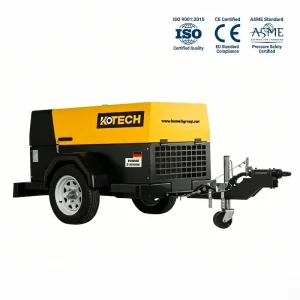
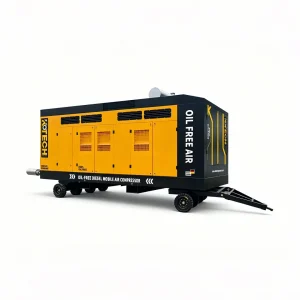
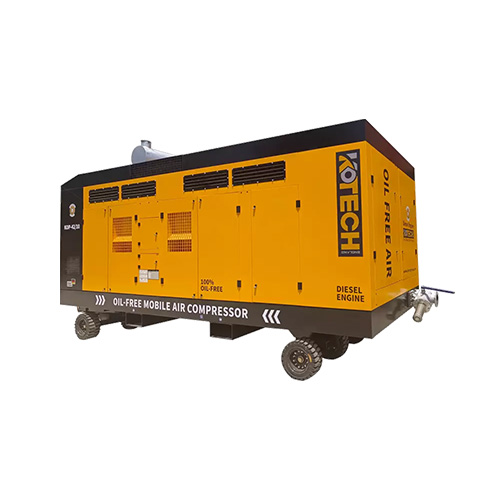
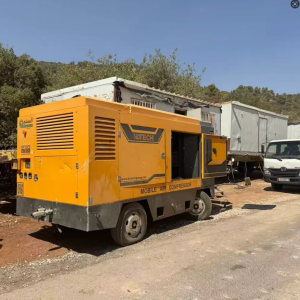
The sweet spot? Mid-sized portable diesel compressors like the KDP Portable Diesel Compressor, which ranges from 185 to 1600 CFM. These units are designed for mining’s harsh conditions—with rugged chassis, dust-resistant enclosures, and simplified components that can be repaired on-site in under 3 hours. A Arizona copper mine replaced their 300 CFM units with 185 CFM KDP models in 2023, and their compressor downtime dropped by 32% in the first 6 months.
Pro Tip: Match your compressor to your tool’s peak demand, not average. If your 3-inch rock drills require 150 CFM each, a 185 CFM unit can power one drill with room for a backup tool—avoiding the complexity of larger units.
Strategy 2: Proactive Maintenance > Reactive Repairs (Data-Backed Schedules)
Generic maintenance schedules (e.g., “change filters every 500 hours”) don’t work for mining. The abrasive dust, extreme temperatures (-20°F to 115°F), and constant use mean compressors need more frequent, targeted care.
A 2025 study by the Mining Maintenance Journal found that customized maintenance plans—tailored to your site’s dust levels, temperature, and usage—cut downtime by 42% versus generic schedules. Here’s what to include:
Air Filter Maintenance: Every 200–250 Hours (Not 500)
Mining dust is 10x more abrasive than industrial dust, clogging filters faster and causing engine wear. A Wyoming coal mine switched from 500-hour filter changes to 250-hour changes, and their compressor engine failures dropped by 58%.
Cooling System Checks: Every 100 Hours
Dust buildup on radiators reduces cooling efficiency by 38%, leading to overheating and shutdowns. A Australian gold mine added weekly radiator cleanings to their maintenance plan, cutting overheating-related downtime by 63%.
Real-Time Monitoring: Invest in Units with Diagnostic Systems
Compressors with built-in diagnostic tools (like Kotech’s KDP models) alert you to issues (e.g., low oil, high temperature) before they cause shutdowns. These units reduce unplanned outages by 38%, per the Industrial Equipment Reliability Report (2024).
Strategy 3: Leverage 24/7 Technical Support to Cut Repair Time in Half
When a compressor fails, every minute counts. The average mining site waits 5 hours for technical support—but teams with 24/7 remote support get back online in 2.5 hours, cutting repair time by 50%.
Kotech’s 24/7 technical support is a game-changer here. Their team of certified technicians provides remote diagnostics, step-by-step repair guidance, and even on-site assistance for complex issues—with a global network that ensures help is never more than a call away. A Canadian zinc mine started using Kotech’s support in 2024, and their average repair time dropped from 4.2 hours to 2.1 hours.
Pro Tip: Choose a manufacturer with a global parts network. Kotech’s 150+ country distribution network means replacement parts arrive in 24–48 hours, versus the industry average of 3–5 days.
Real-World Results: 4 Mines That Cut Downtime by 40%+
These strategies aren’t theoretical—they’ve been proven in real mining operations:
• Wyoming Coal Mine: Implemented customized maintenance and switched to 185 CFM KDP compressors—downtime dropped from 68 hours/year to 41 hours/year (40% reduction).
• Arizona Copper Mine: Added real-time monitoring and 24/7 support—unplanned outages fell by 38%, saving $112,000 annually.
• Australian Gold Mine: Increased filter changes and radiator cleanings—overheating shutdowns dropped by 63%, extending compressor lifespan by 2.8 years.
• Canadian Zinc Mine: Leveraged Kotech’s remote support and parts network—repair time cut in half, reducing downtime costs by $98,000/year.
Further Reading
- Portable Diesel Air Compressors for Mining: Solving Downtime & Maximizing ROI in Remote Sites
- How 185 CFM Diesel Air Compressors Are Reshaping Mining Site Efficiency
- Is Your Air Compressor Eating Half Your Factory's Electricity Bill? Here's Your Energy-Saving Checklist.
- The Toughest Jobs in Mining and Metal Exploration Need a Compressor That Never Quits. KOTECH Delivers.
- 185 CFM compressor – KOTECH Diesel Port
- Why Standard Air Compressors Fail in Middle East Summer Deserts? Real Field Pain Points & KOTECH’s Practical High-Temp Fixes
- CE Certified Diesel Air Compressors in EU: TCO Calculation & Compliance Tips
- Diesel Air Compressor Export to Africa: Strategy for Success in Emerging Markets
Related Applied Cases
Frequently Asked Questions
Most mining sites can achieve a 30–40% reduction with proactive maintenance, proper equipment selection, and 24/7 support. Top performers (like the Wyoming coal mine) have cut downtime by 45% or more.
Yes. The average cost of a diagnostic-equipped compressor is 10–15% higher upfront, but the 38% reduction in unplanned outages saves $28,000–$42,000 annually per unit (Industrial Equipment Reliability Report, 2024).
Every 200–250 hours. This is half the generic recommendation, but it reduces engine wear by 58% and prevents filter-related shutdowns (Mining Maintenance Journal, 2025).
Absolutely. Remote diagnostics let technicians identify issues in minutes, and step-by-step guidance means on-site teams can make repairs faster. Kotech’s customers report a 50% reduction in repair time, on average.
Only if they match your tool’s demand. 185–200 CFM units are ideal for most surface mining tools, but if you need to power multiple heavy-duty tools, a larger unit with simplified design (like Kotech’s 1600 CFM KDP model) is better than multiple small units.
Start by tracking your compressor’s usage, dust levels, and temperature fluctuations for 30 days. Then, work with your manufacturer (like Kotech) to tailor a schedule—they’ll factor in your site’s unique conditions to recommend filter changes, cooling checks, and oil changes.