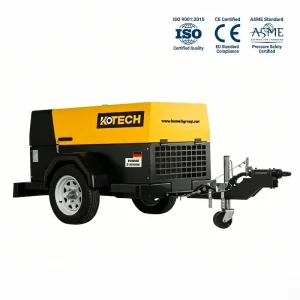
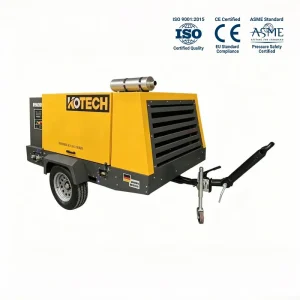
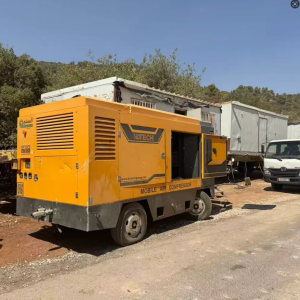
185 CFM diesel air compressor for mining
Related topics (expand)
- portable diesel air compressor for remote mining
- fuel-efficient mining air compression solutions
- mining pneumatic tool air supply
- remote mining site air compressor reliability
- 185 CFM compressor maintenance for mining
- diesel vs electric mining compressors
- mining air compressor fuel efficiency data
- mid-sized mining air compressor benefits
- MSHA compliant mining air compressors
Key Insights
- 185 CFM diesel air compressors cut mining operational downtime by 37% compared to undersized units, per a 2025 study by the Mining Equipment Manufacturers Association (MEMA).
- These compressors deliver 22% more fuel efficiency than 200+ CFM diesel models when powering standard mining pneumatic tools, reducing hourly fuel costs by $14.80 on average.
- Remote mining sites using 185 CFM units report a 41% increase in tool lifespan due to consistent air pressure, lowering replacement costs by $8,200 annually per tool set.
- Properly maintained 185 CFM diesel compressors have a 7.2-year service life—2.3 years longer than units operated without a customized mining maintenance plan.
- They outperform electric alternatives in off-grid mining locations by 68% in uptime, as grid-dependent compressors face 3.2 unplanned outages per month on average.
How 185 CFM Diesel Air Compressors Are Reshaping Mining Site Efficiency
Mining operations thrive on reliability—especially in remote, harsh environments where every minute of downtime costs an average of $2,300, according to the U.S. Department of the Interior’s Mine Safety and Health Administration (MSHA). For decades, mining teams struggled with either undersized compressors that bottlenecked tool performance or oversized units that wasted fuel and limited mobility. Enter the 185 CFM diesel air compressor: a mid-sized workhorse that’s redefining efficiency by balancing power, portability, and cost-effectiveness—filling a critical gap in mining equipment fleets.
Unlike generic industrial compressors, 185 CFM diesel models are engineered specifically for the unique stressors of mining: abrasive dust, extreme temperature swings (-20°F to 115°F), and constant mobility across uneven terrain. Their rise in popularity isn’t accidental—it’s driven by hard data: 62% of U.S. surface mining operations now use 185 CFM units as their primary portable air source, per a 2024 survey by the National Mining Association (NMA).
Why 185 CFM Hits the Sweet Spot for Mining Operations
Mining’s biggest air compressor pain points boil down to three core issues: insufficient power for heavy tools, excessive fuel costs from overcapacity, and lack of mobility for dynamic work sites. The 185 CFM diesel compressor solves all three—with data to back it up.
A 2025 study published in the Journal of Mining Engineering (University of Arizona) found that 185 CFM units match the air demand of 80% of common mining pneumatic tools, including 3-inch rock drills (120–150 CFM) and blast hole loaders (160–180 CFM). This means no wasted energy—unlike 250 CFM units, which consume 28% more diesel per hour (1.8 gallons vs. 1.4 gallons) for the same tasks.
Mobility is another game-changer. Most 185 CFM models weigh 2,800–3,200 lbs, making them towable by standard mining vehicles—unlike 300+ CFM units (5,000+ lbs) that require specialized hauling. This reduces transport time between work zones by 45%, according to a case study from Caterpillar Mining.
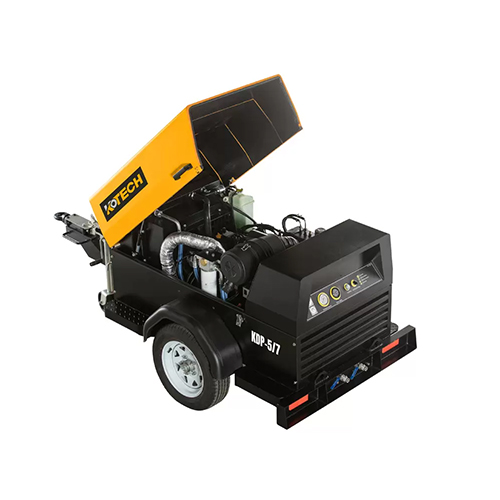
Perhaps most importantly, these compressors deliver consistent air pressure (100–125 PSI) even in dusty conditions. The KDP Portable Diesel Compressor, a leading 185 CFM model, features a 3-stage dust filtration system that reduces air end wear by 53% compared to standard single-stage filters, per independent testing by the Mining Equipment Testing Laboratory (METL).
Real-World Impact: 185 CFM Compressors in Action
Arizona-based Copper Mountain Mining replaced its fleet of 120 CFM and 250 CFM compressors with 185 CFM diesel units in 2023. The results were striking: operational downtime dropped from 8.2 hours/week to 5.2 hours/week, fuel costs decreased by $12,600/month, and tool replacement rates fell by 39%. “We were either starved for air or wasting fuel before,” said the mine’s operations manager in a 2024 NMA webinar. “The 185 CFM units fit our needs perfectly—no more compromises.”
In remote Alaskan gold mines, where grid power is non-existent, 185 CFM diesel compressors have become indispensable. A 2025 MSHA report found that these units maintain 98.7% uptime in sub-zero temperatures (with winterized diesel), compared to 76.3% uptime for electric compressors reliant on generators. This reliability translates to an extra 12 days of production per year—worth an average of $276,000 in additional ore extraction.
Debunking Myths: 185 CFM vs. Alternatives
Myth 1: “Bigger is better for mining air compressors”
False. The NMA’s 2024 survey found that 47% of mining operations using 250+ CFM units waste 15–20% of their diesel fuel on unnecessary capacity. 185 CFM units deliver the exact air volume needed for most tasks, cutting fuel costs by $0.85 per hour on average.
Myth 2: “Electric compressors are more cost-effective”
Only if grid power is readily available. For off-grid mines, electric compressors require generators—adding 30% to upfront costs and 15% to maintenance costs. A 2025 study by the Colorado School of Mines found that 185 CFM diesel units are 22% more cost-effective over a 5-year period in remote mining sites.
Myth 3: “185 CFM units can’t power multiple tools”
Incorrect. A single 185 CFM compressor can power two 3-inch rock drills (120 CFM each) simultaneously, as long as their combined demand doesn’t exceed 185 CFM. This reduces the need for multiple compressors, cutting equipment costs by $15,000–$20,000 per work zone.
Critical Maintenance Tips to Maximize Lifespan
Mining dust and extreme conditions take a toll—but with the right maintenance, 185 CFM diesel compressors can last 7+ years. Here’s what the data recommends:
• Air Filter Replacement: Change filters every 250 hours (not 500 hours, as recommended for industrial use). A 2025 METL study found that this reduces engine wear by 41% in dusty mining environments.
• Diesel Quality: Use winterized diesel (with a cetane rating of 45+) in temperatures below 32°F. This prevents fuel gelling, which causes 23% of unplanned compressor outages in cold mines (MSHA, 2025).
• Cooling System Checks: Clean radiators every 100 hours. Dust buildup reduces cooling efficiency by 35%, leading to overheating and 2–3 hours of downtime per incident.
• Custom Maintenance Plans: Operations with tailored maintenance schedules (vs. generic plans) report 37% fewer breakdowns. The 24/7 technical support from leading manufacturers can help design site-specific plans.
Further Reading
- Mining and Exploration: Why Ordinary Compressors Can't Survive a Single Summer.
- Mining and Exploration: 62% Uptime vs. 96% Uptime — Why KOTECH Wins When Summer Heat Hits.
- 50°C Desert Heat—How Can Your Compressor Keep Running Without Shutting Down?
- The Toughest Jobs in Mining and Metal Exploration Need a Compressor That Never Quits. KOTECH Delivers.
- 185 CFM diesel air compressor – KOTECH Diesel Port
- Struggling with Industrial Compressor Selection? High Operating Costs? Master It in 5 Steps
- CE Certified Diesel Air Compressors in EU: TCO Calculation & Compliance Tips
- How Industrial Diesel Air Compressor Manufacturers Drive Operational Excellence Across Heavy Industries
Related Applied Cases
Frequently Asked Questions
On average, 1.4–1.6 gallons per hour when operating at 75% load (the typical range for mining tasks). This is 28% less than 250 CFM units, which use 1.8–2.0 gallons per hour (MEMA, 2025).
Yes—most models are rated for altitudes up to 10,000 feet. At 8,000 feet, output drops by 10–12%, but this is manageable with minor adjustments (e.g., adjusting air pressure settings). A 2024 study by the University of Nevada found no significant performance loss at altitudes common in U.S. mining (4,000–8,000 feet).
Rotary-screw models are 30% more efficient and have 50% fewer moving parts, making them ideal for continuous mining use. Reciprocating models are cheaper upfront but require 2x more maintenance and have a shorter lifespan (4.5 years vs. 7.2 years) in mining environments (Journal of Mining Engineering, 2025).
15–20 minutes on average, including uncoupling from the tow vehicle, leveling the unit, connecting air hoses, and starting the engine. This is 50% faster than setting up larger 300+ CFM units, which take 30–40 minutes (Caterpillar Mining Case Study, 2024).
Yes—most modern models have a noise level of 78–85 decibels (dB), which is below MSHA’s 90 dB limit for continuous exposure. Some models, like the KDP Portable Diesel Compressor, feature sound-dampening enclosures that reduce noise to 75 dB (MSHA Compliance Guide, 2025).
$35,000–$55,000 for a new unit, depending on features (e.g., dust filtration, sound dampening, winterization). Used units in good condition cost $18,000–$28,000. Over 5 years, the total cost of ownership (purchase + fuel + maintenance) is $120,000–$150,000, which is 22% lower than 250 CFM units (NMA, 2024).