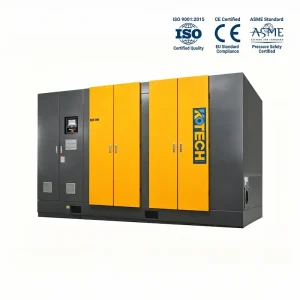
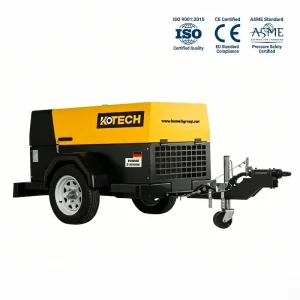
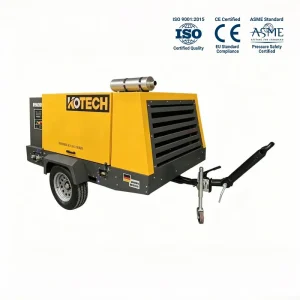
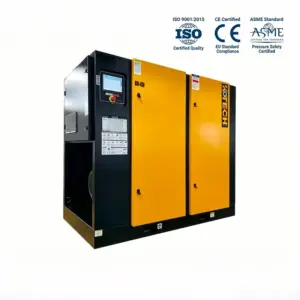
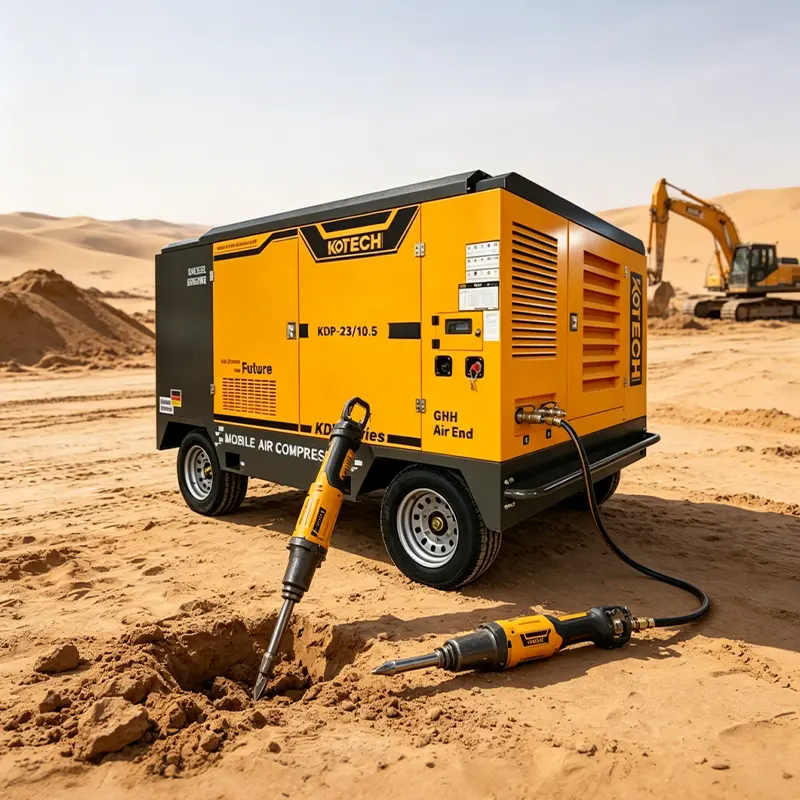
mobile oilfield air compressor Middle East high temperature operation
Related topics (expand)
- rotary screw compressor thermal adaptability
- outdoor oilfield compressor high heat performance
- Middle East desert compressed air unit stability
- industrial compressor cooling system layout optimization
- high temperature lubricant for mobile screw compressor
- thermal expansion control for compressor housing
- desert sand and heat combined equipment protection
- oilfield compressor unplanned downtime solution
- extreme environment compressor R&D practice
Key Insights
Middle East summer extreme ambient heat far exceeds standard mobile compressor design ratings, creating persistent performance decay and unplanned downtime for on-site oilfield drilling and production work.
High temperature does not act alone; combined with intense solar radiation and fine desert sand, it accelerates lubricant degradation, cooling system clogging, and electrical control failure in outdoor mobile air compressors.
Most conventional mobile compressor models are engineered for temperate climates, lacking structural and thermal design margins to sustain stable operation under prolonged 45°C+ desert ambient conditions.
Kotech decade-long R&D on extreme environment mobile compressors focuses on targeted structural optimization, cooling system upgrading, material selection and enclosure protection tailored for Middle East oilfield outdoor working scenarios.
Purpose-built high-temperature design effectively cuts unnecessary maintenance frequency, reduces unexpected shutdown frequency, and extends reliable service cycles for field mobile compressor units in oil and gas projects.
As an industrial air compressor design and R&D engineer with more than ten years focusing on mobile screw compressor structural development and extreme environment adaptability testing, I have spent years reviewing field operation feedback from oil, gas, mining and construction projects across the Middle East. One of the most common and overlooked pain points I observe on a daily basis is how relentless summer heat undermines the stability and output performance of standard outdoor mobile air compressors used for oil exploration, well drilling and on-site engineering work.
Many project operators purchase general-purpose mobile diesel air compressors without fully accounting for the unique climatic characteristics of Middle East summer. Ambient temperatures stay elevated for months, with open-air job sites receiving direct solar radiation all day long. What works perfectly well in European or North American temperate regions often struggles to maintain steady running in desert oilfield environments. This article breaks down the real practical impacts of Middle East summer high heat on outdoor mobile oilfield compressors, and shares the practical optimization design logic Kotech has refined through years of field verification and R&D iteration.
Real Operational Impacts of Middle East Summer Heat on Outdoor Mobile Oilfield Compressors
Ambient Air Density and Actual Compressed Air Output Drop
High ambient temperature naturally lowers atmospheric air density. For positive displacement screw air compressors used widely in mobile oilfield equipment, thinner hot air directly influences inlet charging efficiency. In prolonged high-temperature outdoor conditions, the effective air intake capacity of the compressor rotor system declines gradually, which directly translates to lower actual delivered airflow at the same rated speed.
For oilfield drilling, pipeline maintenance and well servicing tasks, stable and rated compressed air volume is non-negotiable. When output decays under sustained high heat, construction progress slows down, and operators are forced to adjust working schedules or even deploy additional backup units — creating extra operational cost and resource waste. Unlike controlled factory testing environments, Middle East outdoor job sites have no shade or ventilation assistance, letting equipment absorb continuous solar heat buildup day and night.
Accelerated Lubricant Aging and Wear Risk Rise
Compressor lubricant undertakes cooling, sealing, lubrication and anti-oxidation functions inside the screw rotor chamber. Under long-term high ambient temperature and continuous full-load operation, conventional mineral-based lubricants lose stable viscosity balance much faster. When lubricant film thickness cannot stay within the designed range, rotor bearing friction increases, and internal component wear accelerates obviously.
In regular temperate climate operation, maintenance intervals follow standard service schedules. But in Middle East summer field conditions, operators often notice darker oil color, increased carbon deposit formation inside oil circuits, and earlier filter blocking. These are not minor routine issues; they are early warnings of shortened component lifespan and potential sudden mechanical failure if left unaddressed.
Cooling System Load Surge and Easy Overheating Shutdown
Standard mobile compressor cooling systems are sized according to global average ambient design benchmarks. When placed in prolonged 45°C+ open-air environments, the original cooling layout no longer has enough margin to dissipate accumulated heat from engine operation and screw compression heat.
Dust and fine desert sand make the situation worse. Sand particles adhere to cooling fin surfaces, blocking natural airflow and further reducing heat exchange efficiency. It is very common to see generic mobile compressors trigger overheating protection shutdowns during midday peak heat hours, directly interrupting continuous oilfield construction work.
Electrical and Control System Environmental Adaptation Failure
Outdoor mobile compressor control panels, sensors and PLC components all have rated ambient working limits. Under long-term direct sun exposure and high enclosed cabin temperature, electronic components face higher drift risk and sensitivity decline. In many Middle East field cases, intermittent sensor signal errors and automatic protective shutdowns trace back to prolonged thermal stress on electrical systems, rather than mechanical faults.
Kotech Targeted Optimization Design for High-Temperature Outdoor Oilfield Operation
Optimized Cooling System Layout with Higher Heat Dissipation Margin
Based on years of extreme environment field data collection, Kotech re-engineers the cooling system layout for mobile compressor models deployed in Middle East and similar high-temperature regions. Instead of adopting universal cooling module sizing, the design increases overall heat exchange area and optimizes internal airflow channel routing, ensuring sufficient heat dissipation margin even under continuous high ambient temperature and partial dust adhesion.
The cooling fan matching and wind direction layout are also adjusted for open-air static outdoor working conditions, not just for moving vehicle ventilation. This design logic comes directly from real oilfield site feedback, rather than laboratory ideal condition simulation, making it more adaptable to long-time stationary outdoor operation in desert areas.
High-Temperature Resistant Lubricant Matching and Circulation Design
Kotech’s high-temperature optimized mobile compressor configuration recommends specially formulated synthetic lubricant suited for prolonged high-load and high-ambient working scenarios. The formula maintains stable viscosity performance under sustained elevated temperature, slows down oxidation aging speed, and reduces carbon deposit accumulation inside oil circuits.
Meanwhile, the oil circulation pipeline layout is optimized to avoid local dead zones where heat easily accumulates, helping keep overall oil temperature within a stable working window throughout midday peak heat periods. This optimization does not rely on exaggerated parameter promotion, but matches actual maintenance cycle demands of Middle East oilfield projects.
Thermal Structure Material Selection and Expansion Tolerance Design
Different metal materials have different thermal expansion coefficients under wide temperature fluctuations. For outdoor mobile compressors that face drastic temperature difference between day and night plus intense daytime heating, uncontrolled thermal expansion will change internal rotor matching clearance and bring extra running wear.
Kotech adopts strictly selected alloy and cast iron materials for key rotor chamber and housing components, with assembly precision controlled under stable reference temperature conditions. The design reserves reasonable expansion tolerance to accommodate ambient temperature changes, avoiding abnormal friction and performance attenuation caused by thermal deformation in long-term desert operation.
Desert-Grade Enclosure Protection and Heat Isolation Design
Beyond core compression components, the overall unit enclosure is upgraded for high temperature, solar radiation and fine sand intrusion. The structural design adds heat isolation consideration to reduce direct solar heat transfer into the cabin, while maintaining reasonable natural convection airflow. Electrical control compartments follow upgraded ingress protection standards to resist sand dust and high humid heat corrosion common in Middle East outdoor sites.
This integrated enclosure optimization solves the combined impact of heat, sun and sand, rather than only dealing with ambient temperature alone — a key difference from ordinary general-purpose mobile compressors.
Practical Value of High-Temperature Optimization for Middle East Oilfield Operators
For oil exploration, drilling and outdoor engineering contractors in the Middle East, equipment stability directly ties to project timeline and operational cost. Generic mobile compressors may have lower initial purchase cost, but they require more frequent maintenance, face unplanned midday shutdowns, and suffer shorter core component service life under summer high heat.
Kotech’s decade of R&D on extreme environment mobile compressors starts from real field pain points rather than theoretical parameter stacking. Every optimization on cooling layout, lubricant matching, material selection and enclosure protection is verified through long-term site operation feedback. For project owners who need 24/7 reliable compressed air supply in open-air high-temperature oilfield locations, high-temperature tailored design is no longer an optional upgrade, but a necessary configuration to guarantee continuous construction and control long-term operating costs.
Conclusion
Middle East summer high temperature brings multi-dimensional challenges to outdoor mobile oilfield air compressors, covering air output efficiency, lubricant aging, cooling capacity limitation and electrical system stability. Ordinary temperate-climate compressor designs cannot fully adapt to prolonged open-air high-heat working conditions.
With over ten years of industrial compressor R&D and extreme environment iteration experience, Kotech targets these actual field pain points through cooling system upgrading, high-temperature lubricant matching, thermal structure tolerance design and desert-grade enclosure protection. The optimization focuses on real on-site stability, reducing unexpected downtime and lowering long-term maintenance frequency for oil and gas outdoor engineering projects across the Middle East.
Further Reading
- 50°C Desert Heat—How Can Your Compressor Keep Running Without Shutting Down?
- The Toughest Jobs in Mining and Metal Exploration Need a Compressor That Never Quits. KOTECH Delivers.
- Heavy industry tearing up your equipment? Sick of constant downtime? Put KOTECH's rugged screw compressors to the test.
- Portable Diesel Air Compressor | Reliable Off-Grid Pneumatic Power Guide
- Desert oilfield compressor thermal optimization – Heavy Duty Diesel
- How 185 CFM Diesel Air Compressors Are Reshaping Mining Site Efficiency
- 300 CFM Diesel Air Compressors: The Industrial Investment That Saves You Time & Money
- Why 2-Stage Diesel Air Compressors Dominate Long-Term Field Operations: A TCO & Reliability Breakdown
Related Applied Cases
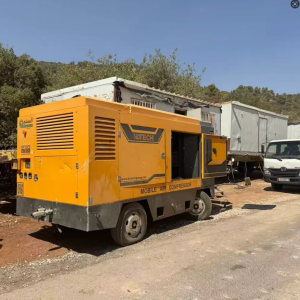
References
Frequently Asked Questions
Standard units are designed for temperate climate benchmarks, with limited cooling margin, ordinary lubricant formulation and basic enclosure protection. Prolonged 45°C+ ambient heat, direct solar radiation and fine desert sand combine to cause output decay, overheating shutdown and faster component aging.
Kotech upgrades cooling layout, adopts high-temperature resistant lubricant matching, reserves thermal expansion tolerance for key components, and adds desert-grade heat insulation and dust protection. All design adjustments are based on actual Middle East field operation feedback instead of laboratory standard parameters.
No. Besides airflow output and mechanical wear, sustained high heat also impacts electrical control panels, sensors and internal electronic components, easily triggering intermittent signal errors and automatic protective shutdowns that interrupt oilfield construction.
Fine sand adheres to cooling fins and blocks natural heat dissipation airflow, further lowering cooling efficiency under already high ambient temperature. It also increases abrasion risk and accelerates filter blocking in regular maintenance cycles.
Not at all. Effective optimization includes cooling layout redesign, lubricant formula matching, material thermal expansion control, cabin heat isolation and electrical compartment protection. Simply upsizing radiators cannot solve the compound impact of heat, sun and sand in outdoor oilfield sites.
They reduce unplanned midday shutdowns that delay construction progress, extend regular maintenance intervals, slow down core component aging, and cut long-term replacement and repair costs for outdoor continuous operation scenarios.