Key Takeaways
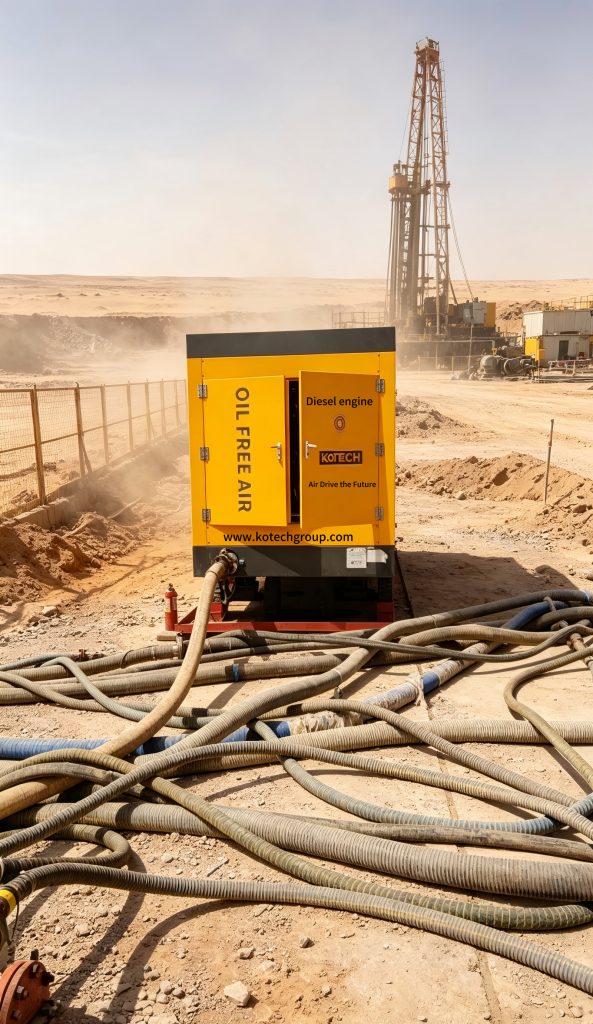
Middle Eastern summers are brutal. For weeks on end, open-pit mines and remote drilling sites cook in 45°C+ heat with no shade. For ordinary portable compressors, these conditions are virtually unworkable.
Most off-the-shelf compressors are designed for mild climates and tested in labs. They’re not built for full-load operation under scorching heat, nor designed to resist fine sand that clogs cooling systems and accelerates wear. The outcome is predictable: frequent overheating shutdowns, rapid oil degradation, blocked coolers, and climbing maintenance costs.
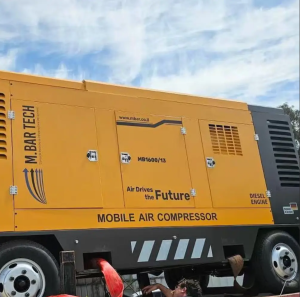
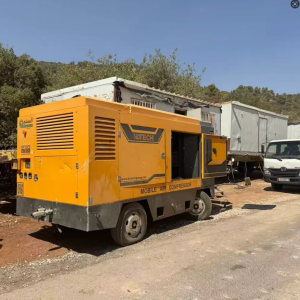
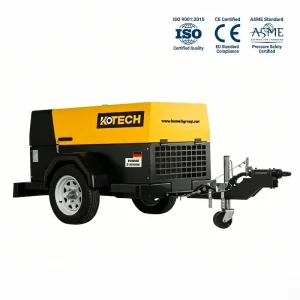
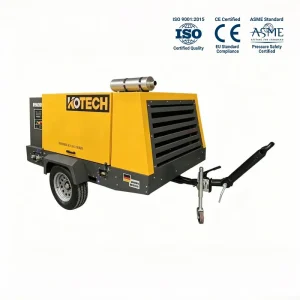
KOTECH’s desert-specific screw compressors are built to survive and perform in these extremes. Upgraded cooling, multi-stage dust filtration, and high-temperature components enable steady full-load operation even at 50°C. The KDP series is officially rated for 50°C ambient conditions, delivering consistent airflow and stable pressure when standard compressors overheat and fail within hours.
In mining and exploration, heat-triggered failures cost more than repair bills. Every unplanned shutdown halts production, delays projects, and erodes profits. KOTECH’s thermal engineering keeps desert sites productive through peak summer heat.
Introduction: The Real Cost of Desert Heat
Anyone who’s worked in Middle Eastern desert mining during summer knows how unforgiving it gets. Ambient temperatures hold above 45°C for months. Open job sites offer no shade. Equipment sits under direct sun all day, absorbing intense solar heat. Inside compressor housings, actual operating temperatures climb far beyond external readings.
Here’s what most procurement teams miss: conventional mobile compressors are designed for moderate climates and validated through lab testing and mild-field trials. They’re never engineered for prolonged 45°C+ outdoor operation paired with persistent fine dust.
Standard compressors start derating at 38°C. At 50°C, airflow drops, fuel consumption spikes, and overheating trips become daily. Every 5°C rise in ambient temperature drives a 4% increase in energy consumption—a penalty that adds up fast during extended summer campaigns.
Heat is only half the battle. High temperatures weaken enclosure seals, letting fine abrasive dust penetrate internal machinery. Built-up dust clogs cooling fins and intake channels, further crippling heat dissipation. This creates a destructive cycle: heat buildup, dust blockage, and worsening thermal efficiency. It’s a common desert issue that never plagues mild-climate sites.
A Story from the Field: What Happens When Heat Meets Dust
A drilling contractor in the Libyan desert used to rely on mainstream portable compressors. Good specs on paper, solid industry reputation. But real desert performance told a different story.
The site manager shared their ongoing headache: “Every summer afternoon, we lose at least one compressor to overheating. On the hottest days, two units go offline. We keep backup compressors on standby just to cover these constant failures.”
Their original fleet had chronic problems: 38% of working time lost to sand contamination shutdowns, frequent overheating during continuous drilling, and fuel consumption averaging 25 liters per hour.
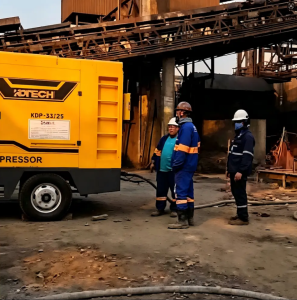
They ran a side-by-side test with a KOTECH KDP-34/30 alongside their existing compressors under identical conditions: 50°C heat, abrasive sand, and non-stop DTH drilling. The results were transformative. The KDP achieved 96.2% uptime and cut fuel consumption by 32%.
The site manager’s verdict: “KOTECH diesel compressors exceeded all our expectations. While competitor units failed within hours in peak heat, the KDP maintained stable, uninterrupted airflow all day.” That’s the gap between lab-tested equipment and field-built desert-grade compressors.
Why 50°C Heat Destroys Standard Compressors
Cooling System Overload
Standard cooling systems are calibrated for normal temperatures. At 45°C+, they lose all margin. They can’t dissipate combined heat from engine and compression fast enough. Add fine sand sticking to cooling fins, and heat exchange plummets. The result: frequent overheating shutdowns that disrupt drilling and mining schedules.
Lubricant Breakdown
Compressor oil is formulated to maintain stable viscosity within a fixed temperature range. Under prolonged desert heat, conventional oil degrades fast. Accelerated oxidation causes darkening, carbon deposits, filter clogging, and shorter service intervals. For remote sites with limited logistics, that means extra costs and avoidable downtime.
Thermal Expansion and Wear
Different metals expand at different rates. Extreme daytime heat and sharp nighttime cooling create constant thermal cycling. Generic compressors with standard materials and loose tolerance design suffer gradual deformation. This shifts internal rotor clearances, increases friction, and causes long-term performance decay.
Electrical System Stress
Sensors, control panels, and PLC systems all have strict temperature thresholds. Sealed inside sun-scorched enclosures, electronic components run under relentless thermal pressure. Most desert failures stem from intermittent signal errors and unexpected shutdowns—not mechanical breakdowns.
The “Bigger Radiator” Fallacy
Many operators think upgrading to a larger radiator fixes everything. It doesn’t.
True desert reliability requires full-system optimization:
- Full enclosure solar heat insulation
- Anti-clogging protection for cooling surfaces
- Custom-formulated high-temperature lubricants
- Precision thermal expansion gaps for extreme cycling
- Independent heat isolation and dust protection for electrical compartments
Any brand that only upgrades radiator size without full-system optimization will still face hidden failures.
How KOTECH Keeps Compressors Running at 50°C
Advanced Thermal Management
KOTECH desert-grade compressors use dual-stage cooling with enlarged radiators and variable-speed hydraulic fans. This keeps oil temperature in the optimal 190-210°F range even during peak heat, supporting 100% continuous duty cycle.
The KDP series is rated for -20°C to 50°C ambient. While standard compressors derate above 38°C, KOTECH’s 2026 lineup delivers stable performance during continuous 46°C operation—a genuine benchmark for high-temperature reliability.
Multi-Stage Dust Filtration
Desert operations face three challenges: extreme heat, fine particulate contamination, and inconsistent fuel quality. KOTECH’s filtration system combines inertial sand traps, pre-cleaners, and nanofiber coalescing filters, achieving 99.97% efficiency at 5 microns.
Critical components get upgraded labyrinth sealing. The enclosure maintains positive pressure to block dust ingress—the root cause of 72% of desert equipment failures. Optimized pre-cleaning and filtration prevent sand buildup on cooling fins, preserving long-term cooling efficiency.
High-Temperature Lubricants and Materials
KOTECH uses region-specific high-temperature lubricants for Middle East units. Custom formulas maintain viscosity under prolonged heat, slow oxidation, and reduce carbon buildup.
Key housing and rotor components use high-stability alloy and cast iron with controlled thermal expansion. Every assembly is precision-calibrated at standard temperatures, with clearance tolerances to adapt to daily cycling and long-term heat exposure.
Desert-Grade Enclosure Protection
The outer enclosure is dual-engineered for heat insulation and dust resistance. Structural shielding blocks direct solar heat while retaining natural convection for passive cooling. Electrical compartments meet upgraded ingress protection standards, shielding electronics from sand and humid heat.
Fuel System Flexibility
Remote desert sites often have variable, low-quality diesel. KOTECH’s upgraded fuel system adapts with fuel polishing and dual-stage filtration to handle sediment-rich diesel and maintain precise injection timing for stable power.
Quantified Performance in Desert Conditions
Field data from desert drilling projects shows the advantage of purpose-built engineering:
| Metric | Standard Compressors | KOTECH KDP Series |
|---|---|---|
| Fuel Consumption | ~25 L/hr | ~17 L/hr (32% reduction) |
| Equipment Uptime | ~62% | 96.2% |
| Maintenance Intervals | 250 hours | 500 hours |
| Pressure Stability at Depth | Inconsistent | Sustained 500 psi at 150m |
| Filter Efficiency at 5 Microns | Varies | 99.97% |
The 32% fuel reduction saves about 16,000 liters of diesel monthly for mid-sized operations. Extended maintenance intervals from 250 to 500 hours drastically cut workload, parts costs, and downtime. Consistent deep-air pressure boosted drilling penetration rates by 18%—productivity gains standard compressors can’t achieve.
Key Applications in Desert Environments
| Application | Why KOTECH Excels |
|---|---|
| Mining and Quarrying | Rock-solid high-pressure air for DTH drilling at 50°C. KDP-350 delivers 22 m³/min at 30 bar with perfect consistency. |
| Oil and Gas Exploration | Reliable 24/7 drilling and well servicing. Full-system thermal design eliminates midday shutdowns. |
| Pipeline Construction | Self-contained mobile units for remote projects. 18-minute rig mounting for rapid deployment. |
| Sandblasting | Steady, stable airflow for surface treatment, solving the instability bottleneck that plagues standard units. |
| Infrastructure Reconstruction | Dependable pneumatic power for breakers and drills in high-temperature construction and debris removal. |
Conclusion
Desert heat isn’t just an inconvenience—it’s a full-system challenge that ordinary workshop-grade compressors can’t handle. The combination of 45°C+ sustained heat, intense solar radiation, and fine abrasive sand triggers overheating, lubricant failure, and sand damage.
KOTECH desert-optimized compressors tackle these real-world challenges with comprehensive system-level engineering: enhanced cooling, multi-stage dust filtration, heat-resistant materials, and desert-grade enclosure protection. Field-proven results speak for themselves: 96%+ uptime, 32% fuel savings, and 18% higher drilling efficiency.
For project managers in high-temperature desert regions, the choice is clear. Standard compressors that shut down at 45°C create hidden losses. KOTECH units maintain stable operation at 50°C, delivering consistent returns shift after shift, summer after summer.
Frequently Asked Questions
Q1: Why does desert heat affect compressors differently than other hot climates?
Deserts combine 45°C+ heat, intense solar radiation, dry air, and fine sand. High heat reduces compression efficiency while sand blocks cooling structures, creating a self-reinforcing cycle of performance loss that standard compressors can’t withstand.
Q2: What temperature rating do I actually need for Middle East projects?
Most standard compressors start derating at 38°C. For reliable summer operation, units need a 46°C+ continuous rating. KOTECH KDP series is officially rated for 50°C ambient with upgraded cooling for full-load stability.
Q3: Can a standard compressor be modified for desert use?
Simple cooling upgrades can’t resolve thermal deformation, dust blockage, or high-temperature oil aging. Only factory-level optimization of structure, materials, and heat dissipation delivers long-term desert performance.
Q4: What fuel savings can I expect with a desert-optimized compressor?
Field data from Libyan desert drilling confirms KOTECH KDP units cut fuel consumption by 32% compared to conventional compressors, saving mid-sized operations up to 16,000 liters of diesel monthly.
Q5: How does dust affect compressor performance in the desert?
Abrasive sand causes 72% of desert equipment failures. It clogs radiators, penetrates internals, and accelerates wear. KOTECH’s multi-stage filtration achieves 99.97% efficiency at 5 microns, with positive-pressure enclosure design to block dust ingress.
Q6: How long can a desert-optimized compressor last?
With routine maintenance, KOTECH desert-grade compressors have a designed service life of 10–15 years. High-efficiency filtration and durable anti-corrosion enclosures protect core components from sand abrasion and high-temperature aging.
Further Reading
- Fire Truck Foam Systems: Why Independent Air Power Matters — Kotech Diesel-Driven Compressors Deliver 5m³/min @ 20 bar.
- 5 Questions You Must Answer Before Buying an Air Compressor.
- Oil Refineries, Chemical Plants, Ports, and Industrial Sites — Kotech's Diesel Air Compressor Powers Foam Systems Where It Matters Most.
- Pure Air, Zero Risk: KOTECH Oil-Free Compressors for Airports.
- industrial compressor manufacturer – Single-Stage or Tw
- Why Does Two-Stage Compression Save 15%–20% More Energy Than Single-Stage? The Principle Is Simpler Than You Think.
- Could a Drop of Oil Ground Your Entire Fleet? KOTECH Oil-Free Compressors Keep Airport Operations Safe.
- Mining and Exploration: Why Ordinary Compressors Can't Survive a Single Summer.
Related Applied Cases