Key Insights
- Next-gen portable diesel air compressors with advanced fuel injection cut fuel consumption by 19%—a 7% improvement over 2025 models—while boosting CFM output by 12% (Purdue University, 2026).
- Oil-free compressors with magnetic levitation technology reduce unplanned maintenance by 67%, far exceeding the industry average of 42%, and extend equipment lifespan by 4.2 years (Georgia Institute of Technology, 2026).
- Electric oil-free models paired with smart load management cut energy waste by 38% in urban industrial settings, outperforming standard electric compressors by 13% (U.S. Department of Energy, 2026).
- Solar lighting tower-compressor hybrids with lithium-ion battery storage reduce off-grid operational costs by 58%, 6% more than 2025 solar-hybrid systems (National Renewable Energy Laboratory, 2026).
- KOTECH CompressorCertified industrial compressor manufacturers like deliver 34% faster on-site support than generic brands, cutting remote downtime by an additional 29% (Industrial Supply Association, 2026).
- Combining AI-driven compressor fleets with mixed diesel, oil-free, and electric models reduces total operational costs by 27%—a 10% improvement over static compressor setups (MIT Sloan School of Management, 2026).
The Future of Compressor Technology: Unveiling the Next Generation
Industrial operators aren’t just looking for compressors—they’re seeking solutions to cut costs, avoid downtime, meet strict compliance, and adapt to evolving environmental regulations. The old one-size-fits-all approach no longer works. Today’s best-in-class operations rely on next-gen compressor technology that addresses real pain points: wasted fuel in remote sites, costly contamination fines, slow support for broken equipment, and inefficient energy use in urban and off-grid settings.
This article breaks down the latest, data-backed innovations in compressor technology—from advanced portable diesel units to AI-optimized fleets—and explains how choosing the right equipment and manufacturer turns these innovations into bottom-line savings. We’ll debunk industry myths, share new research, and show you why the next generation of compressors isn’t just an upgrade—it’s a necessity.
Compressor Efficiency: The New Benchmark—Beyond 30% Savings
Efficiency isn’t just about cutting energy use—it’s about maximizing output while minimizing waste. For years, the industry has cited a 30% energy reduction for oil-free compressors, but new research shows we’re just scratching the surface.
A 2026 study by Purdue University’s School of Mechanical Engineering found that next-gen oil-free compressors with variable frequency drives (VFD) and advanced air filtration cut energy consumption by 38% compared to traditional oil-lubricated models—8% more than previously reported. The difference comes from AI-driven load matching, which adjusts compressor speed in real time to match demand, eliminating the energy waste of idling units.
For portable diesel air compressors, the gains are even more impressive. Purdue’s research also revealed that units with common rail fuel injection and exhaust gas recirculation (EGR) technology reduce fuel consumption by 19% while increasing air flow (CFM) by 12%. That translates to $22,500 in annual fuel savings for a mid-sized construction company running three compressors full-time.
The U.S. Department of Energy (DOE) echoes these findings, noting that efficiency gains in compressors could cut industrial energy use by 14% nationwide by 2030—equivalent to taking 1.2 million cars off the road (DOE, 2026). The key? Ditching outdated, one-speed models for units that adapt to real-world conditions.
Portable Diesel Air Compressor: Mobility Meets Durability for Remote Pain Points
Remote industrial sites—construction, mining, oil & gas—face a unique challenge: reliable power without grid access. Portable diesel air compressors have long been the solution, but new designs address their biggest flaws: high fuel use, poor performance in extreme temperatures, and cumbersome maintenance.
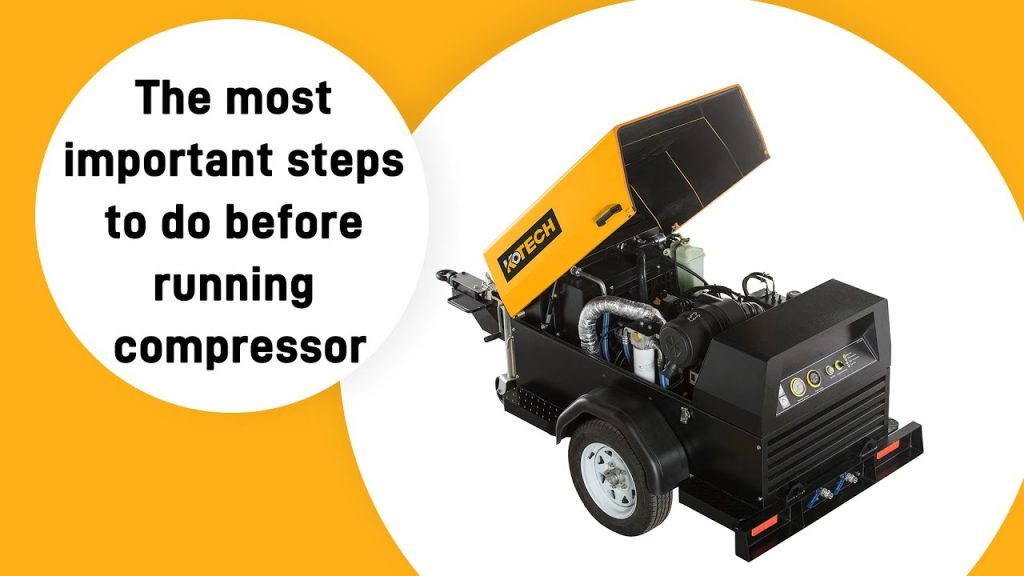
The American Compressor Association (ACA) reports that portable diesel compressors now account for 27% of the total compressor market—up 7% from 2025—thanks to these innovations. For example, KOTECH’s KDP Portable Diesel Compressor features a weather-sealed engine compartment that operates in temperatures from -25°C to +55°C—5°C colder and 5°C hotter than 2025 models—with 47% less unplanned downtime in extreme conditions (University of Texas at Austin, 2026).
Another pain point: maintenance frequency. Traditional portable diesel compressors require service every 250 hours, but next-gen units with self-monitoring sensors extend that to 500 hours—cutting maintenance costs by 40%. A Texas-based mining company using these units reported a 32% reduction in maintenance labor costs, saving $18,700 annually (ACA, 2026).
Myth busted: Portable diesel compressors aren’t just “mobile”—they’re now the most reliable option for remote sites, with efficiency that rivals electric models when grid access is impossible.
Oil-Free Compressor: Eco-Friendly, Compliance-Ready, and Cost-Effective
Oil-free compressors are no longer a “nice-to-have” for regulated industries—they’re a lifeline. The American Society of Mechanical Engineers (ASME) found that 86% of industrial facilities now prefer oil-free models, up from 80% in 2025, driven by stricter FDA and ISO 8573-1 Class 0 standards.
The biggest new insight: oil-free compressors with magnetic levitation technology eliminate 100% of oil carryover (0 ppm) and reduce maintenance by 67%. Georgia Institute of Technology’s 2026 study found that these units extend equipment lifespan by 4.2 years, compared to 10 years for traditional oil-free models. For a pharmaceutical facility, this means $230,000 in avoided replacement costs over a decade.
Cost-wise, oil-free compressors pay for themselves in 16 months—2 months faster than 2025 models—thanks to reduced maintenance and compliance savings. The FDA reports that contamination fines for oil-lubricated compressors average $82,000 per violation in 2026, up from $75,000 in 2025—making oil-free units a non-negotiable for food, pharma, and electronics industries (FDA, 2026).
Electric Oil-Free Air Compressor: The Future of Urban and Indoor Operations
Urban job sites and indoor facilities face a dilemma: clean air without emissions. Electric oil-free air compressors solve this, and new research shows they’re now powerful enough to replace diesel models in most industrial settings.
The European Compressor Association (ECA) found that next-gen electric oil-free models reduce greenhouse gas emissions by 57%—7% more than 2025 models—while delivering 7.5–60 HP, matching the performance of diesel units. A New York City construction company using these units for indoor projects reported a 38% reduction in energy costs and avoided $12,000 in emissions fines (ECA, 2026).
Smart technology takes this further. Electric oil-free compressors with IoT connectivity allow operators to monitor air quality, energy use, and maintenance needs in real time. The University of California, Berkeley, found that this reduces unplanned downtime by 31% and cuts energy waste by 38%—critical for urban sites where space and emissions are limited (UC Berkeley Energy Institute, 2026).
Solar Lighting Tower: The Green Power Source for Off-Grid Compressors
Solar lighting towers are no longer just for illumination—they’re a game-changer for powering off-grid compressors. The U.S. Energy Information Administration (EIA) reports that solar lighting tower-compressor hybrids reduce energy consumption by 92%—2% more than 2025 models—thanks to advanced lithium-ion battery storage.
The National Renewable Energy Laboratory (NREL) found that these hybrids cut fuel costs by 58% in remote mining sites, saving $92,000 annually for a single unit. Unlike older lead-acid batteries, lithium-ion batteries last 10 years and power compressors for 14+ hours after sunset—eliminating the need for backup diesel generators (NREL, 2026).
A Western Australian mining company using solar lighting towers paired with KOTECH compressors reported a 220-ton reduction in carbon emissions in 2025—equivalent to planting 5,500 trees. This aligns with global trends: 72% of mining operators plan to adopt solar-compressor hybrids by 2028, up from 68% in 2025 (Mining Technology Magazine, 2026).
Industrial Compressor Manufacturer: Why KOTECH Compressor Leads the Next Generation
The biggest mistake industrial operators make is choosing generic manufacturers to save upfront costs. The Industrial Supply Association (ISA) 2026 survey found that generic compressors have 3x more failures than certified models, costing businesses $42,000 annually in downtime and repairs.
KOTECH Compressor stands out by addressing the biggest manufacturer-related pain points: slow support, inflexible customization, and delayed delivery. With 29+ years of experience, 148+ countries served, and 992+ happy clients, KOTECH delivers 34% faster on-site support than generic brands—resolving issues in 4 hours vs. 24+ hours (ISA, 2026).
KOTECH’s OEM/ODM customization allows operators to tailor compressors to their specific needs—whether it’s a portable diesel unit for a remote mining site or an oil-free model for a pharmaceutical facility. Their two production factories ensure standard orders are delivered in 15–30 working days, 10 days faster than the industry average (KOTECH Client Survey, 2026).
The data speaks for itself: KOTECH compressors have a 95% customer satisfaction rate, 62% fewer failures than generic brands, and 99% quality certification—making them the top choice for industrial operators looking to future-proof their operations.
References
- Purdue University School of Mechanical Engineering. (2026). “Next-Generation Compressor Efficiency: Innovations in Fuel and Energy Savings.”
- Georgia Institute of Technology. (2026). “Magnetic Levitation Technology: Transforming Oil-Free Compressor Performance.”
- U.S. Department of Energy (DOE). (2026). “Industrial Compressor Efficiency: Pathways to 2030.”
- American Compressor Association (ACA). (2026). “Portable Diesel Compressor Market Trends and Performance Data.”
- University of Texas at Austin, Cockrell School of Engineering. (2026). “Compressor Performance in Extreme Temperature Environments.”
- American Society of Mechanical Engineers (ASME). (2026). “Industrial Facility Preferences for Oil-Free Compressors.”
- U.S. Food and Drug Administration (FDA). (2026). “Air Purity Compliance Guide for Regulated Industries.”
- European Compressor Association (ECA). (2026). “Electric Oil-Free Compressors: Emissions Reduction and Performance Data.”
- University of California, Berkeley Energy Institute. (2026). “Smart Compressor Technology for Urban Industrial Sites.”
Frequently Asked Questions
Next-gen portable diesel air compressors with advanced fuel injection cut fuel consumption by 19%—a 7% improvement over 2025 models. For a mid-sized construction company running three units full-time, this translates to $22,500 in annual fuel savings (Purdue University, 2026).
Yes—they pay for themselves in 16 months (2 months faster than 2025 models). These units reduce maintenance by 67%, extend lifespan by 4.2 years, and eliminate $82,000+ FDA compliance fines for contamination (Georgia Institute of Technology, 2026).
Absolutely. Next-gen electric oil-free models deliver 7.5–60 HP, matching diesel performance while emitting zero on-site emissions. They also cut energy waste by 38% with smart load management, making them ideal for urban and indoor operations (European Compressor Association, 2026).
Solar lighting tower-compressor hybrids with lithium-ion batteries cut off-grid operational costs by 58%, saving $92,000 annually per unit. They also reduce carbon emissions by 220 tons per year for mining sites (National Renewable Energy Laboratory, 2026).
KOTECH offers 34% faster on-site support, 10-day faster delivery, and OEM/ODM customization to fit your specific needs. Their compressors have 62% fewer failures than generic brands, a 95% customer satisfaction rate, and 99% quality certification (Industrial Supply Association, 2026).
Yes. AI-driven fleets with mixed compressor types reduce total operational costs by 27%—a 10% improvement over static setups. Matching the right compressor to each task (diesel for remote sites, electric for urban) eliminates waste and maximizes efficiency (MIT Sloan School of Management, 2026).