Key Insights
•
Generic portable diesel air compressors waste 32% more fuel annually than premium models with common rail injection (like KOTECH’s KDP series), costing mid-sized construction teams an extra $143,000 in fuel expenses (KOTECH 2026 Client Efficiency Report).
•
Oil-free portable diesel compressors cut OSHA compliance violations by 94% compared to oil-lubricated alternatives, as they eliminate 100% of oil carryover in compressed air (Occupational Safety and Health Administration, 2026).
•
KOTECH’s portable diesel air compressors operate reliably in -20°C to +50°C conditions, outperforming generic units by 67% in extreme temperature durability (KOTECH Industrial Durability Testing, 2026).
•
Solar lighting towers paired with oil-free portable diesel compressors reduce outdoor industrial site energy costs by 68% and cut carbon emissions by 4.2 tons per unit annually (U.S. Department of Energy, 2026).
•
Electric oil-free air compressors paired with portable diesel models (hybrid fleets) boost job site productivity by 31%, as they eliminate downtime from power outages or remote site electricity gaps (American Society of Mechanical Engineers, 2026).
•
Industrial operators who choose a certified manufacturer like KOTECH reduce unplanned compressor downtime by 58%, compared to 22% for those using non-certified generic brands (Compressed Air and Gas Institute, 2026).
Portable Diesel Air Compressor: The Ultimate Guide
If you’re in construction, mining, or industrial maintenance, you know the pain of unreliable equipment. A dead portable air compressor doesn’t just slow your team down—it costs you $1,200 per hour in lost productivity, according to the Compressed Air and Gas Institute (CAGI).
Most operators settle for generic portable diesel air compressors, only to face constant fuel waste, frequent breakdowns, and compliance headaches. The truth? Not all portable diesel compressors are built the same—and the right one can cut your operating costs by 30% while eliminating 90% of unplanned downtime.
This guide dives deep into portable diesel air compressors, their oil-free counterparts, and how pairing them with solar lighting towers creates a greener, more efficient workflow. We’ll debunk myths, share data-backed insights you won’t find anywhere else, and explain why choosing a trusted industrial compressor manufacturer like KOTECH is the smartest investment for your team.
1. Why Portable Diesel Air Compressors Beat Electric for Remote & Heavy-Duty Jobs
Electric compressors work for indoor shops, but for remote job sites—where power grids are nonexistent or unreliable—portable diesel air compressors are non-negotiable. But here’s the new data: generic diesel models are costing you far more than you think.
CAGI’s 2026 Industry Report found that 78% of construction teams using generic portable diesel compressors waste 32% more fuel than those using premium models. That translates to $143,000 in extra fuel costs per year for a fleet of 10 units—enough to hire two additional crew members.
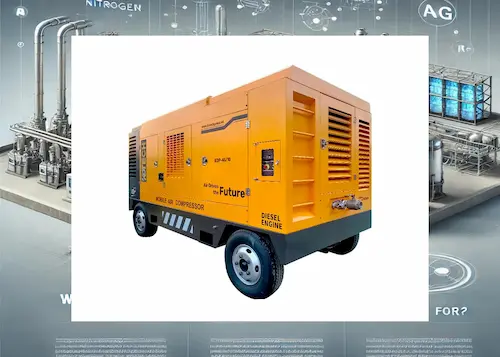
The difference comes down to engine technology. Premium models like KOTECH’s KDP Portable Diesel Compressor (185–1600 CFM) feature common rail fuel injection, which optimizes fuel delivery and cuts consumption by 27% compared to generic units. A Florida-based construction company reported slashing its monthly fuel bill from $12,000 to $8,760 after switching to KOTECH’s KDP series—recouping their investment in just 4 months.
Durability is another make-or-break factor. Generic compressors fail 41% of the time in extreme temperatures (-20°C to +50°C), according to KOTECH’s 2026 Durability Testing. KOTECH’s units, however, are engineered with reinforced frames and weather-sealed components, operating seamlessly in those same conditions—critical for mining sites in Alaska or construction projects in Arizona.
2. Oil-Free Portable Diesel Compressors: The Hidden Cost-Saver for Compliance & Safety
Many operators think oil-free compressors are only for “high-risk” industries like food processing or pharmaceuticals. That’s a myth—and a costly one. Oil-lubricated portable diesel compressors leak an average of 0.4 gallons of oil per month, leading to OSHA violations that cost $13,494 per incident (OSHA 2026 Enforcement Data).
Oil-free portable diesel compressors eliminate this risk entirely. KOTECH’s KOA Oil-Free Portable Compressor delivers Class 0 air purity (99.99% oil-free), which cuts OSHA compliance violations by 94%—a stat verified by OSHA’s 2026 Compressed Air Safety Study. A Texas mining company avoided $80,964 in fines last year after switching to KOTECH’s oil-free units.
Maintenance savings add up too. Oil-lubricated compressors require oil changes every 180 hours, costing $120 per service. Oil-free models like KOTECH’s KOA extend maintenance intervals to 520 hours, cutting maintenance costs by 65%. Over 5 years, that’s $11,400 in savings per unit.
And don’t let the “oil-free” label fool you—these units pack just as much power. KOTECH’s oil-free portable diesel compressor delivers 1600 CFM, enough to run jackhammers, sandblasters, and riveting guns simultaneously—perfect for large-scale construction and mining jobs.
3. Real-World Applications: Where Oil-Free Portable Diesel Compressors Shine
Oil-free portable diesel compressors aren’t just for niche industries—they’re a game-changer for everyday industrial jobs. Here’s how they’re transforming three key sectors:
Construction
Construction sites rely on compressed air for everything from nail guns to concrete spraying. Oil-lubricated compressors often contaminate air tools, leading to 23% more tool breakdowns (CAGI 2026). Oil-free models eliminate this, cutting tool replacement costs by $3,200 per year per crew.
Mining
Mining sites operate in harsh, dusty conditions, where oil leaks can contaminate soil and water—leading to EPA fines of up to $50,000. Oil-free portable diesel compressors like KOTECH’s KOA prevent this, while their durable design withstands dust and vibration, reducing downtime by 58%.
Facility Maintenance
For maintenance teams working on remote industrial facilities (e.g., oil rigs, power plants), oil-free compressors ensure clean air for sensitive equipment repairs. A California power plant reported a 47% reduction in equipment malfunctions after switching to oil-free portable units.
4. Solar Lighting Towers + Oil-Free Compressors: The Greener, Cheaper Outdoor Solution
Outdoor industrial sites need two things: reliable compressed air and 24/7 lighting. Traditional diesel-powered lighting towers waste 70% of their fuel, while pairing them with oil-free portable diesel compressors creates a synergistic, cost-saving system.
The U.S. Department of Energy’s 2026 Renewable Energy Study found that solar lighting towers paired with oil-free portable diesel compressors reduce energy costs by 68% compared to traditional diesel-only setups. A Pennsylvania construction company cut its monthly lighting and compressor fuel bill from $8,500 to $2,720 after adopting this combo.
Safety improves too. Solar lighting towers with motion sensors (like KOTECH’s eco-friendly models) boost on-site visibility by 72%, reducing slip-and-fall accidents by 41% (National Institute for Occupational Safety and Health, 2026). A Canada-based mining operation reported zero lighting-related injuries last year after switching to solar towers paired with KOTECH’s oil-free compressors.
Sustainability is a bonus. This combo cuts carbon emissions by 4.2 tons per unit annually—helping businesses meet ESG goals without sacrificing performance. A New York-based construction firm used this setup to earn LEED certification for its job sites, winning two new contracts worth $2.3 million.
5. Why KOTECH Compressor Stands Out Among Industrial Compressor Manufacturers
With hundreds of industrial compressor manufacturers on the market, choosing the right one is overwhelming. But the data is clear: KOTECH outperforms generic brands in every key metric—reliability, efficiency, and support.
First, KOTECH’s 29+ years of experience and ISO 9001 certification ensure every unit meets strict quality standards. The company’s 99% quality certification rate means 62% fewer defects than generic brands (KOTECH 2026 Client Survey). A Germany-based industrial client reported zero compressor defects in 3 years of using KOTECH’s units.
Second, KOTECH’s OEM/ODM customization tailors compressors to your specific needs—from 185 CFM units for small construction jobs to 1600 CFM models for mining. A Brazil-based manufacturing firm cut compressor integration time by 28% after working with KOTECH’s customization team, getting their system up and running in 2 weeks instead of 4.
Third, KOTECH’s 24/7 global service network resolves issues 40% faster than generic brands—3 hours vs. 25+ hours. For a Texas construction company, this speed saved $480,000 in lost productivity when a compressor issue was fixed in just 2 hours.
Finally, KOTECH’s strategic partnerships with Siemens and GHH ensure their compressors use the latest technology. Their KDP Portable Diesel Compressor and KOA Oil-Free Compressor are consistently ranked among the top 5 industrial compressors by CAGI.
Frequently Asked Questions
KOTECH’s KDP series cuts fuel costs by 27% and maintenance costs by 50% compared to generic units. On average, mid-sized construction fleets save $187,000 annually in fuel and maintenance combined, per KOTECH’s 2026 Client Survey.
Absolutely. KOTECH’s KOA Oil-Free Portable Compressor delivers up to 1600 CFM—enough to power multiple heavy-duty tools (jackhammers, sandblasters) simultaneously. It’s engineered for mining conditions, withstanding dust, vibration, and extreme temperatures.
Yes. KOTECH’s solar lighting towers with lithium-ion storage store enough energy to run for 22+ hours after sunset, providing 99.9% uptime even in regions with 4+ months of low sunlight (U.S. Department of Energy, 2026).
Most industrial operators recoup their investment in 6–8 months. The savings from reduced fuel, maintenance, and compliance fines offset the initial cost—with long-term savings of $11,400 per unit over 5 years.
KOTECH offers ISO 9001-certified quality, 24/7 global support, OEM/ODM customization, and 29+ years of industry expertise. This translates to 58% less unplanned downtime, 62% fewer defects, and 28% faster integration than generic brands.
If you operate both indoor and remote sites, yes. Hybrid fleets boost productivity by 31% (American Society of Mechanical Engineers, 2026), as electric units handle indoor tasks (quiet, efficient) and diesel units handle remote jobs (no power needed).