Key Takeaways
Compressed air is everywhere in pharmaceutical manufacturing. It pushes tablet presses, moves powders through pipes, keeps fermentation tanks alive, and blows debris off packaging lines. Most plant managers know this. What they don’t always think about is this: if that air carries even a whiff of oil, an entire batch can end up in the trash.
Not “might.” Can. And does.
Regulators like the FDA and EMA don’t mess around with oil contamination. One bad test result can trigger a Form 483, a product recall, or worse—a full shutdown of your facility. The cost of a recall alone can run into millions. The hit to your reputation? That lasts even longer.
That’s why oil-free compressors have become the default in pharma, not the exception. The benchmark everyone aims for is ISO 8573-1 Class 0—the strictest air purity standard out there. It requires zero oil, in any form: liquid, mist, or vapor.
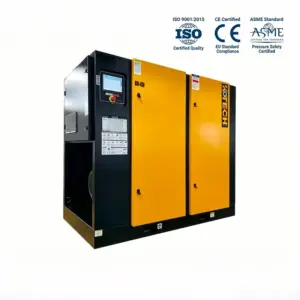
KOTECH’s KDOF Series dry screw compressors are built to this standard. They deliver 100% oil-free air, no filters required, no compromises. For pharmaceutical manufacturing, where product integrity is the whole point, oil-free isn’t a feature. It’s a requirement.
Introduction: The Problem Nobody Talks About—Until It’s Too Late
A few months ago, I talked to a quality manager at a mid-sized pharma plant in Southeast Asia. He told me about an audit that still makes him cringe.
His facility passed most of the inspection without issues. Then the auditor turned to the compressed air system. “Show me your ISO 8573-1 certification,” he said. “And show me your oil contamination test results from the last 12 months.”
They pulled the records. The numbers showed oil content consistently above Class 1 limits. Nothing catastrophic had happened yet, but the system wasn’t compliant. The plant got a corrective action notice. They had 90 days to fix it or face production restrictions.
The manager told me: “We’d been running oil-injected compressors for eight years. We thought the filters were doing the job. But nobody told us how fast filter efficiency drops off. We didn’t find out until the lab results came back.”
This isn’t a one-off story. Compressed air gets treated like a utility, but it’s a direct input to your product. If it’s contaminated, your product is contaminated. And the consequences are real.
The simplest fix: take the oil out of the equation entirely. Use oil-free compressors.
A Real Story: One Plant’s Move to Class 0
A few years ago, we worked with a pharmaceutical manufacturer in Thailand. They made tablets, capsules, and sterile solutions—all of which need compressed air for mixing, coating, fermentation, and cleaning.
They’d been running oil-injected compressors with multi-stage filtration. On paper, the system was supposed to deliver “technically oil-free” air. In practice, they kept running into three headaches:
- Filters degraded fast. Thailand’s warm climate made things worse. At 30°C, oil carryover through filters can be 20 times higher than at 20°C. The filters just couldn’t keep up.
- Maintenance ate up time and money. Monthly filter changes, oil checks, disposal costs. The maintenance team spent more time on the filtration system than on production.
- Audits were always stressful. Every inspection required fresh documentation. Every batch needed extra testing. The uncertainty never went away.
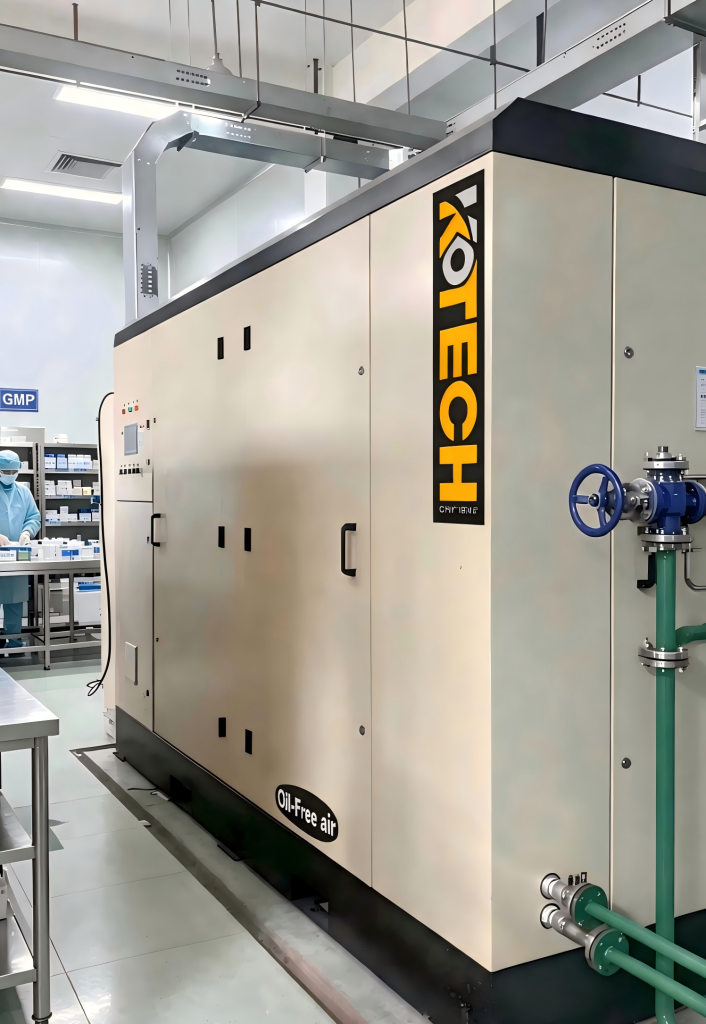
We replaced their system with six KOTECH KWI Series water-lubricated oil-free compressors. The difference was immediate:
| Metric | Before (Oil-Injected + Filters) | After (KOTECH Oil-Free) |
|---|---|---|
| Oil content | Inconsistent, often above Class 1 | 0 ppm — ISO Class 0 certified |
| Maintenance | Monthly filter changes | Minimal—no oil to change |
| Audit confidence | Always uncertain | Full traceability, no surprises |
| Downtime | Unplanned filter failures | Stable 24/7 operation |
The plant manager’s take: “We should have done this years ago. The peace of mind alone makes it worth it.”
Why Oil-Free Is the Only Real Choice for Pharma
Compliance Isn’t Optional
Pharma is one of the most tightly regulated industries on the planet. FDA, EMA, MHRA—they all require documented proof that compressed air won’t contaminate products.
ISO 8573-1 is the global standard. Class 0 is the highest level—stricter than Class 1. It means:
- Zero oil—no aerosols, no vapor, no liquid
- Measurable and verifiable—all three forms tested
- Certified by independent labs—not self-declared
Oil-free compressors are the only reliable way to hit Class 0 consistently. Oil-injected with filters might get close, but close isn’t good enough in pharma.
Oil Ruins Products
Here’s what happens when oil gets into your compressed air:
- Tablets and capsules: Oil messes up coating, affects dissolution rates, and causes visual defects. Worst case: the batch fails potency testing.
- Fermentation: Oil kills the microbial cultures you’re trying to grow. For biologics, that means weeks of work down the drain.
- Packaging: Oil-contaminated air can cause sterilization failures in blister packs and vials.
- Instrumentation: Pneumatic valves and actuators drift or fail when oil vapor builds up. That means line stoppages and wasted product.
“Technically Oil-Free” Isn’t Good Enough
Some manufacturers use oil-injected compressors with filters and call the output “technically oil-free.” Here’s why that’s risky:
- Filters depend on temperature. At 30°C, oil carryover can be 20 times higher than at 20°C.
- Carbon filters saturate without warning. A filter rated for 1,000 hours might only last 50 hours at 40°C. And you won’t know it’s failed until oil starts showing up downstream.
- Vapor slips through. Many filtration systems trap liquid and aerosol oil, but let vapor through. Vapor condenses later, causing contamination down the line.
Oil-free compressors eliminate these variables. No oil in the compression chamber means nothing to filter out. The air is clean, period.
KOTECH’s Oil-Free Solutions for Pharma
KOTECH offers two oil-free compressor lines built for pharmaceutical applications:
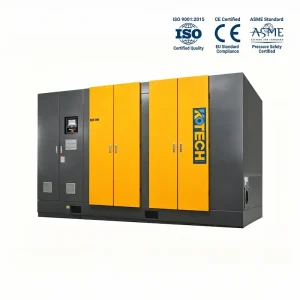
KDOF Series Dry Screw Compressors
These use two-stage dry compression with no oil in the compression chamber. They deliver ISO 8573-1 Class 0 air, guaranteed.
- GHH airends—trusted in critical applications worldwide
- Chromium-coated rotors—resistant to heat and corrosion
- Dual-stage design—efficient heat dissipation
- Fixed-speed and VSD options—match your production load
KWI Series Water-Lubricated Compressors
For applications where even trace vapor is unacceptable, water-lubricated compressors use water instead of oil for sealing and cooling.
- Zero oil in the compression chamber—no risk of carryover
- Self-lubricating seals—lower maintenance, longer life
- VSD option—energy savings for variable loads
Both series are CE certified and comply with ASME, TUV, UL, and SGS standards. They’re built for the demands of GMP-compliant production.
Where Oil-Free Compressed Air Is Used in Pharma
Compressed air touches almost every part of pharmaceutical production. Here are the critical applications:
| Application | Why Oil-Free Matters |
|---|---|
| Tablet and capsule manufacturing | Air contacts product during mixing, granulation, coating, and compression. Oil contamination means batch rejection. |
| Packaging | Blister packs, vials, and containers cleaned with compressed air. Sterility must be maintained. |
| Fermentation | Air is aerated into bioreactors. Oil kills cultures and ruins active ingredients. |
| Instrumentation | Pneumatic valves and actuators need clean, dry air. Oil and moisture cause failures. |
| Drying | Vacuum drying removes moisture from products. Contaminated air recontaminates them. |
| Cleanrooms | Air in cleanrooms must meet particle and purity standards. Oil aerosols violate them. |
Each of these requires ISO 8573-1 Class 0 or Class 1 air. Oil-free compressors deliver it consistently.
The Real Cost Picture: Oil-Free Saves Money Over Time
Yes, oil-free compressors cost more upfront. But over the full lifespan, the math changes.
Consider a pharma plant running oil-injected compressors with filtration. Their annual costs include:
- Filter replacements—coalescing, carbon, and others
- Oil changes and disposal—environmental fees add up
- Maintenance labor—frequent service intervals
- Unplanned downtime—filter failures and oil carryover incidents
- Compliance documentation—testing and certification costs
The Thailand plant we worked with cut all of these significantly after switching to oil-free. Their maintenance team stopped spending time on oil and filters. Their QA team stopped worrying about audits.
Most pharma plants recover the extra cost of an oil-free upgrade within 18 to 24 months. After that, you’re running cleaner, more reliable equipment at lower ongoing cost.
Conclusion
Pharmaceutical manufacturing doesn’t forgive mistakes. One contamination incident can scrap millions in product and trigger regulatory actions that take months to resolve. Oil contamination from compressed air is preventable—but only if you remove the source of risk.
Oil-free compressors certified to ISO 8573-1 Class 0 are the only reliable way to guarantee your compressed air won’t contaminate your products. They deliver 100% oil-free air, reduce maintenance, simplify compliance, and give you confidence in your air supply.
KOTECH’s oil-free compressor lines—the KDOF dry screw series and KWI water-lubricated series—are built for these demanding applications. They’re certified to the highest standards, proven in real-world use, and backed by a team that understands pharmaceutical production.
If you’re still running oil-injected compressors with filtration, you’re managing risk instead of eliminating it. The question isn’t whether you can afford to switch to oil-free. It’s whether you can afford not to.
Frequently Asked Questions
Q1: What does ISO 8573-1 Class 0 mean for pharmaceutical manufacturing?
It means the compressed air contains zero detectable oil in any form—aerosols, vapor, or liquid. Class 0 is the strictest classification under ISO 8573-1 and is required for pharmaceutical applications where air contacts products or packaging.
Q2: Can oil-injected compressors with filters deliver Class 0 air?
In theory, yes—with enough filtration. In practice, filter performance depends on temperature, humidity, and age. At higher temperatures, oil carryover increases sharply, and filters saturate without warning. Oil-free compressors eliminate this uncertainty entirely.
Q3: What’s the difference between dry screw and water-lubricated oil-free compressors?
Dry screw compressors use no lubrication in the compression chamber—they rely on precision clearances and coatings to seal. Water-lubricated compressors use water as the sealing and cooling medium. Both deliver oil-free air. Water-lubricated units are often preferred for sterile applications where even vapor risk must be minimized.
Q4: How often do oil-free compressors need maintenance?
Much less often than oil-injected units. There are no oil changes, no coalescing filter replacements, and no oil disposal costs. Maintenance is typically limited to air filters, bearings (every few years), and routine inspections. KOTECH compressors are designed for long service intervals and low ongoing cost.
Q5: Is an oil-free compressor more expensive than an oil-injected one?
Upfront, yes. Over the full lifecycle, no. The higher initial cost is offset by lower maintenance, less downtime, and no oil-related expenses. Most pharmaceutical plants recover the premium within 18 to 24 months through operating savings and reduced compliance risk.
Further Reading
- 5 Questions You Must Answer Before Buying an Air Compressor.
- Could a Drop of Oil Ground Your Entire Fleet? KOTECH Oil-Free Compressors Keep Airport Operations Safe.
- Pure Air, On Demand: KOTECH Oil-Free Compressors Keep Airports Operating Without Interruption.
- From Engine Start to Cabin Air — KOTECH Oil-Free Compressors Power the Full Spectrum of Aircraft Ground Support
- electric oil-free air compressor emissions – 100% Oil-Free Mobi
- Why are oil-free compressors the top choice for aircraft ground support units? KOTECH mobile air compressors have the answer
- The Future of Oil & Gas Exploration: Unveiling the New Wave
- The Future of Compressor Technology: Unveiling the Next Generation
Related Applied Cases